


The main Aruba land types include privately owned land, long-term government leasehold land and government rental land, each carrying different rights, obligations and permitted uses.
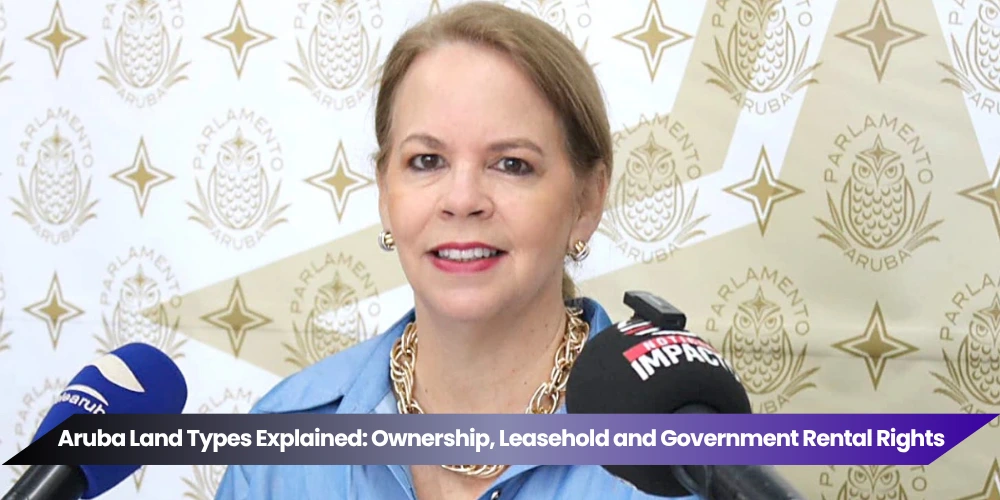
Parliamentarian Evelyn Wever-Croes discussed these distinctions in a special edition of “What the Law Says,” noting that many residents may not fully understand the type of land they occupy or the conditions attached to it.
She explained that understanding the legal status of a parcel is important because it determines who owns the land, how it may be used, which payments are required and whether the government can eventually recover it.

Privately Owned Land
The first category is privately owned land, known locally as eigendom.
With this type of property, the land belongs to the registered owner. The owner may sell it, transfer it through inheritance or use it for another legally permitted purpose.
Use of privately owned land must still comply with Aruba’s planning and development regulations, including applicable rules under the Spatial Development Plan with Regulations.
Owners of private land are also responsible for paying annual land tax to the government.
According to Wever-Croes, private ownership offers the greatest level of long-term security because the property legally belongs to the owner.
Long-Term Government Leasehold
The second category is erfpacht, or long-term government leasehold land.
This land remains the property of the Government of Aruba, but an individual or organization receives the right to use it for a specified period, commonly 60 years.
The government grants the land for an approved purpose, such as constructing a home or developing commercial premises.
When the leasehold period approaches expiration, the holder may apply for an extension of the right to continue using the land. An extension is subject to the applicable government process and conditions.
A leasehold holder generally has two annual financial obligations: land tax and the leasehold fee, commonly referred to as erfpachtcanon.
The land remains government property even though the leaseholder may have substantial rights to use and develop it during the agreed period.
Government Rental Land
The third category is huurgrond, or government rental land.
The government rents this land to a person for a specific approved purpose, normally agriculture or livestock farming.
According to Wever-Croes, permanent homes and other unauthorized structures may not be built on government rental land when the rental conditions restrict its use to farming or raising animals.
Unlike private ownership or long-term leasehold, rental land provides less permanent security.
When the rental agreement ends, the government may recover the land, use it for another public purpose or rent it to another person.
Why the Differences Matter
The three Aruba land types serve different legal and public-policy purposes.
Private ownership gives the owner permanent property rights, subject to the law.
Long-term leasehold allows the government to retain ownership while giving a resident or business the right to use the land for an extended period.
Government rental land remains under government control and is generally intended for limited purposes such as agriculture and livestock farming.
Wever-Croes emphasized that residents should determine exactly which type of land they possess before building, transferring rights or making long-term investments.
Knowing the land category helps residents understand their rights, financial obligations, permitted uses and the steps required to maintain their legal interest in the property.
Residents with questions about a specific parcel should review their deed, leasehold decision or rental agreement and seek guidance from the responsible government department or a qualified legal professional.