

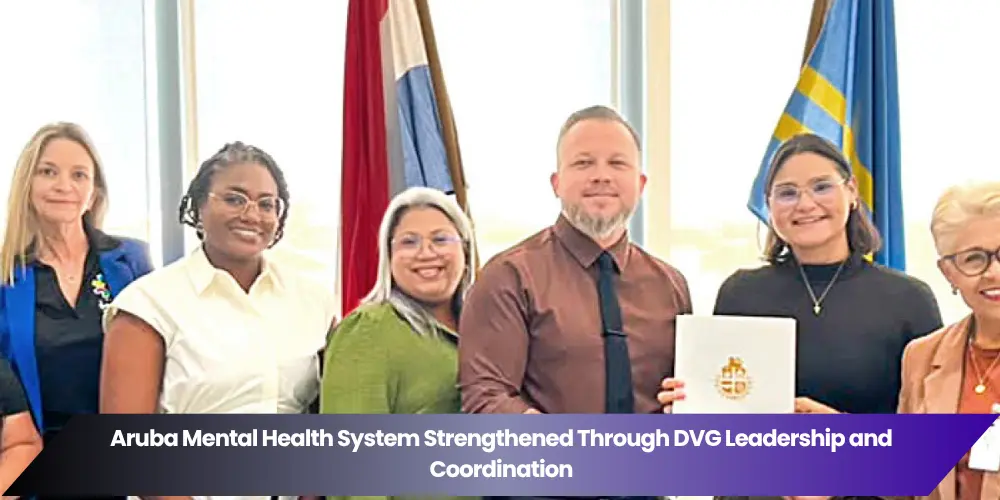
The Aruba mental health system is entering a new phase as mental health and addiction care become more structurally integrated within the responsibilities of the Department of Public Health, known as DVG.
Officials described mental health and addiction care as more than healthcare challenges, emphasizing that they represent a shared responsibility across society.
To create lasting improvements, authorities said policy development and coordination must be firmly embedded within Aruba’s public-health system and remain protected from short-term political changes.

As part of this approach, mental health care, known as GGZ, and addiction care will be structurally incorporated into DVG’s policy responsibilities.
The government said this decision is intended to strengthen continuity, sustainability and cooperation among organizations working throughout the healthcare network.
A key part of the transition involves transferring the chairmanship of the GGZ Steering Group from the Ministry of Public Health, Social Affairs, Elderly Care and Addiction Policy to DVG.
Under the new structure, DVG will assume responsibility for chairing and managing the steering group, including coordination among the various institutions involved.
This arrangement is intended to ensure that long-term policy development and the implementation of strategic priorities remain anchored within the public-health organization.
Authorities said the transfer will also strengthen institutional knowledge and improve collaboration between organizations working in mental health and addiction care.
The broader objective is to develop a system in which prevention, early detection, treatment, recovery and social reintegration are connected within one coordinated care pathway.
Patient wellbeing will remain at the centre of this approach, with policy development based on professional knowledge, cooperation and continuity.
The government said a stronger Aruba mental health system should make care more accessible while creating clearer coordination between organizations responsible for prevention, treatment and recovery.
Mental health was described as a shared responsibility and an investment in Aruba’s future.
Authorities emphasized that continued cooperation will be essential to building a stronger mental-health system capable of providing accessible and sustainable care for everyone who needs support.