

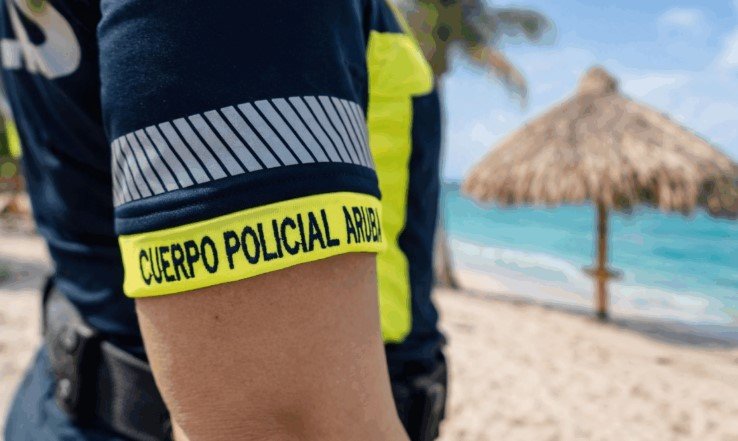
A long-standing debate over beach access in Police Clarify Public Access to Aruba’s Beach Palapas resurfaced after police intervened at Manchebo Beach Resort and Spa to clarify that palapas on the island’s public beaches are available for everyone to use, free of charge.
The situation began when a family from Argentina set up under a palapa at the beach in front of the hotel. Hotel security informed them that the palapa had been rented by another guest who had paid for privacy. Security reportedly threatened to remove the family if they did not leave. The situation escalated, and police were called.
Officers from the Beach Police unit responded and explained to hotel staff that palapas on public beaches are part of the community’s shared space and cannot be reserved for the exclusive use of one hotel guest. They clarified that simply placing a palapa on the beach does not grant the hotel ownership of the structure, the land, or the surrounding beach area.

For years, many hotels have acted as though the palapas in front of their properties are private. While most people understand that the sea itself is public, conflicts often arise when tourists from other hotels or local residents attempt to use these palapas. Police emphasized that the rule is simple: first come, first served.
Hotels may rent out beach chairs and other equipment, but they cannot prevent someone from using a palapa if they bring their own chair or towel. Similarly, no one can force others to vacate a spot that is already in use. However, once someone leaves, they lose their claim to that spot.
The Argentine family involved in the incident expressed relief at how the Beach Police handled the situation. They said they did not want trouble with the hotel but felt it was important to clear up the common misconception that hotel palapas are private.
Because the beach is public property, any structures placed there, such as palapas, are also considered public. This means they must remain available for everyone, both locals and visitors.
The court further clarified that placing chairs, beach beds, or towels under a palapa does not count as legally occupying it unless someone is physically present there. Once a person leaves, the spot becomes available for others.
Manchebo Beach Resort and Spa representatives stated that this specific case is more complex. The hotel explained that the palapa in question is located on leasehold land belonging to the property, not on the general public beach. While the government has placed some palapas along the beach, hotels also pay fees for placing chairs and umbrellas in designated areas. In some cases, parts of hotel properties extend onto the beach.
The hotel argued that the palapa involved in the incident is situated on their long-term leasehold land, so it should not be freely accessible to the public. However, government-owned palapas must be used according to public rules.
This disagreement highlights the ongoing tension between public access rights and private hotel operations along Aruba’s coastline. For now, the police continue to follow the 2015 court ruling, which asserts that most palapas on Aruba’s beaches are meant to be shared by all.