


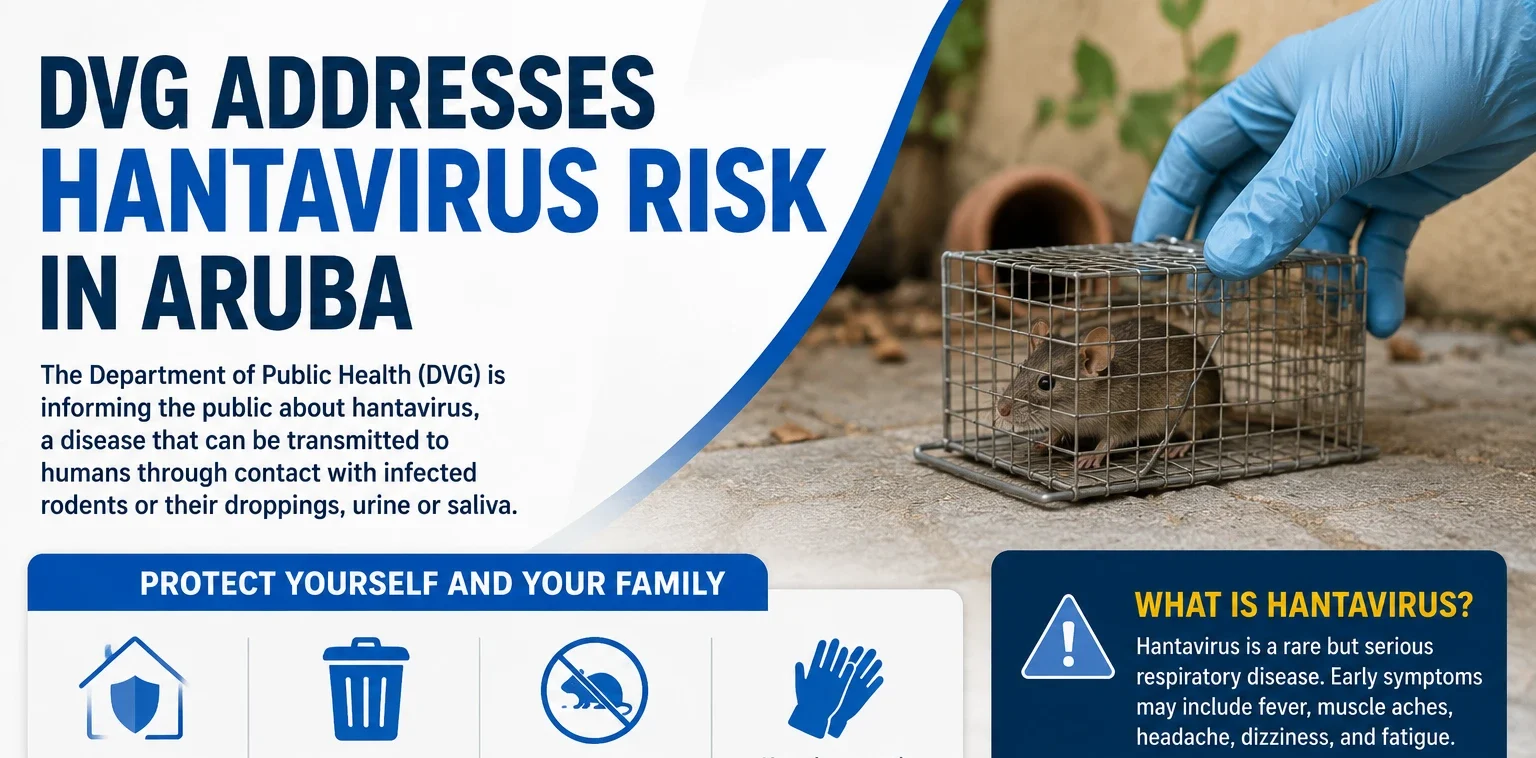
ORANJESTAD (AAN) – The Department of Public Health (Directie Volksgezondheid, DVG) has issued an update regarding Hantavirus, confirming that the disease currently poses a limited risk to the Aruban community.
Hantavirus is a zoonotic disease primarily transmitted to humans by rodents. While scientific experts note that certain variants, such as the Andes virus, can spread between people through prolonged close contact, DVG reports there is no indication that Aruba’s local rodent population is infected. Consequently, the possibility of animal-to-human transmission within the country is considered very low. Currently, there are no confirmed cases of Hantavirus in Aruba.
The primary risk of introduction involves residents or visitors returning from specific areas where the virus is present, including Argentina, Chile, Bolivia, Paraguay, Uruguay, and Brazil. Symptoms can appear within one to six weeks of exposure and include fever, muscle pain, extreme fatigue, headaches, nausea, and respiratory problems.

Health authorities advise individuals traveling to affected regions to avoid contact with wild or dead animals. Travelers should monitor their health upon return and seek medical attention if symptoms develop, ensuring they inform their doctor of their travel history. DVG urges the public to rely on official channels for information to avoid misinformation and continues to monitor international developments to safeguard public health.