

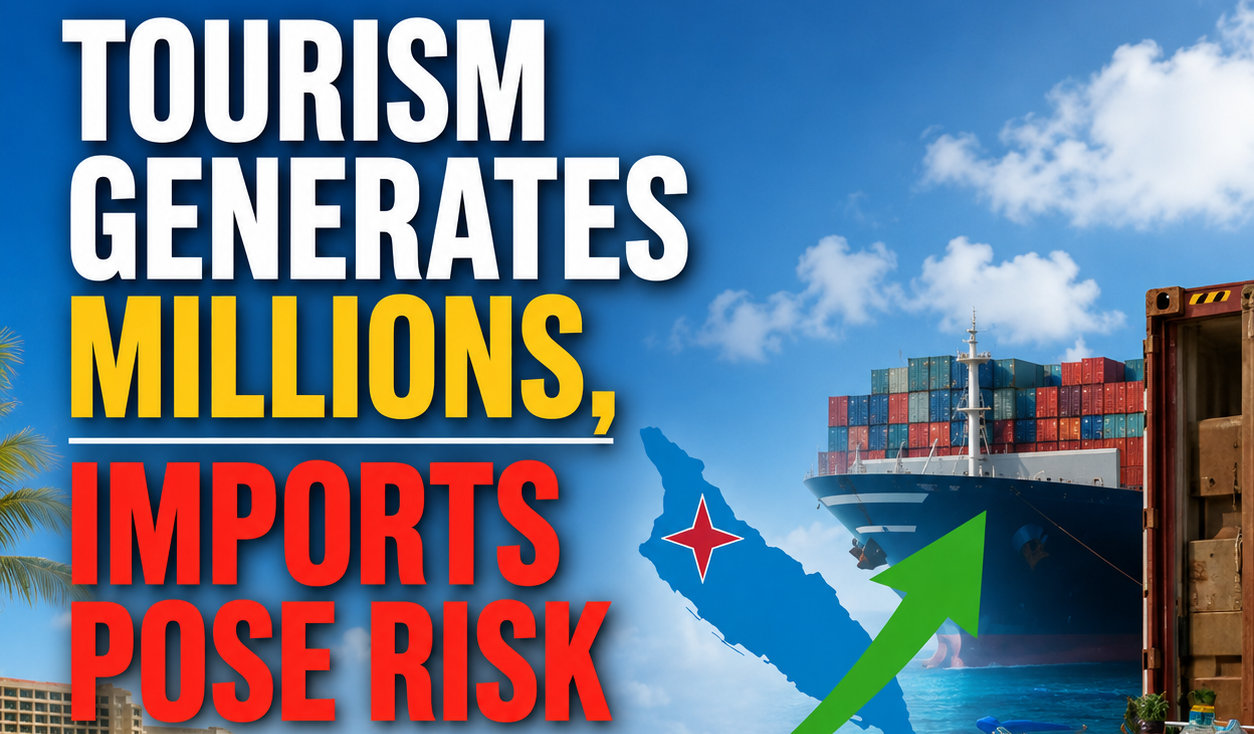
Tourism Generates Millions, Imports Pose Risk
ORANJESTAD – Tourism remains Aruba’s primary economic engine, yet new data from the Central Bank indicates that this growth brings significant challenges regarding import dependency. While the increase in visitors brings foreign currency into the country, it simultaneously drives a rise in the demand for imported goods.
According to the Central Bank, service exports—driven primarily by tourism—are projected to exceed 3.8 billion florins in 2025. However, Aruba imports far more products than it exports, resulting in a trade deficit of over 2.5 billion florins. This situation is directly linked to the tourism sector, as the island produces few goods locally and relies heavily on imports to supply hotels, restaurants, supermarkets, and construction projects.
Quarterly figures for 2025 illustrate this trend. During the first quarter, typically the strongest tourist season, service exports reached more than 1.18 billion florins. Despite this, imports created a trade deficit exceeding 606 million florins. In the third quarter, as tourism declined, service exports fell to approximately 834 million florins, while import levels remained high, leading to a balance of payments deficit of around 21 million florins.

Economists warn that small economies dependent on tourism are inherently vulnerable. Although the sector generates substantial foreign exchange, a significant portion of these funds leaves the island to pay for imports, foreign investor earnings, and interest payments. In 2025, the financial entry balance remained negative at approximately 401 million florins. The Central Bank notes that the Aruban economy remains heavily dependent on external factors, meaning that a slowdown in tourism or rising import prices could place rapid pressure on the economy. Nonetheless, tourism continues to provide the necessary revenue to sustain economic operations.