

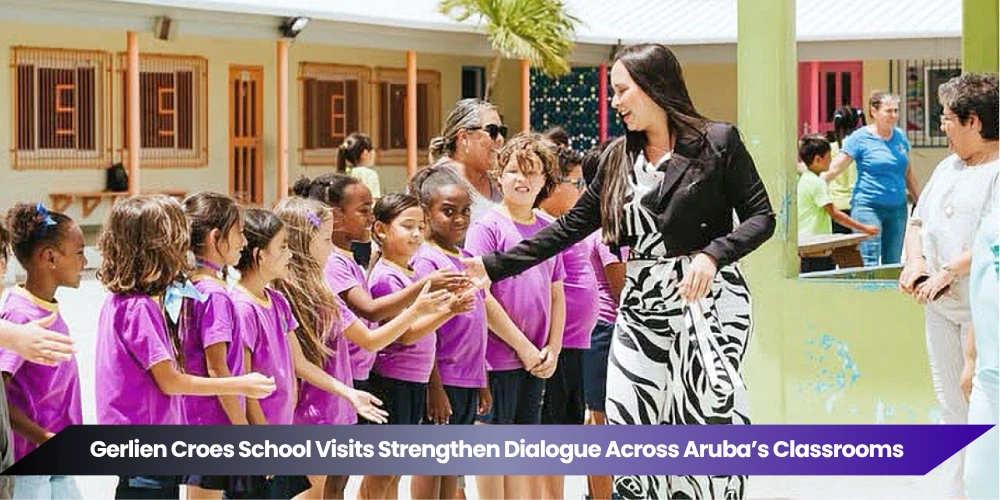
ORANJESTAD, Aruba — Gerlien Croes School Visits continued during the final weeks of the 2025–2026 academic year as the education minister met students, teachers and school employees at eight campuses across the island.
The visits were organised to strengthen communication between the Government of Aruba and the education sector, review the condition of school facilities and give the minister a clearer understanding of everyday conditions within classrooms and school communities.
Eight Schools Included in Latest Visits
Shortly before the summer holiday, Croes visited:

- Scol Preparatorio Aurora;
- Agnes Kleuterschool;
- Colegio Felipe B. Tromp;
- Ceque College MAVO;
- Scol Preparatorio Washington;
- Scol Basico Washington;
- Colegio Ora Ubao;
- Prinses Amalia Basisschool.
Students, teachers and employees welcomed the minister at each location, according to reports about the visits.
The schools represent different educational levels, allowing the minister to hear from teams working with young children as well as students in secondary education.
Minister Reviews School Facilities
One purpose of the visits was to observe the physical condition of the campuses.
School infrastructure can directly affect teaching, student comfort and the ability of educators to deliver lessons effectively.
By visiting campuses personally, the minister can observe classrooms and common areas while hearing directly from employees about practical challenges.
The announcement did not specify which facilities require repairs or improvements, and no individual construction or renovation commitments were confirmed.
Teachers Share Ideas and Experiences
The visits also created opportunities for teachers and school leaders to exchange ideas with the minister.
Educators work closely with students every day and can provide information about classroom needs, teaching materials, workload, student support and school administration.
Direct conversations can help the ministry better understand how education policies operate in practice rather than relying only on written reports.
Croes’ wider school-visiting programme has consistently focused on speaking with educators, examining facilities and maintaining direct contact with students and employees.
Students Remain Central to Visits
The minister also interacted with students during the school tour.
Maintaining direct contact with children and young people gives government representatives an opportunity to hear how students experience their schools.
Students may identify concerns involving facilities, learning materials, school activities or the general learning environment.
The latest announcement did not report formal student proposals or policy decisions arising from the conversations, but it described the visits as part of an effort to maintain close communication with school communities.
Educators Recognised for Daily Work
Croes expressed appreciation for teachers and other school employees who work to provide inclusive, healthy and stimulating learning environments.
Their responsibilities extend beyond delivering lessons.
Teachers and support staff also guide students’ social development, identify learning difficulties, maintain safe classrooms and communicate with families.
The ministry said the commitment demonstrated by school teams reflects their shared focus on the progress and wellbeing of Aruba’s children.
Visits Form Part of Wider Island Tour
The eight campuses are part of a broader series of visits conducted by the education minister.
Earlier rounds included schools in Paradera, Ayo, Santa Cruz and San Nicolas.
The purpose across the different visits has remained consistent: strengthening relations with education professionals and gaining a realistic picture of conditions within Aruba’s education system.
Continuing the programme across different districts can help ensure that concerns are not collected from only one type of school or one part of the island.
Dialogue Can Support Better Planning
Regular communication between government and schools can contribute to more informed educational planning.
Information gathered through visits may help officials understand priorities involving:
- Building maintenance;
- Classroom capacity;
- Learning materials;
- Student support;
- Teacher resources;
- Inclusive education;
- Technology;
- Safety and wellbeing.
However, school visits alone do not resolve these issues. Follow-up assessments, funding decisions and cooperation with school boards may be required before improvements can be implemented.
Ministry Reaffirms Education Commitment
The Ministry of Education said it will continue working closely with schools to address their needs and improve educational quality at every level.
The ministry described continuous dialogue as a priority and recognised educators as essential to Aruba’s future development.
Croes is officially responsible for the Ministry of Kingdom Relations, Education, Youth, Innovation and Sports.
Visits Highlight Shared Responsibility
The Gerlien Croes School Visits programme reflects the idea that improving education requires cooperation among government officials, school boards, administrators, teachers, parents and students.
Government is responsible for policy, resources and oversight, while educators bring daily experience from classrooms and direct knowledge of student needs.
By continuing to visit schools and speak with the people working and learning inside them, the ministry aims to maintain a closer connection with the realities facing Aruba’s education sector.
The latest round concluded with recognition for the dedication shown by teachers and school employees and a renewed commitment to continue strengthening educational quality throughout the island.