

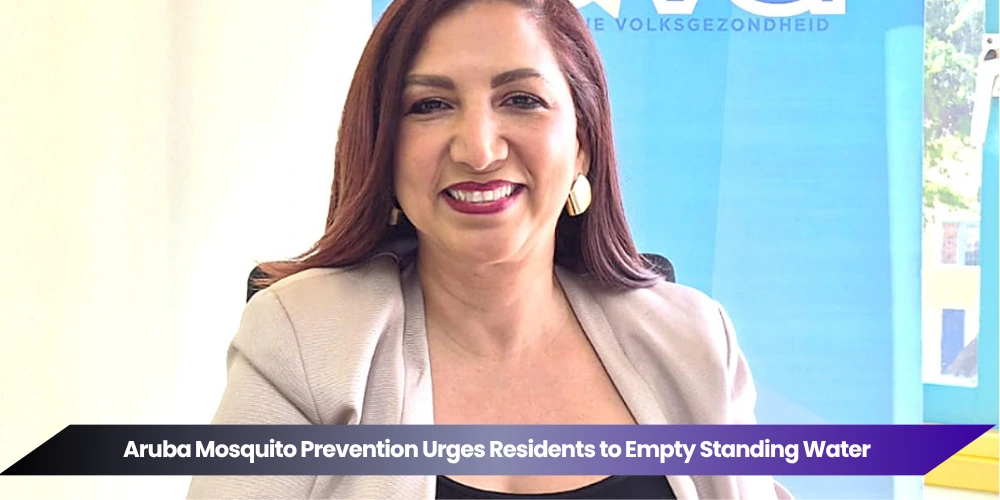
ORANJESTAD, Aruba — Aruba Mosquito Prevention remains an important public-health priority as DVG encourages residents to remove small amounts of standing water from their homes and surrounding properties.
Jurette Croes of the Department of Public Health discussed the ongoing “A Small Action With a Big Effect” awareness campaign during an interview with DIARIO.
The campaign reminds residents that preventing mosquito breeding does not always require a major cleanup. Emptying a bucket, turning over a container or covering a water barrel can significantly reduce potential breeding locations.

Small Amounts of Water Can Create Breeding Sites
Brief or isolated rainfall can leave water inside cans, bottles, buckets, toys, plant saucers and other objects around a property.
These containers may appear harmless, but Aedes aegypti mosquitoes commonly lay their eggs in artificial containers holding water near homes, schools and workplaces.
Residents should inspect their yards after rainfall and empty water from objects including:
- Buckets and cans;
- Bottles and disposable cups;
- Children’s toys;
- Flowerpots and plant saucers;
- Old tyres;
- Uncovered barrels;
- Animal water containers;
- Equipment stored outdoors.
Items that are still needed should be turned upside down, placed under cover or stored in a way that prevents them from collecting rainwater.
Aedes Mosquitoes Can Transmit Several Diseases
DVG’s campaign focuses particularly on Aedes aegypti, the mosquito capable of transmitting dengue, chikungunya and Zika.
The species frequently lives and breeds close to people, making household participation essential to mosquito control. Eliminating its breeding sites reduces opportunities for disease transmission.
The campaign does not indicate that every mosquito in Aruba carries disease. Its purpose is to reduce the conditions allowing disease-transmitting mosquito populations to grow.
GKMB Continues Neighbourhood Inspections
DVG’s Yellow Fever and Mosquito Control Department, known as GKMB, continues inspecting neighbourhoods and identifying possible mosquito breeding locations.
Its responsibilities include inspecting homes, businesses, institutions, public grounds and other vulnerable locations. The department also responds to reports of mosquito nuisance and provides residents with guidance on controlling breeding sites.
According to Croes, inspectors are currently not finding large numbers of mosquitoes or breeding sites during their neighbourhood visits.
DVG is encouraging the community to continue its preventive work so that conditions do not worsen following additional rainfall.
Residents Report Mosquito Problems
DVG receives complaints involving Aedes aegypti breeding sites as well as other mosquitoes creating significant nuisance around homes and neighbourhoods.
Aedes aegypti generally breeds in relatively clean standing water held inside artificial containers.
Other mosquito species may reproduce in drains, open sewage pits or water containing organic material. Although not every nuisance mosquito transmits the same diseases, large numbers can still affect nearby residents and create sanitation concerns.
DVG recommends keeping pits and water-storage areas securely covered to prevent mosquitoes from entering and laying eggs.
Water Barrels Require Regular Attention
Residents who collect rainwater in barrels must inspect them regularly.
A barrel does not need to be full to become a potential breeding site. A small quantity of water remaining at the bottom may be sufficient for mosquito development.
Water-storage tanks, barrels and other containers should be tightly covered or sealed so mosquitoes cannot enter. Containers should also be cleaned regularly because mosquito eggs may remain attached to their inside surfaces.
A loose cover that leaves openings around the edges may not provide adequate protection.
One Household Can Affect an Entire Neighbourhood
Mosquito prevention is not limited to protecting one family.
Mosquitoes breeding on one property can move to neighbouring homes and public spaces. When several properties contain standing water, the overall mosquito population and the risk of disease transmission can increase.
DVG’s teams inspect public areas and respond to reported breeding sites, but the department cannot continuously inspect every private yard on the island. Homeowners and occupants therefore remain responsible for regularly checking their own surroundings.
What Residents Should Do After Rain
DVG recommends that residents walk around their homes after rainfall and complete a simple inspection.
Standing water should be emptied onto the ground instead of remaining inside a container. Unnecessary objects capable of holding water should be discarded responsibly.
Containers that cannot be removed should be turned upside down or protected from rain. Drains and gutters should also be kept clear so water can flow instead of remaining trapped.
Pet bowls and other necessary water containers should be emptied, cleaned and refilled regularly.
Campaign Emphasises Consistent Prevention
The name “A Small Action With a Big Effect” reflects DVG’s central message.
Residents do not have to wait until they see large numbers of mosquitoes before taking action. Prevention is most effective when breeding locations are removed before adult mosquitoes emerge.
The campaign asks every household to make a short property inspection part of its normal routine, particularly after rain.
Through Aruba Mosquito Prevention, DVG and GKMB are encouraging residents to remain alert, remove standing water and help protect their families and neighbours from mosquito-borne diseases.