

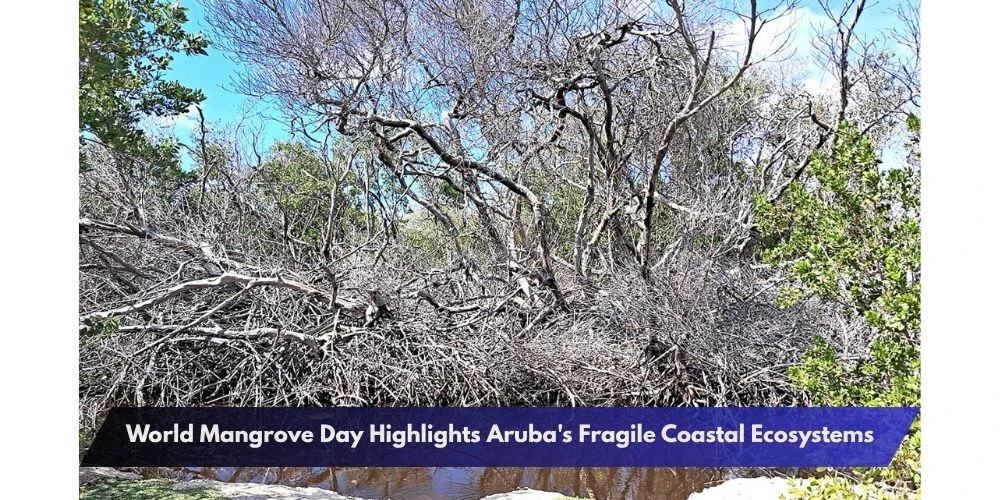
ORANJESTAD (AAN) – World Mangrove Day Highlights Aruba’s Fragile Coastal Ecosystems as environmental advocates renewed calls for stronger protection of the island’s mangrove forests during the observance of World Mangrove Day on Sunday, July 26, 2026.
According to local environmental expert Olinda Rasmijn, mangroves are among Aruba’s most valuable coastal ecosystems. These resilient trees thrive along shorelines, withstand powerful hurricanes, and provide essential habitats for a wide variety of marine life.
A Vital Nursery for Marine Life
Rasmijn explained that the complex root systems of mangroves create ideal breeding grounds for young fish, shellfish, and other marine species.

In Aruba, mangrove forests can be found in several coastal areas, where their intertwined roots protect wildlife while supplying nutrients that support diverse ecosystems beneath the water’s surface.
One of the island’s best-known mangrove ecosystems is Spanish Lagoon (Spaans Lagoen), often referred to as the “Nursery of Fish” because of its importance to marine biodiversity.
Governor Alfonso Boekhoudt previously highlighted the importance of mangrove conservation by planting a Red Mangrove (Rhizophora mangle) seedling, emphasizing the ecological value these forests provide for Aruba’s flora, fauna, and insect populations.
Growing Concerns Over Damage
Rasmijn expressed concern that Aruba’s mangroves continue to face damage, particularly during weekends when visitors unintentionally or deliberately harm the fragile ecosystems.
According to her observations, people frequently sit on exposed mangrove roots, tie ropes to the trees to support tents, cut branches, and remove leaves, causing long-term damage to the forests.
She also pointed to areas such as Santo Largo and Pos Chikito, where mangroves have reportedly suffered from years of neglect.
Mangel Halto Remains a Conservation Concern
The article also highlights ongoing concerns about Mangel Halto, one of Aruba’s most recognized mangrove areas.
According to Rasmijn, residents and returning visitors have watched portions of the mangrove forest gradually decline over several decades.
She recalled that the area once supported abundant aquatic life and attracted as many as 21 species of migratory birds each year. Although efforts such as improving water circulation through the construction of channels helped revive parts of the ecosystem, conservationists say continued care and protection remain essential.
World Mangrove Day serves as an opportunity to recognize the ecological importance of mangroves and to encourage residents and visitors alike to help preserve these unique coastal environments for future generations.