

ORANJESTAD, Aruba — Aruba Elder Care Safety has returned to public discussion after a reported incident at a residential care facility in Tanki Leendert allegedly placed an older resident in serious danger.
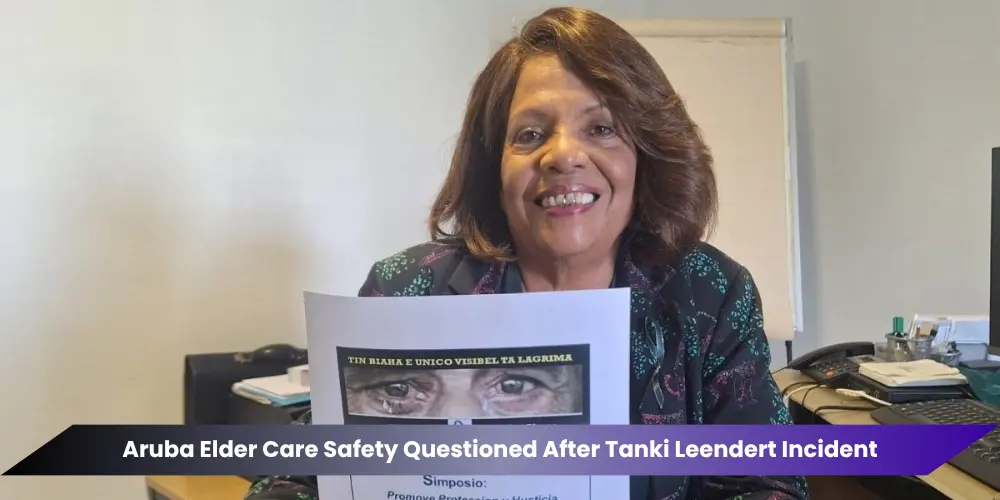
Melva Croes-Yánez, president of Fundacion Alzheimer Aruba and its “Say No to Elder Abuse” project, said the case raises urgent questions about emergency preparedness, admission procedures, staffing and supervision within residential care facilities.
Local reports state that one resident allegedly struck another resident with a walking aid on July 17, 2026. Emergency medical personnel attended to the injured person and transported the resident to the hospital. Another resident was reportedly detained while authorities investigated the incident.

The precise circumstances, responsibility and possible contributing factors have not been officially established in the publicly available information.
Foundation Raises Safety Concerns
Croes-Yánez said residential care homes should provide older adults with a calm, secure and professionally supervised living environment.
She argued that vulnerable residents may face unnecessary risks when facilities accept people with complex behavioural, mental-health or substance-use needs without having appropriately trained personnel, suitable infrastructure and clear safety procedures.
The foundation stressed that residents should not be placed together solely because they require accommodation or assistance.
Each person’s medical condition, behavioural risks, care requirements and compatibility with other residents should be professionally assessed before admission.
Croes-Yánez said facilities must also be prepared to respond when a resident becomes confused, distressed, threatening or physically aggressive.
Cause of Incident Remains Unconfirmed
Questions have circulated about whether addiction, medication or other substances may have contributed to the reported behaviour.
However, no official evidence confirming those possibilities was included in the available reports.
Determining the cause requires a proper investigation involving healthcare professionals, the facility’s management and the relevant authorities.
The investigation should examine the residents’ care plans, medical histories, prescribed medication, supervision arrangements, staffing levels and the events immediately preceding the incident.
It should not rely on assumptions about addiction, mental illness or medication without clinical evidence.
Care Homes Need Emergency Protocols
Fundacion Alzheimer Aruba said every residential facility should maintain a clear emergency plan covering violence, medical crises, missing residents, fires, natural disasters and other serious situations.
Employees should understand who must intervene, how vulnerable residents should be protected and when police, ambulance personnel or healthcare authorities must be contacted.
Emergency procedures should also establish how relatives are informed and how incidents are documented, reviewed and reported.
Croes-Yánez said having written policies is insufficient when employees have not been trained to apply them during an emergency.
Regular training exercises and reviews can help facilities identify weaknesses before a dangerous situation occurs.
Qualified Staffing Considered Essential
The foundation called for enough qualified personnel to be present during every shift.
Residential care workers may be responsible for administering medication, assisting with bathing and mobility, recognizing medical deterioration and managing residents experiencing confusion or behavioural changes.
These duties require professional knowledge, supervision and clearly assigned responsibilities.
A regular elderly-care facility should not operate as an addiction-treatment centre, psychiatric crisis unit or rehabilitation centre unless it has the required authorization, specialists and safety measures.
When a resident requires services beyond a facility’s capabilities, the person should be referred to an institution equipped to provide the appropriate level of care.
Stronger Admission Assessments Requested
Croes-Yánez called for stricter admission and risk-assessment procedures across Aruba’s residential care sector.
Before accepting a resident, management should determine whether the facility has the staff, training and infrastructure necessary to meet that person’s needs safely.
The assessment should consider medical requirements, cognitive impairment, mobility, medication, behavioural history and the possible effect on other residents.
Facilities should also regularly reassess residents because their health and care needs can change over time.
A person who could initially be supported within a standard care home may later require specialist nursing, psychiatric or addiction-related services.
Incident Reporting Required
Aruba’s healthcare regulations require providers to report suspected care-related calamities to the Inspectie Volksgezondheid Aruba.
The care provider must investigate what happened, identify contributing factors and introduce measures intended to prevent another occurrence.
Fundacion Alzheimer Aruba called for transparency about whether the Tanki Leendert incident was reported to IVA and whether an internal investigation has begun.
The foundation also wants authorities to determine whether the facility followed its admission, medication, supervision and emergency-response procedures.
Any conclusions should be based on verified evidence and should respect the privacy and legal rights of everyone involved.
Previous Reports Identified Care-Home Risks
IVA has previously reported serious weaknesses within parts of Aruba’s residential care sector.
A report published in February 2026 examined six care-home calamities investigated between 2020 and 2024.
The inspectorate identified problems involving insufficient staffing, inadequate professional knowledge, missing protocols, poor communication, medication errors and failures to respond promptly when residents’ health deteriorated.
IVA emphasized that providers must learn from serious incidents and implement improvements to reduce the risk of repetition.
Immediate Review Requested
Croes-Yánez urged the ministry responsible for public health, social affairs, elderly care and addiction services, together with IVA and care-home management, to review safety arrangements across the sector.
The foundation proposed several priorities:
Facilities should separate residents whose care requirements cannot be safely managed together.
Admission criteria should clearly establish which residents a facility can responsibly accommodate.
Employees should receive appropriate training in emergency response, medication management, dementia care, behavioural crises and violence prevention.
Care providers should maintain enough qualified personnel during every shift.
Serious incidents should be reported, independently reviewed and followed by measurable corrective actions.
Protecting Vulnerable Residents
Older adults living in residential facilities often depend entirely on caregivers for food, medication, hygiene, mobility and protection.
Many residents may be unable to describe mistreatment clearly, defend themselves physically or report unsafe conditions without assistance.
Their safety must therefore remain the central consideration in every management and admission decision.
Fundacion Alzheimer Aruba said families should be able to trust that care homes will provide a dignified and secure environment for their loved ones.
The Tanki Leendert incident should be investigated carefully without speculation, while any verified failures should result in corrective measures.
The foundation concluded that improving Aruba Elder Care Safety will require stronger oversight, professional staffing, suitable resident placement and emergency procedures that are understood and practiced before another crisis occurs.