

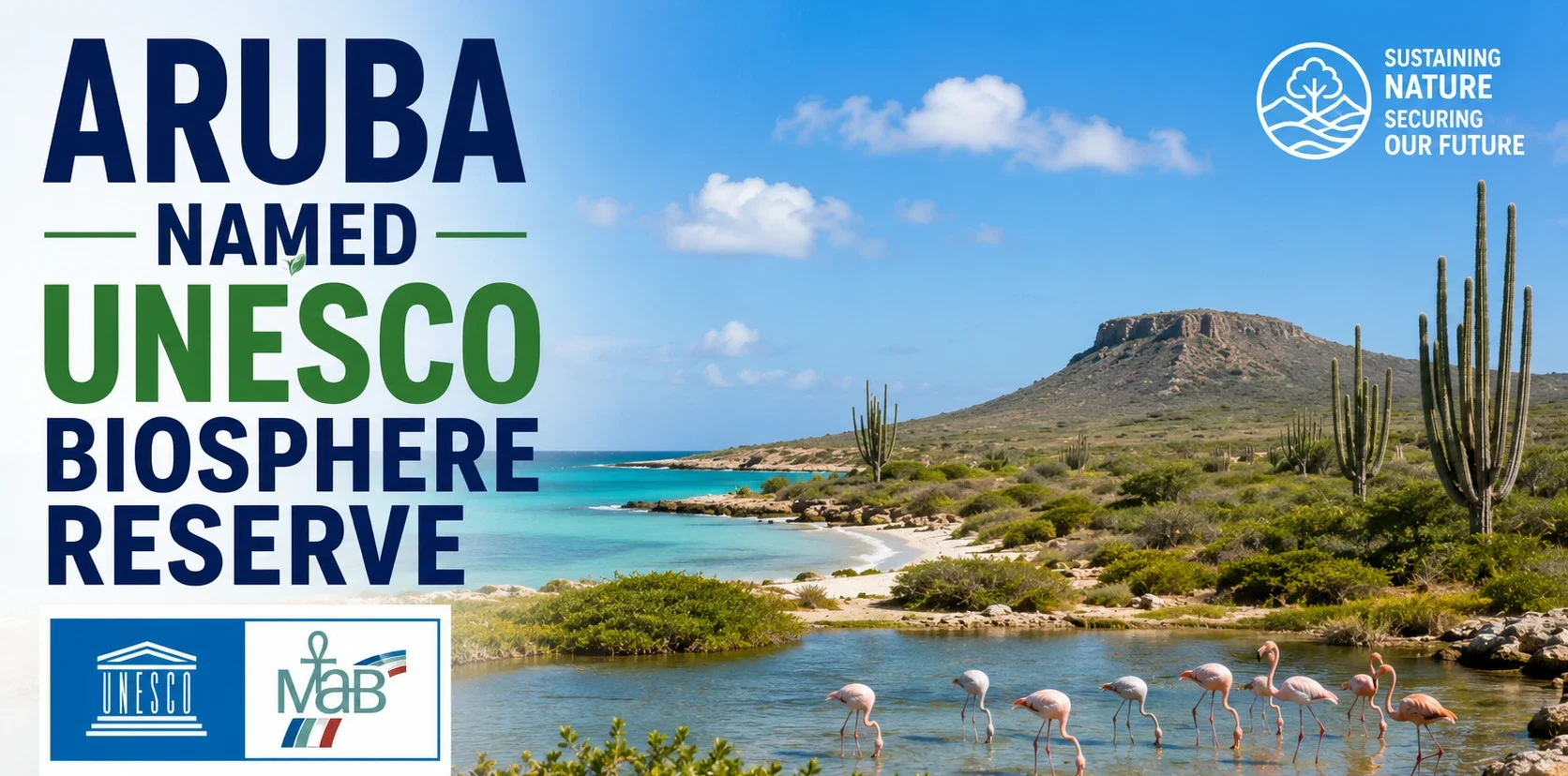
ORANJESTAD (AAN): On June 5, 2026, Aruba was officially designated as a UNESCO Biosphere Reserve during the 38th session of the International Co-ordinating Council of the Man and the Biosphere (MAB) Programme in Hernandarias, Paraguay. The designation encompasses the entire island, covering a land area of approximately 19,300 hectares and an Exclusive Economic Zone (EEZ) of nearly 3 million hectares. The reserve includes approximately 108,000 inhabitants and results from an inclusive process involving government institutions, local communities, civil society, scientists, and the private sector.
Eric Falt, Director and Representative of UNESCO for the Caribbean Regional Office, stated that the biosphere concept is particularly adapted to Small Island Developing States (SIDS). Falt noted that Aruba demonstrates how biodiversity conservation, cultural heritage, and sustainable development can proceed together. He expressed hope that this designation will inspire other nations in the region to consider this model and join the World Network of Biosphere Reserves.
Prior to this, the English and Dutch Caribbean region counted only two biosphere reserves: the Saint Mary’s Biosphere Reserve in Saint Kitts & Nevis and the North East Tobago Biosphere Reserve in Trinidad & Tobago. Aruba’s inclusion strengthens the Caribbean’s presence in the global network. Despite its modest size, Aruba is characterized by extraordinary contrasts, featuring relatively dry landscapes.