


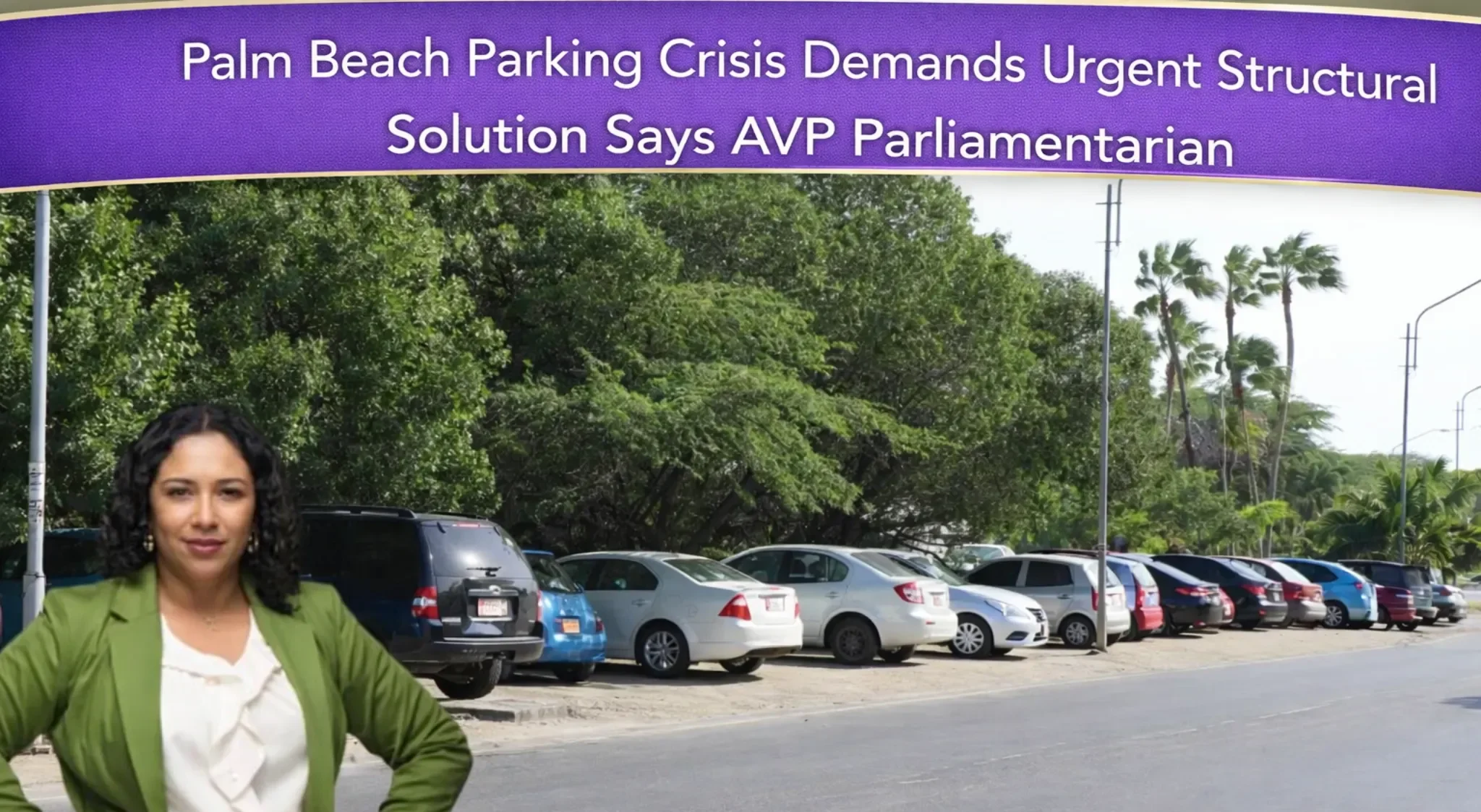
AVP Member of Parliament Stephany Sevinger is calling for urgent structural solutions to the worsening Palm Beach parking and traffic crisis in the high-rise area, warning that the situation has reached a critical point that is not only inconvenient but dangerous and damaging to Aruba’s tourism reputation.
Palm Beach Parking Crisis Threatens Tourism and Public Safety
The Palm Beach zone represents one of the principal engines of Aruba’s tourism industry, where thousands of visitors move through daily. According to Sevinger, the current congestion and disorder fail to reflect the quality, professionalism, and hospitality that Aruba aims to project to the world. The area is home to major resorts, restaurants, casinos, shops, and entertainment venues that form the backbone of the island’s hospitality sector.
The problem extends well beyond tourists. Thousands of employees who work at hotels, restaurants, casinos, shops, and other services along the high-rise strip face daily difficulties arriving at work on time and returning home. This creates stress, chronic delays, and negatively affects the wellbeing of many workers who keep the local economy running.

Aruba Traffic Problems Spread to Eagle Beach and Oranjestad
Sevinger emphasized that while Palm Beach parking is a key focal point, the traffic problem has become a national challenge. Similar situations are emerging in other areas, including Eagle Beach, where residents manage parking on the streets themselves, and near the California Lighthouse, where congestion creates safety risks. In downtown Oranjestad, parking has been one of the biggest obstacles to economic development for years. These issues echo earlier traffic congestion concerns raised about the Palm Beach area, and follow a worrying trend as Aruba traffic accidents rise alarmingly in 2026.
The parliamentarian warned that the current situation poses a real danger to public safety. The lack of parking spaces, inadequate sidewalks, and constant congestion could lead to accidents and complicate rapid access for emergency services when every second counts. Fire trucks, ambulances, and police vehicles may face critical delays reaching incidents in the area.
Sevinger acknowledged that the challenges are not new, and relevant authorities are fully aware of the problems. Various studies have been conducted and projects identified to address the situation structurally. However, she stressed that the priority now must be effective implementation and rapid execution. Solving the Palm Beach parking crisis is not merely a matter of convenience — it is a question of public safety, economic sustainability, and national reputation.


















Discussion about this post