

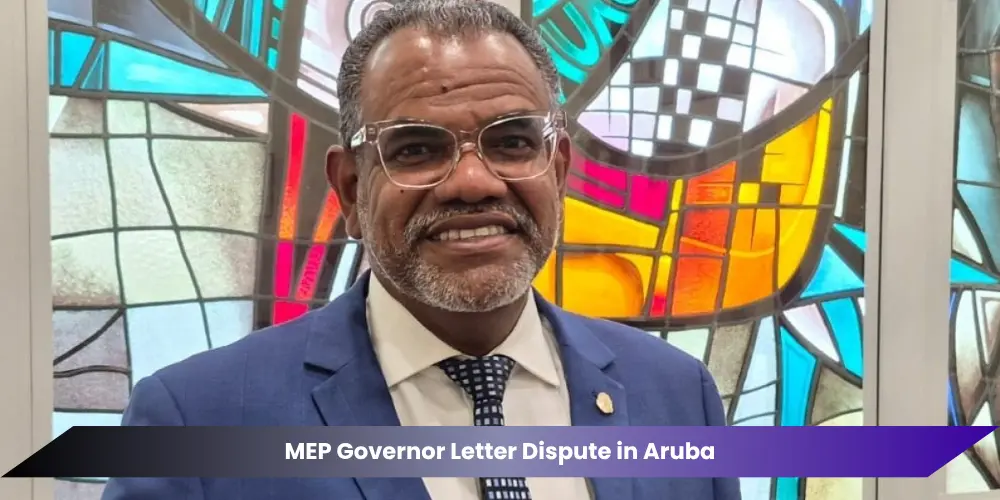
ORANJESTAD, Aruba — The MEP Governor Letter Dispute has intensified after Parliament President Marlon Sneek criticized the opposition faction for repeatedly sending letters to Governor Alfonso Boekhoudt.
Sneek said Aruba’s Parliament is an autonomous institution and maintained that only the people who elect its members have the authority to determine its political composition.
His comments followed complaints submitted by the MEP parliamentary faction concerning procedures and decisions within Parliament.

Sneek Criticizes Opposition Letters
During an interview, Sneek accused the MEP faction of unnecessarily involving the governor in internal parliamentary matters.
He argued that Aruba’s constitutional framework clearly establishes Parliament as an independent branch of government.
According to Sneek, the governor does not have authority to direct Parliament’s internal procedures.
Sneek also alleged that some of the information included in the opposition’s letters was inaccurate. These accusations represent his account of the dispute and were not independently verified in the original report.
Disagreement Over Parliamentary Meeting
One example discussed in the MEP Governor Letter Dispute involved a request for a parliamentary meeting concerning an alleged illegal dumping site near the home of Member of Parliament Edgard Vrolijk.
Sneek said the original request was submitted as an “OV” meeting but was later changed to an “OB” meeting.
He rejected the claim that he made the change on his own.
According to Sneek, he discussed the matter with Vrolijk, who was responsible for requesting the meeting. Sneek said Vrolijk agreed that changing the meeting format would be appropriate.
Sneek explained that under the selected format, the responsible minister would first provide an explanation before members of Parliament asked questions.
Under the other format, parliamentarians would speak first and the minister would respond afterward.
Parliament’s Independence Emphasized
Sneek said the adjustment was made following consultation and not through a unilateral decision by the Parliament president.
He expressed frustration that the issue was presented differently in correspondence sent to the governor.
Sneek also noted that the MEP faction leader has a legal background and should understand the constitutional independence of Parliament.
The Parliament president described the repeated letters as unnecessary and said disputes concerning parliamentary procedures should be addressed within Parliament.
The MEP Governor Letter Dispute reflects continuing political tension between Parliament’s leadership and the opposition faction over meeting procedures, institutional authority and the role of the governor.
No response from the MEP faction or the governor was included in the information provided.