

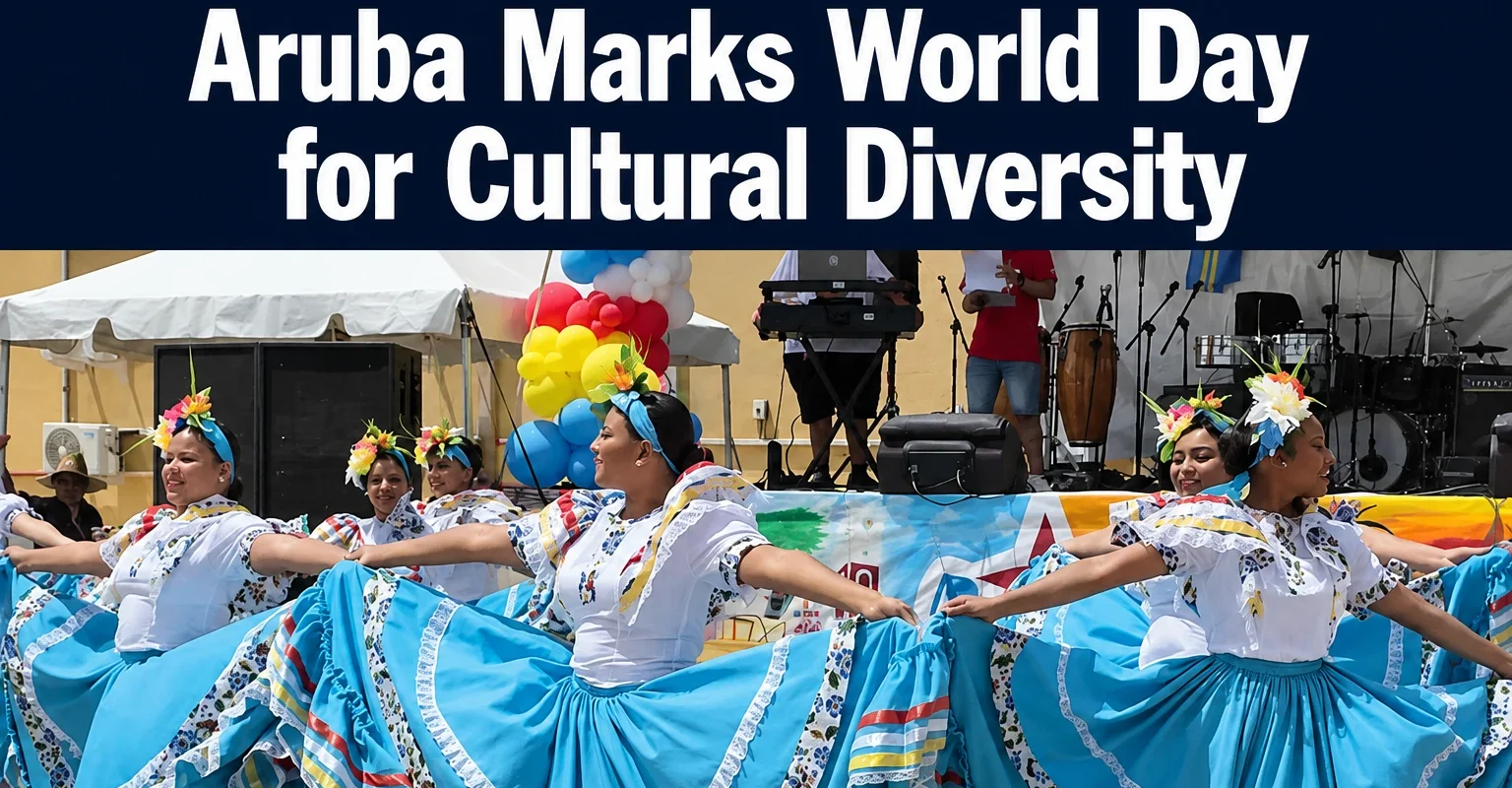
On May 21, countries around the world, including Aruba, observed the World Day for Cultural Diversity for Dialogue and Development. Established by the United Nations in 2002 following UNESCO’s Universal Declaration on Cultural Diversity, the day promotes understanding among various cultures and recognizes diversity as a vital element for peace and development.
For Aruba, the occasion holds particular significance given the island’s reputation as a multicultural hub. With residents and workers from more than 100 nationalities, the island serves as a prominent example of coexistence among different cultures, languages, and traditions. Communities from Latin America, the Caribbean, Europe, Asia, and North America contribute daily to the local economy and social fabric, shaping the modern identity of Aruba alongside native Arubans.
Linguistic diversity remains a key strength of the local community. While Papiamento and Dutch are the official languages, English and Spanish are widely spoken in schools, workplaces, and neighborhoods. Educators frequently cite this multilingualism as a critical asset that fosters better communication and cross-cultural understanding. Furthermore, this multiculturalism is deeply intertwined with the tourism sector, the pillar of the Aruban economy, offering visitors and locals a vast array of international culinary and musical experiences.

Despite these strengths, local leaders emphasize that maintaining inclusion requires continuous effort. UNESCO stresses that diversity alone is insufficient without equal opportunities and active participation from all communities. As immigration has increased over recent decades, Aruba faces ongoing discussions regarding integration and social inclusion. Community organizations and educational institutions continue to play a vital role in promoting intercultural education to ensure that diversity remains a source of unity.