


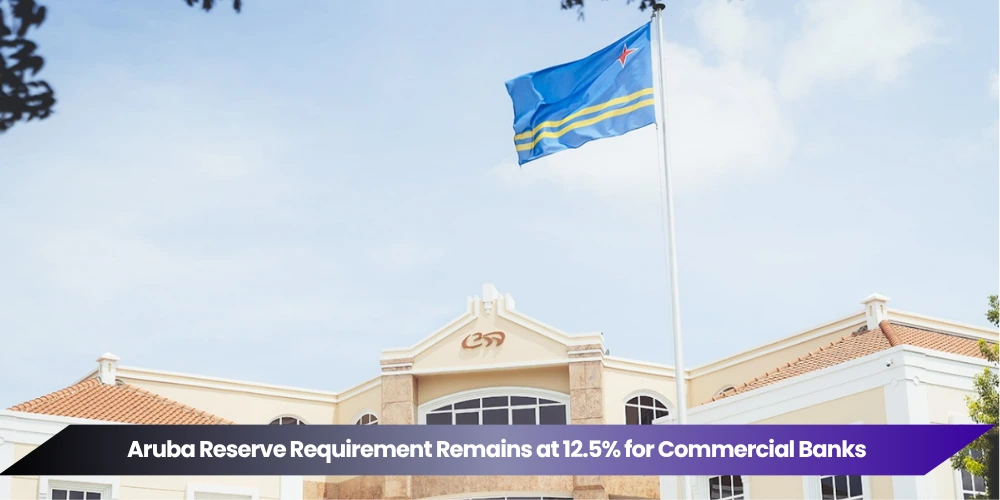
ORANJESTAD, Aruba — The Aruba Reserve Requirement for commercial banks remains unchanged at 12.5% following the latest monetary-policy decision published by the Central Bank of Aruba.
The bank’s Monetary Policy Committee made the decision during its May 8, 2026 meeting, with the unchanged rate taking effect on June 1.
The Central Bank cited adequate foreign-exchange reserves, relatively low inflation and continuing uncertainty in the global economy as its main considerations.

What the Reserve Requirement Means
The reserve requirement determines the minimum amount commercial banks must maintain at the Central Bank instead of using those funds for lending or other activities.
Keeping the rate at 12.5% means the Central Bank did not introduce a new monetary tightening or easing measure through the reserve requirement in June.
The rate was originally reduced from 13.5% to 12.5% effective March 1, 2025, giving commercial banks more funds potentially available for loans and investments. It has remained at 12.5% through several subsequent policy decisions.
Foreign Reserves Remain Above Benchmarks
The Central Bank reported that Aruba’s foreign reserves remained comfortably above the benchmarks it monitors as of April 3, 2026.
Official and international reserves also increased during the first quarter of the year.
International reserves rose by approximately Afl. 363.4 million between the end of December 2025 and the end of March 2026.
The increase included:
- Afl. 289.9 million in additional official reserves;
- Afl. 73.5 million in additional foreign-exchange reserves held by commercial banks.
At the end of March, official reserves stood at approximately Afl. 4.34 billion, while international reserves reached around Afl. 4.87 billion.
Reserve Coverage Considered More Than Adequate
The Central Bank assessed Aruba’s reserves using two important indicators.
The current-account coverage ratio reached approximately 8.4 months, while the International Monetary Fund’s Assessing Reserve Adequacy metric stood at 153.5%.
Both results indicated that Aruba maintained more than adequate reserve levels during the period reviewed by the committee.
The bank also expected foreign reserves to remain adequate and continue growing during 2026, although international developments could cause results to differ from its baseline projections.
Inflation Remained Relatively Low
Aruba’s end-of-period inflation reached 1.1% in March 2026, increasing from 0.7% in February.
The 12-month average inflation rate stood at 0.2%, slightly above the 0.1% recorded one month earlier.
The Central Bank attributed much of the increase in end-of-period inflation to higher prices involving:
- Food and non-alcoholic beverages;
- Communication;
- Restaurants and hotels;
- Miscellaneous goods and services.
Housing, communication, restaurants and hotels were among the categories contributing to average inflation.
Commercial Bank Liquidity Increased
Preliminary information showed that commercial banks continued holding substantial excess liquidity.
Excess liquidity reached approximately Afl. 1.17 billion on April 3, compared with Afl. 917.9 million at the end of December 2025.
The Central Bank said strong tourism activity and increased public-sector deposits at commercial banks were the principal reasons for the increase.
The unchanged reserve requirement therefore operates within a banking system that currently holds significant funds above the mandatory minimum.
Lending Continued Growing
The total resident loan portfolio of Aruba’s commercial banks increased by Afl. 79.6 million during the first quarter of 2026.
Outstanding loans rose from approximately Afl. 5.16 billion at the end of December 2025 to Afl. 5.24 billion at the end of March.
Business loans increased by Afl. 42.2 million, while loans to individuals rose by Afl. 39.9 million.
The figures show that credit continued expanding while Aruba maintained adequate reserves and comparatively low inflation.
Global Conditions Create Uncertainty
The Central Bank identified geopolitical tensions, particularly conflict in the Middle East and possible effects on global oil prices, as significant sources of uncertainty.
Aruba is a small and open economy that depends heavily on tourism, imports and economic conditions in the United States.
Changes in energy prices, international travel, trade or consumer confidence could therefore affect Aruba’s inflation and foreign-exchange reserves.
The committee decided that maintaining the reserve requirement was appropriate while it continued observing those risks.
Florin-Dollar Exchange Rate Remains Central
One of the Central Bank’s principal monetary-policy objectives is maintaining the fixed exchange rate between the Aruban florin and the US dollar.
Adequate foreign reserves are essential because they support confidence in the currency and Aruba’s ability to make international payments.
The Central Bank said it will continue monitoring monetary and economic indicators and adjust its policy position when necessary to protect the fixed exchange rate.
No Immediate Change for Bank Customers
Maintaining the Aruba Reserve Requirement at 12.5% does not automatically change interest rates, loan approvals or savings-account returns for customers.
Those conditions also depend on each commercial bank’s policies, operating costs, assessment of risk and wider market conditions.
The decision primarily confirms that banks must continue maintaining the same required reserve level at the Central Bank.
Future adjustments will depend on developments involving foreign reserves, inflation, commercial-bank liquidity, lending and global economic uncertainty.