

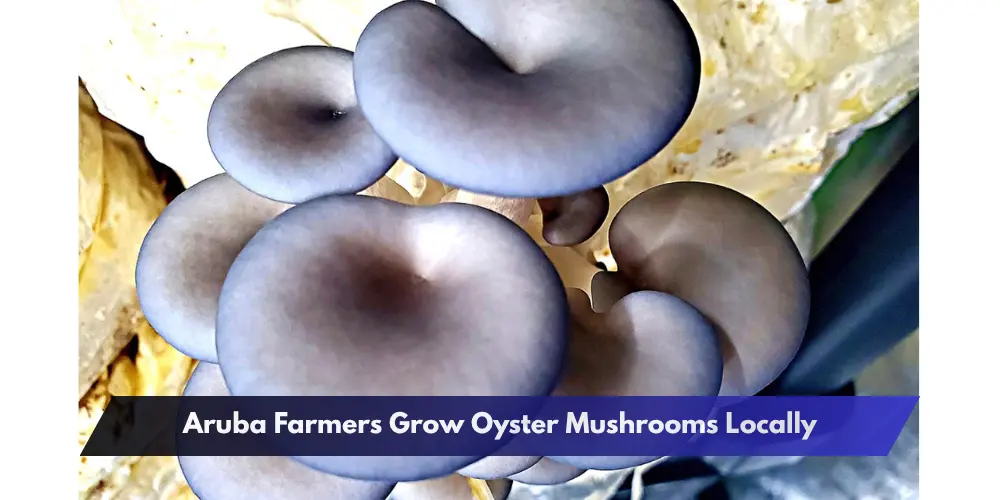
ORANJESTAD, Aruba – Aruba Farmers Grow Oyster Mushrooms in several striking colors, demonstrating that the island’s agricultural sector can successfully produce fresh and unusual varieties of edible fungi for local consumers, restaurants and culinary professionals.
Santa Rosa recently shared information with the community about the varieties of mushrooms now being harvested locally in Aruba. The announcement is expected to interest residents who enjoy mushrooms and may be surprised by the range of products that can be cultivated under the island’s agricultural conditions.
According to producers at Farmacure Fungi, oyster mushrooms can grow in several attractive colors, with each variety offering its own distinctive flavor, aroma and texture. The local farm is cultivating a selection that includes pink, golden, blue, pearl, black and brown oyster mushrooms.

The colorful mushrooms are not only visually distinctive but also offer different culinary qualities. Some varieties have a soft and delicate texture, while others are thicker, firmer and more satisfying to chew. These differences allow cooks to use the mushrooms in a broad range of dishes and preparation styles.
Their flavors also vary considerably. Certain oyster mushrooms have a mild and buttery taste, while others carry deeper earthy and savory notes. Some varieties may even offer flavors that resemble seafood, giving chefs an opportunity to develop creative dishes using locally grown ingredients.
The aromas can range from slightly sweet and floral to rich, earthy and woody. These characteristics make oyster mushrooms versatile ingredients for soups, sauces, pasta dishes, rice preparations, grilled meals, sandwiches and other recipes.
Farmacure Fungi said it is proud to cultivate multiple oyster mushroom varieties in Aruba. The farm’s work demonstrates that local producers can explore specialized crops and introduce products that are not traditionally associated with agriculture on the island.
Aruba Farmers Grow Oyster Mushrooms at a time when greater attention is being placed on local food production and reducing dependence on imported goods. Locally grown mushrooms can provide restaurants and households with fresher ingredients while supporting farmers, small businesses and the wider agricultural economy.
The initiative may also create new opportunities for Aruba’s chefs. Culinary professionals can experiment with different colors, textures and flavors while adding locally produced ingredients to their menus. The mushrooms’ unusual appearance may be especially attractive for creative dishes presented in hotels, restaurants and specialty food businesses.
Producing oyster mushrooms locally can also help increase public awareness of the diversity possible within Aruba’s agricultural sector. Although the island faces environmental and climatic limitations, specialized cultivation methods can make it possible to grow products that may not develop easily through conventional outdoor farming.
The colorful harvest at Farmacure Fungi highlights the connection between agriculture, science, entrepreneurship and culinary innovation. It also shows how local growers can respond to changing consumer interests by offering fresh, distinctive and high-quality products.
Farmacure Fungi provided the photographs accompanying the announcement. The company’s colorful oyster mushrooms serve as another example of how Aruba’s farmers are expanding local production and proving that the island can successfully cultivate unique agricultural products.