
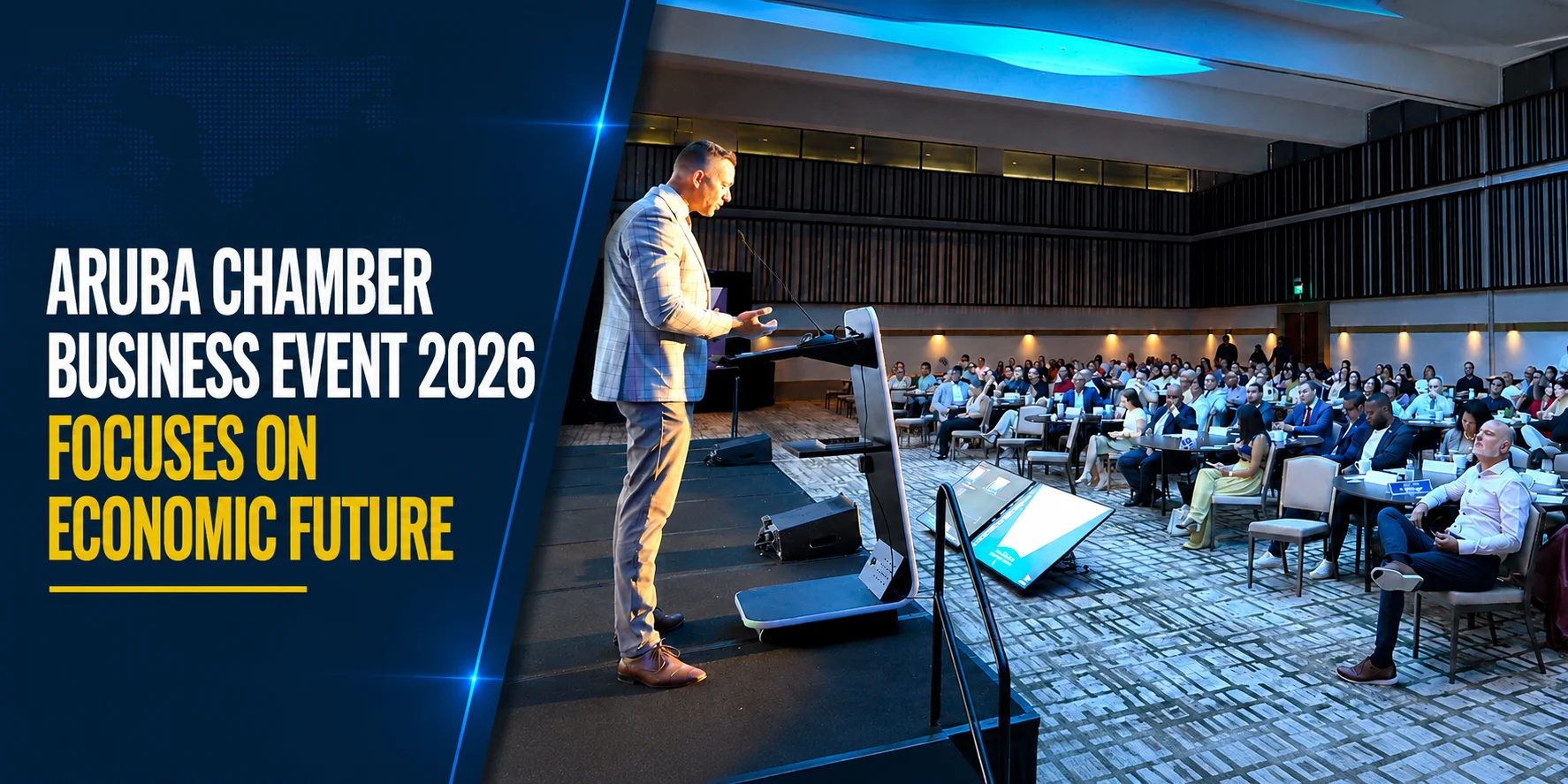
ORANJESTAD (AAN) – Aruba Chamber Business Event 2026 brought together nearly 300 business leaders, government representatives, professionals, and stakeholders to discuss the island’s long-term economic future. Held at the ballroom of The St. Regis Aruba Resort, the event centered on the theme “Beyond Tourism: Building Aruba’s Next Economy – From Volume to Value. From Dependence to Diversification.”
The conference explored one of Aruba’s most pressing questions: how the island can continue creating prosperity while preserving the qualities that make it unique. Opening the event, Aruba Chamber of Commerce President Diederik Kemmerling said Aruba has reached a pivotal moment where tourism has delivered significant economic success, but future growth requires difficult decisions and a shared vision for sustainable development.
Keynote speakers Tony van Veen, CEO of DIY Media Group in the United States, and Miles Mercera, CEO of CINEX Curaçao, emphasized that Aruba’s tourism industry has been highly successful but is also placing increasing pressure on infrastructure, traffic, housing, natural resources, and the visitor experience. They encouraged the island to shift from a model focused on visitor numbers to one centered on higher-value, sustainable tourism while using tourism as a foundation for building a more diversified economy.

Among the recommendations presented were stronger management of tourism growth, limiting cruise tourism to a maximum of one ship per day, reviewing approvals for new hotel developments, and regulating the expansion of short-term rentals such as Airbnb. The speakers also proposed introducing an Environmental Impact Tax for activities that place additional pressure on Aruba’s environment, ensuring those contributing to environmental impacts also help fund conservation efforts.
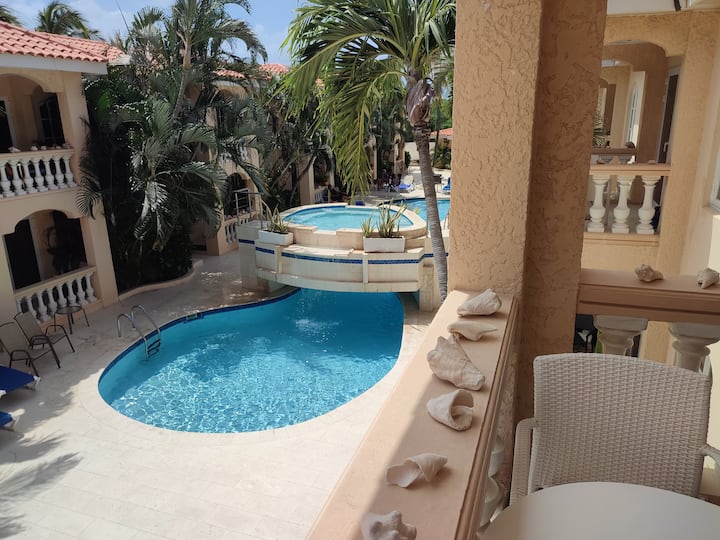
Housing affordability was another major topic. Proposals included a two-tier property transfer tax system that would provide lower rates for local residents while applying higher rates to non-resident buyers and commercial investors. Speakers also recommended establishing an Aruba Future Fund, with a fixed portion of tourism-related tax revenue invested in economic diversification, housing initiatives, entrepreneurship, fintech, digital industries, and the creative sector. They stressed the importance of expanding access to micro-financing while incorporating financial literacy, digital skills, and artificial intelligence into Aruba’s education system.
The event also highlighted the need to measure economic success beyond gross domestic product by considering indicators such as quality of life, community well-being, and opportunities for residents. Regional collaboration between Aruba, Bonaire, and Curaçao was presented as another strategy to strengthen competitiveness across the Dutch Caribbean.
The panel discussion featured Omar-Steve Lejuez of Privada Stays, Vincent van Rutten of Sentoo, and Humphrey “Fito” Croes of Cas Bon Group, with Gavril Mansur serving as moderator. Panelists agreed that creating a more sustainable economy is a shared responsibility between government and the private sector. They discussed the importance of building more housing for local families, encouraging socially responsible tourism development, and distinguishing between local homeowners who rent a single property and commercial operators managing multiple short-term rentals.
Local artist Elvis Tromp added a creative element to the event by producing a live painting illustrating Aruba’s economic transformation, while youth parliament Minister of Culture Phillip-Johnson Martinus interpreted the artwork through poetry.
The Aruba Chamber of Commerce thanked keynote speakers, panelists, sponsors, and participants for contributing to the event. The organization said it remains committed to facilitating ongoing dialogue between the private sector, government, and the community as Aruba continues shaping a more resilient, diversified, and sustainable economy.