


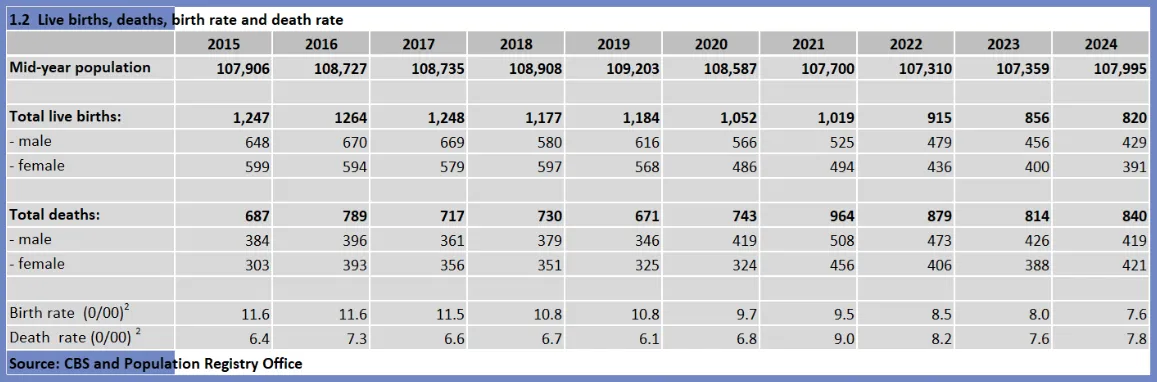
Recently published data from the Central Bureau of Statistics (CBS) indicates a significant decline in birth and fertility rates across Aruba. The detailed reports, released in April 2026, offer a comprehensive overview of the island’s shifting demographic landscape. They highlight critical changes in population growth, birth patterns, and family trends that are currently shaping the social and economic future of the country.
According to the CBS, the evolution of Aruba’s population is the result of both natural demographic shifts and migration patterns. While the island enjoyed decades of growth, recent statistics indicate a deceleration driven by lower fertility levels and an aging local population. Experts observe that Aruba is following a trajectory common among small island economies, where birth rates gradually decrease while the proportion of elderly residents increases. These demographic shifts carry substantial implications for the healthcare system, educational planning, and the labor market.
The CBS analysis pays close attention to the age distribution of new mothers, revealing that women are increasingly choosing to have children later in life. This trend correlates with higher education levels, increased professional participation among women, and changing economic priorities. Furthermore, the report monitors teenage pregnancy rates among mothers aged 15 to 19 as a vital social indicator. Health officials note that improved sexual education and access to reproductive care have contributed to regional declines in these numbers, a pattern that Aruban policymakers continue to track.