


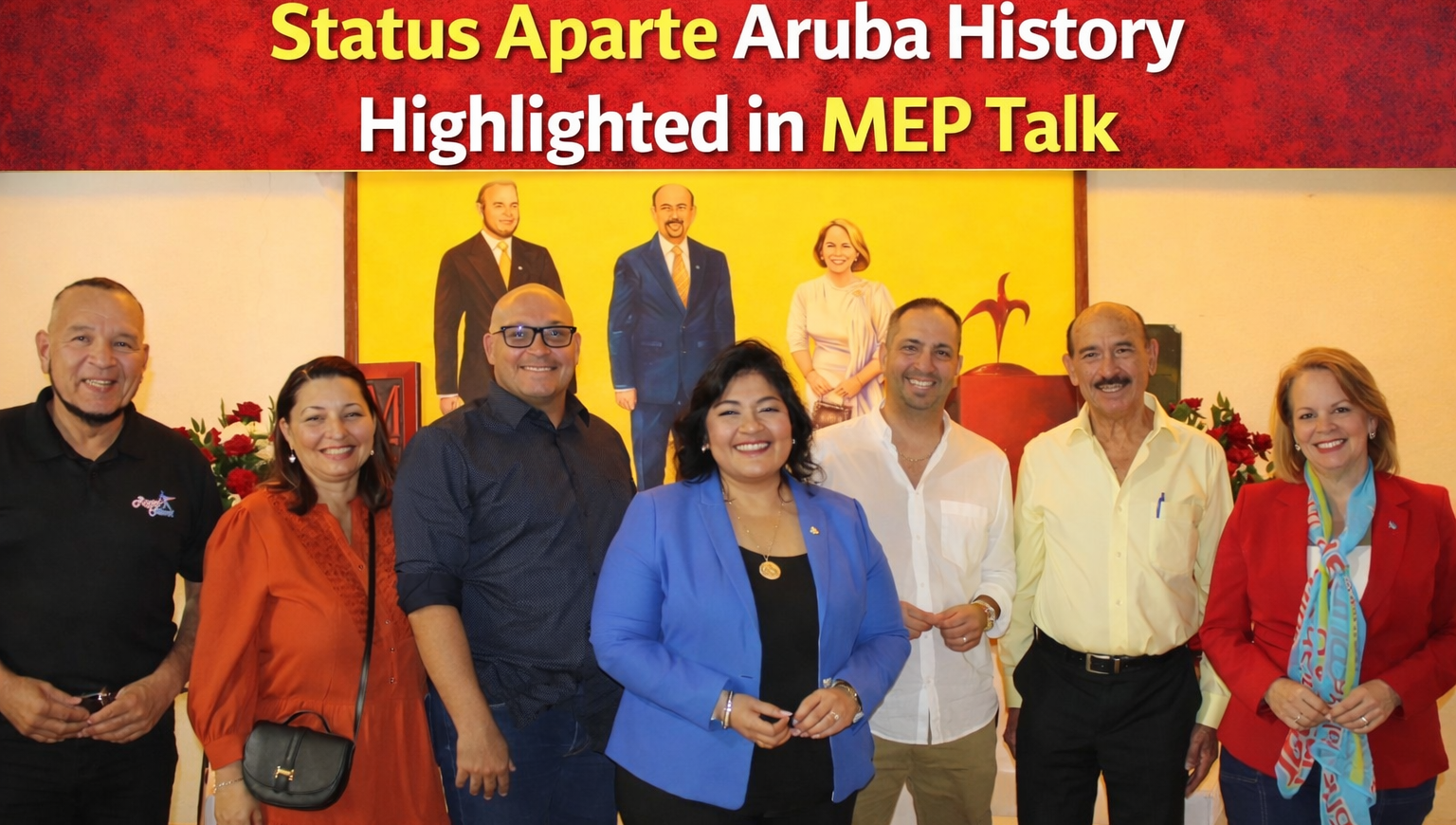
MEP parliamentarian Xiomara Maduro delivered a presentation highlighting the Status Aparte Aruba history during an event held at the headquarters of the Movimiento Electoral di Pueblo (MEP). The activity formed part of the commemoration marking 40 years of Aruba’s Status Aparte.
During her presentation, Maduro guided the audience through the important historical moments that shaped Aruba’s path toward achieving its autonomous status. The talk explained how the movement for separation from the Netherlands Antilles developed from early demands for greater autonomy.
According to Maduro, the struggle for autonomy can be traced back to early political actions in 1933 and the major 1947 demonstration, when thousands of Arubans publicly expressed their desire for greater self-governance.

Maduro also highlighted the central role of Betico Croes, who entered politics in 1967 and later founded the MEP party in 1971. The party was established with the goal of fighting for an Aruba that was fair, united, and proud of its identity, based on values such as social justice, love for Aruba, national unity, and autonomy.
One of the key historical events discussed during the lecture was the mass demonstration of March 18, 1973, at Wilhelmina Stadium, where thousands of Arubans gathered to demand an autonomous status within the Kingdom of the Netherlands.
The movement for self-determination continued to grow during the 1970s. Maduro recalled the Marcha di Libertad, also known as the Marcha di Flambeu, which took place on March 18, 1975. This march symbolized the determination of the Aruban people to achieve political freedom.
Another crucial moment in the Status Aparte Aruba history was the referendum held on March 25, 1977, when 82% of voters supported separation from the Netherlands Antilles. The result provided a strong democratic mandate for Aruba to negotiate with the Netherlands regarding the realization of Status Aparte.
Maduro also referred to the period of protests and social mobilization known as “Augustus Scur” in 1977. During this time, the Aruban population expressed frustration after MEP won the parliamentary elections but was unable to form a government. The protests and general strike contributed to increasing pressure on the Netherlands to begin dialogue about Aruba’s political future.
During the talk, Maduro also explained how March 18 gained additional significance in Aruba’s history. In 1976, the date was chosen to honor historical leaders such as Juancho Yrausquin, Henny Eman, and Shon A. Eman, and that same year Aruba officially adopted its national anthem and flag.
Maduro further discussed the diplomatic negotiations that followed the referendum. Aruban delegations participated in several commissions and international conferences, which eventually led to the Round Table Conference on March 12, 1983, where the Netherlands recognized Aruba’s right to self-determination. This process ultimately resulted in the official introduction of Status Aparte on January 1, 1986.
After the presentation, the event continued with a conversation featuring Nel Oduber, honorary leader of MEP and former Prime Minister of Aruba. During the dialogue, Oduber shared personal memories of the political struggle that led to Status Aparte and provided additional insight into the key decisions made during that historic period.
Oduber also connected the Status Aparte Aruba history with current discussions about the Rijkswet HOFA, emphasizing that topics such as autonomy, governance, and responsibility within the Kingdom of the Netherlands remain relevant for Aruba today.
The event concluded with reflections on the importance of national identity, unity among the people, and continued political commitment to protecting the autonomy that Aruba achieved after decades of struggle.