

The RECIP engine expansion Aruba continues as a new and more powerful reciprocating engine has been transported from Barcadera to the WEB Aruba NV facility in Balashi, marking another major step in Aruba’s energy transition.
Aruba no longer relies on traditional boiler systems for electricity and water production. Instead, the island uses highly fuel-efficient reciprocating engines (RECIP), which help reduce fuel consumption, lower costs, and maximize electricity generation.
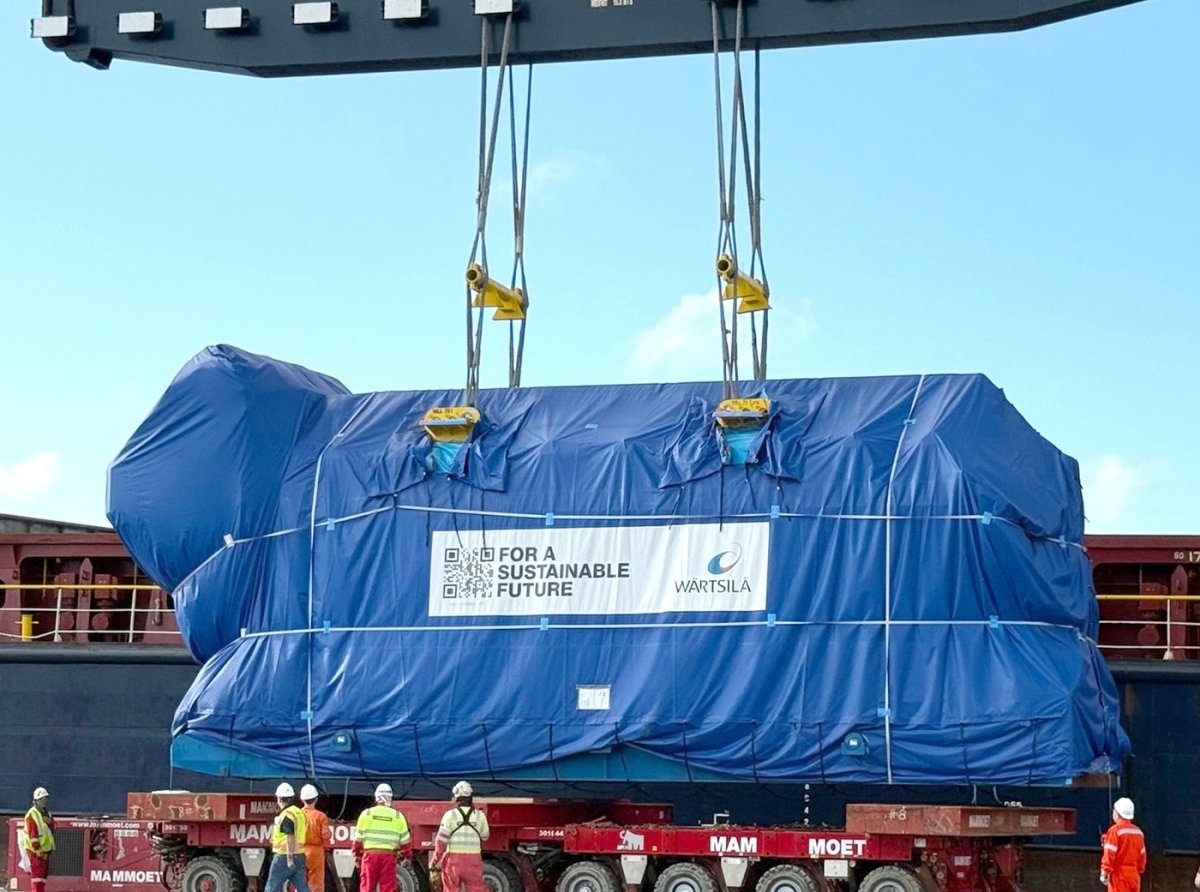
WEB Aruba NV already operates several RECIP engines in combination with the Molina Power Plant and solar parks, supplying reliable electricity across the island. As part of the RECIP-3 Plant Expansion Project, the newly arrived engine was transported on Monday, January 26, from the Barcadera port to the WEB facility.

The engine is manufactured by Wärtsilä, a Finnish company known for continuously modernizing its engines to improve efficiency. This new unit produces significantly more power than existing RECIP engines currently in operation.
Due to its massive size and weight—approximately 300,000 kilograms (300 tons)—the transport required special permits and temporary road closures coordinated with the police. At the WEB site, a specially engineered vibration-resistant foundation was constructed to support the engine.
Each RECIP engine-generator set now delivers 18 megawatts (MW) of electricity, which is 7 MW more than the current RECIP-3 units. The transport operation began early in the morning, with the engine unloaded from a cargo vessel and placed on a specialized multi-wheel trailer designed to handle extreme weight.
Additional precautions were taken along the route, including reinforcing a bridge near Rooi Bosal with temporary steel plates to ensure structural safety during the transport. These complex operations required extensive planning and coordination.
According to information obtained by DIARIO, another RECIP engine and its corresponding generator will be transported in the coming weeks. The RECIP engine expansion Aruba project is scheduled for completion by August, after which Aruba will benefit from increased electricity generation capacity and improved energy security.