

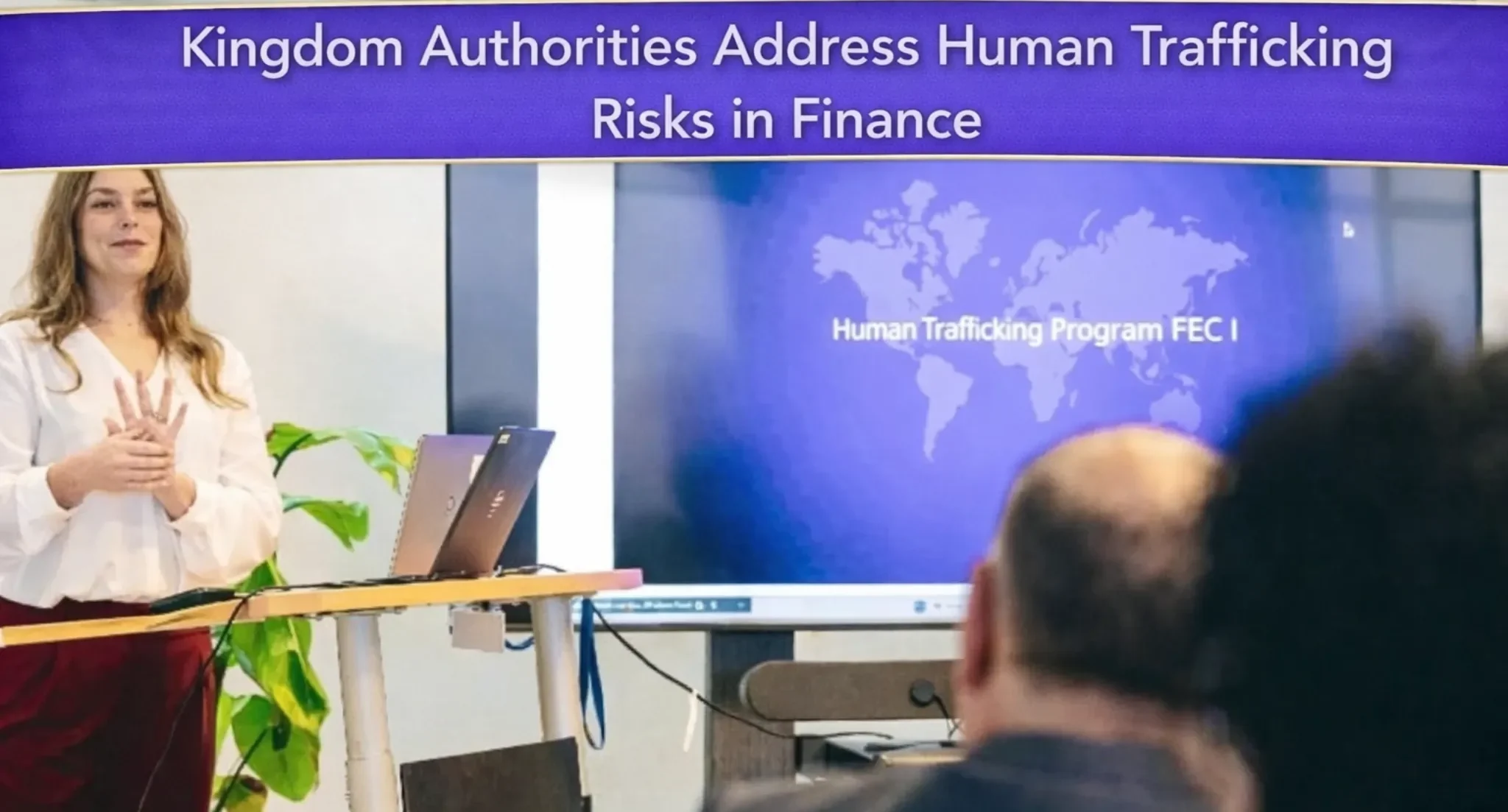
Oranjestad — Kingdom supervision authorities from across the Netherlands gathered in Aruba on March 31, 2026, for a high-level seminar addressing the relationship between human trafficking and the financial system, marking a significant expansion in the approach to combating this crime.
The seminar, organized by Banco Central di Aruba (BCA), brought together supervision professionals from the entire Kingdom of the Netherlands to analyze how human trafficking-related exploitation manifests in financial flows.
Financial Dimension of Human Trafficking

Human trafficking is often addressed from the perspectives of criminal justice or social policy. This seminar focused specifically on the financial dimension: how exploitation related to human trafficking can appear in financial flows, and how supervisors and financial institutions can better identify and react to these risks.
Kingdom-Wide Participation
The event was attended both in person and virtually by supervision professionals from multiple institutions:
- Banco Central di Aruba (BCA)
- De Nederlandsche Bank (DNB)
- Centrale Bank van Curaçao en Sint Maarten (CBCS)
- Autoriteit Financiële Markten (AFM)
Representatives from the “Coördinatiecentrum Mensenhandel Mensensmokkel Aruba” (CMMA) and Rabobank Netherlands also participated.
Program and Presentations
The program opened with a CMMA presentation on human trafficking in the Caribbean part of the Kingdom of the Netherlands, followed by a presentation from representatives of the “Financial Economic Crime Investigations” department of Rabobank Netherlands on how patterns related to human trafficking can become visible in financial data.
Subsequently, supervision authorities shared their experiences regarding risk indicators, supervision methods, cooperation mechanisms, and areas where more reinforcement may be necessary.
Panel Discussion
During a panel discussion moderated by CMMA, representatives from supervision authorities spoke about how human trafficking risks can be addressed within the existing integrity supervision framework, including customer due diligence, transaction monitoring, and cooperation with financial intelligence units and judicial entities.
Key Conclusions
The most important conclusion from the seminar was that effective detection depends on recognizing patterns and networks rather than isolated transactions. Addressing human trafficking within the financial system requires close cooperation and exchange of information between relevant authorities throughout the Kingdom of the Netherlands.