

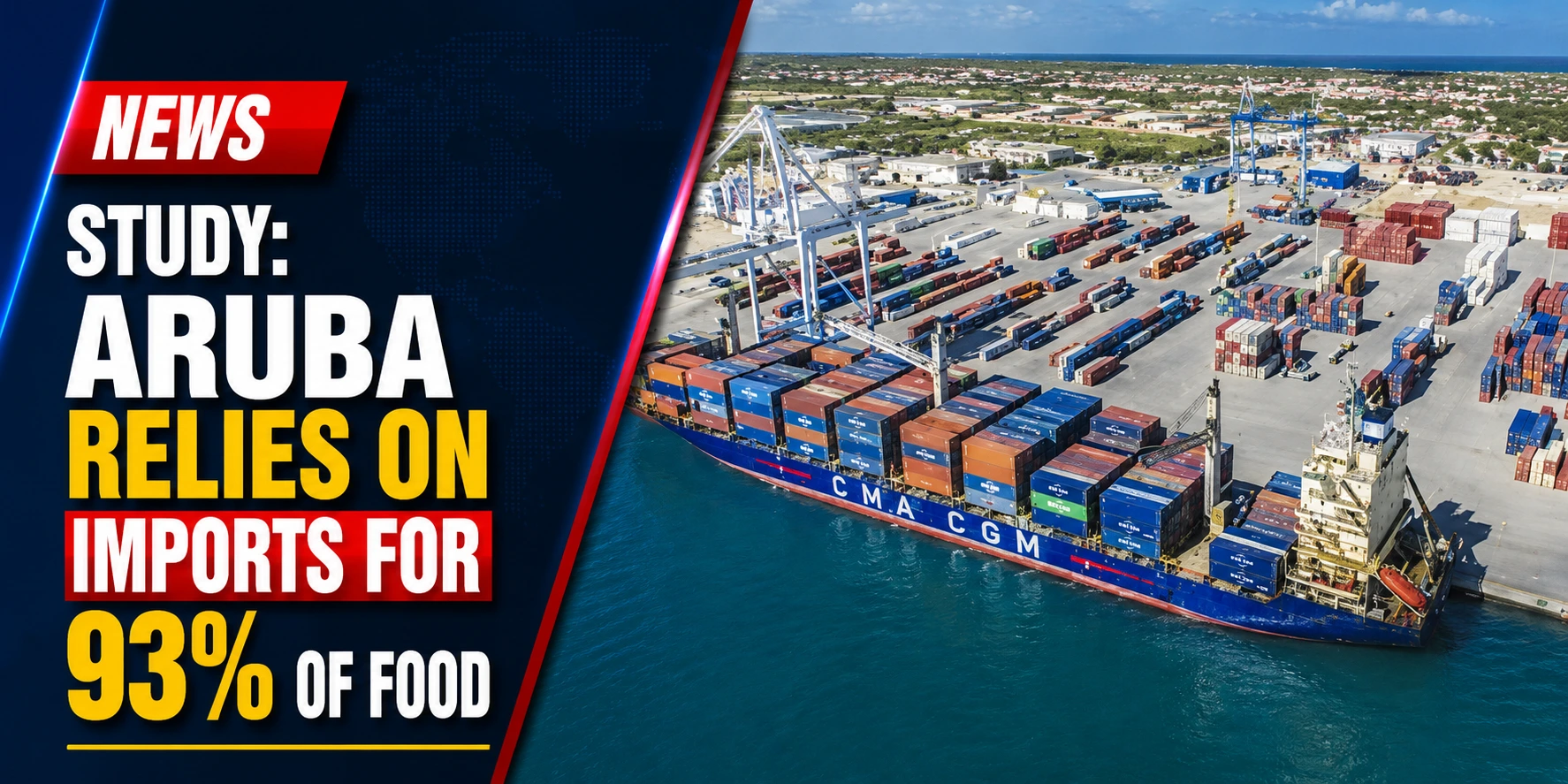
A new study regarding local production in the Dutch Caribbean indicates that while Aruba possesses a small but modern agricultural sector, over 93% of food consumed on the island is imported. Research conducted in Oranjestad highlights that Aruba has a self-sufficiency rate of just 6.57%, placing it lower than Curaçao and Bonaire, but higher than Saba and Sint Maarten.
Despite the low overall percentage, the study attributes the figure to high demand from a large resident population and a robust tourism sector rather than a lack of capability. Specific areas show strong results; approximately 90% of mushrooms consumed are produced locally. Local egg production covers more than 40% of demand, while hydroponic vegetables, including lettuce and leafy greens, account for over 21% of local consumption.
Researchers note that Aruba demonstrates how modern technology and intensive agriculture can succeed despite limited land. Only about 34 hectares are used for food production, comprising less than 0.2% of the island’s total surface area. The government continues to invest in this sector through initiatives like the Agri-Innovation Park, which focuses on home farming, hydroponics, and professionalization.

The report warns, however, that Aruba remains vulnerable to disruptions in international import chains and logistics. According to the calculations, if imports were to stop completely, the island has less than two days of vegetable supplies.