


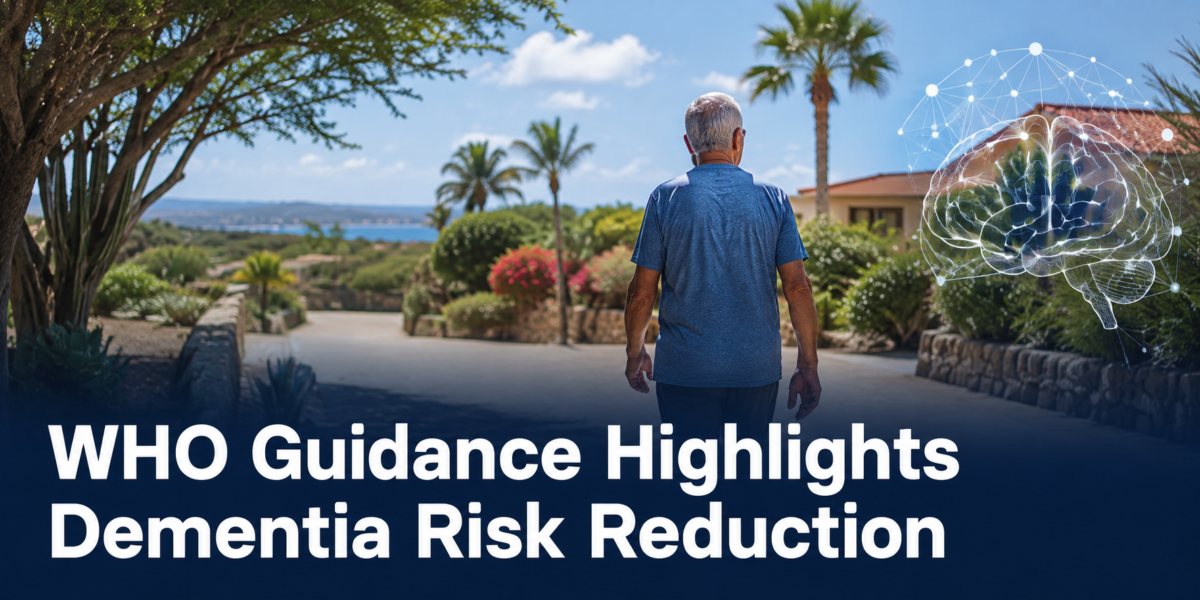
Updated World Health Organization guidance says addressing modifiable health and lifestyle factors can help reduce or delay dementia risk, a message highlighted for Aruba by Fundacion Alzheimer Aruba.
The WHO released the second edition of its dementia risk-reduction guidelines in July 2026 and published an executive summary on September 2. The guidance says as much as 45 percent of dementia risk may be linked to factors that can be modified across a person’s lifetime.
What the updated guidance recommends
The recommendations include regular physical activity, stopping tobacco use, reducing alcohol consumption, eating a healthy diet and staying socially and mentally active. The WHO also identifies air pollution as an environmental risk factor and emphasizes the management of high blood pressure, diabetes and high cholesterol.

Hearing aids may be offered as part of a broader risk-reduction approach when hearing loss is present. The WHO does not recommend vitamins B or E, omega-3 supplements, or multivitamin and mineral supplements solely to prevent cognitive decline when a diagnosed deficiency is absent.
Reducing risk is not a guarantee
Dementia is caused by diseases and injuries that affect the brain, and there is currently no cure. Risk reduction does not mean every case can be prevented. Individual health decisions should be discussed with a qualified healthcare professional, particularly when a person has existing medical conditions or concerns about memory and thinking.
The WHO estimates that more than 57 million people worldwide live with dementia and nearly 10 million new cases are diagnosed each year. Alzheimer disease is the most common form, accounting for an estimated 60 to 70 percent of cases.
Why the guidance matters in Aruba
Fundacion Alzheimer Aruba shared the updated information as part of its public education work. Neuropsychologist Drs. Melva Croes-Yánez summarized the international guidance and its relevance to older adults, families and caregivers on the island.
The recommendations place prevention within everyday health policy as well as personal behavior. Access to preventive care, opportunities for exercise and social participation, cleaner air, and timely treatment of chronic conditions all influence whether people can act on the advice.
Sources: 24ora and the World Health Organization.