
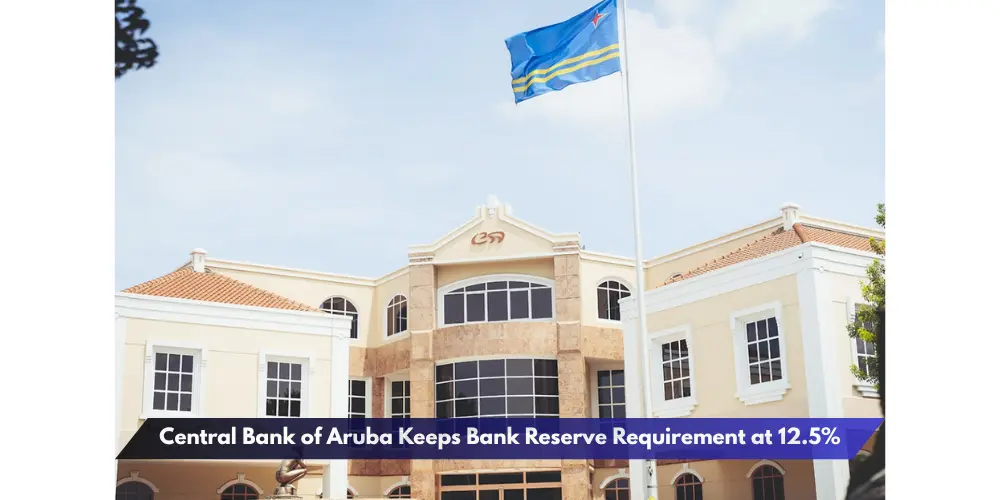
ORANJESTAD, Aruba – The Aruba Bank Reserve Requirement remains at 12.5% after the Central Bank of Aruba (BCA) decided to maintain the mandatory reserve rate for commercial banks as part of its monetary policy.
The decision was taken during a meeting of the BCA’s Monetary Policy Committee on June 15, 2026, and the 12.5% reserve requirement remained in effect from July 1, 2026.
According to the Central Bank, several important monetary and economic indicators were considered when making the decision. These included Aruba’s foreign exchange reserves, the island’s relatively low inflation rate and continuing uncertainty surrounding the international economy.

One of the main factors supporting the decision was the level of Aruba’s foreign exchange reserves. As of May 22, 2026, foreign exchange reserves were substantially above the adequacy standards monitored by the Central Bank of Aruba.
The BCA also expects the island’s foreign exchange reserves to remain at adequate levels throughout 2026. Maintaining sufficient reserves is particularly important for Aruba because of the fixed exchange rate between the Aruban florin and the U.S. dollar.
Inflation was another important consideration behind the decision to keep the Aruba Bank Reserve Requirement unchanged.
According to the BCA, both inflation indicators remained at relatively low levels in April 2026. Inflation measured at the end of the month compared with the same month a year earlier stood at approximately 0.8%, while average annual inflation was approximately 0.2%.
These relatively low inflation figures, combined with adequate foreign exchange reserves, contributed to the Central Bank’s decision to maintain its current monetary policy position rather than adjust the mandatory reserve requirement for commercial banks.
However, the BCA also pointed to continuing uncertainty in the global economy as a factor that requires close monitoring.
Persistent geopolitical tensions and other international economic developments could affect both foreign exchange reserves and inflation in Aruba. According to the Central Bank, such developments could cause economic conditions to deviate from the projections currently being used as its baseline.
For this reason, the BCA will continue monitoring monetary and economic indicators closely throughout the year.
The Aruba Bank Reserve Requirement is one of the monetary policy instruments available to the Central Bank. By maintaining the requirement at 12.5%, commercial banks continue operating under the reserve level that has been in place since July 1.
The Central Bank emphasized that it remains prepared to adjust its monetary policy position whenever economic or monetary conditions make such action necessary.
A central objective of this policy remains protecting monetary stability and supporting the fixed exchange rate of the Aruban florin against the U.S. dollar.
For now, adequate foreign exchange reserves and relatively low inflation have allowed the Central Bank of Aruba to maintain the mandatory reserve requirement for commercial banks at 12.5%.