

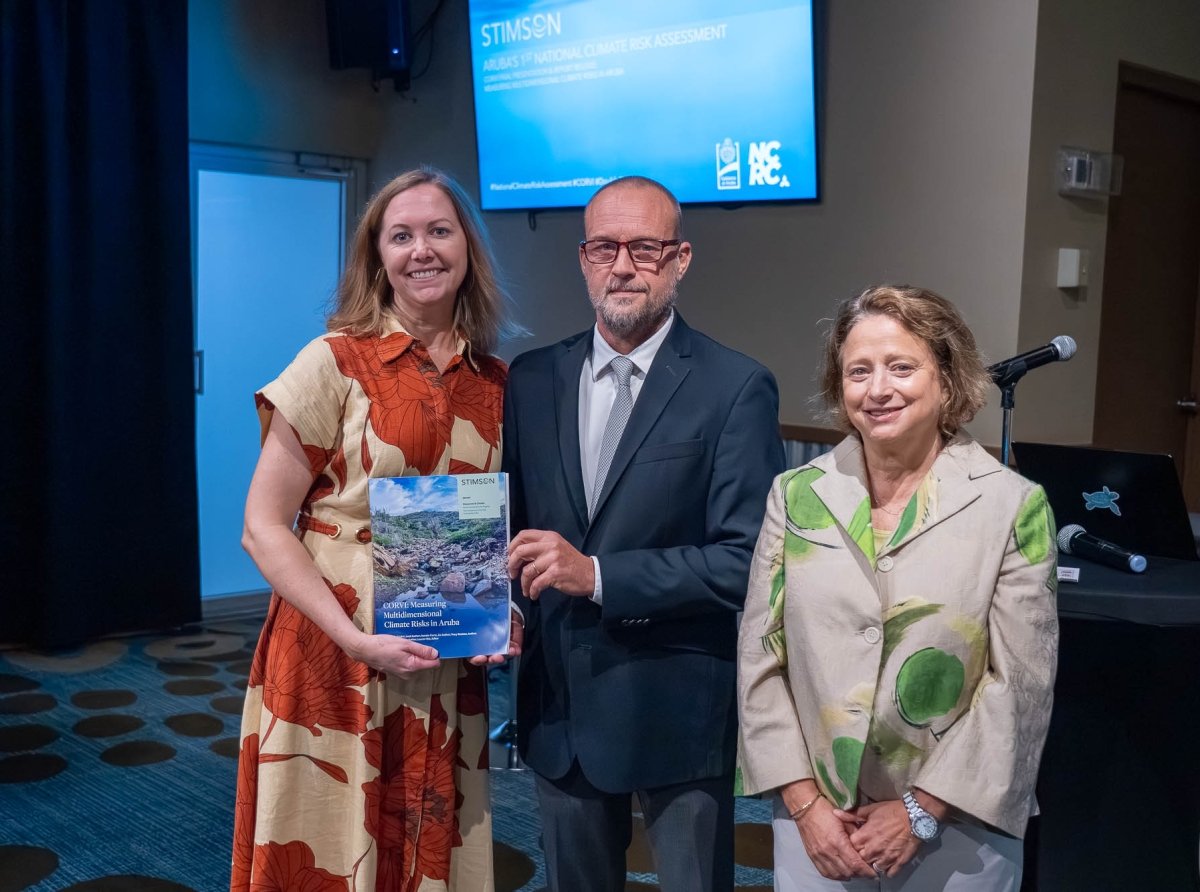
The Stimson Center, a U.S.-based research institute, together with the National Council for Climate Resilience (NCRC), has published the results of Aruba’s first Climate and Ocean Risk Vulnerability Index (CORVI) study. The research was sponsored by the Government of Aruba, Aruba Hotel & Tourism Association (AHATA), Aruba Bank, Aruba Tourism Authority (ATA), Central Bank of Aruba, Metacorp, SETAR, WEB, and Utilities N.V.
The CORVI study explains the significant impacts of climate change on Aruba. Without action, the island faces drastic changes — rising sea levels, increased heat and drought, and coastal erosion — posing threats to housing, healthcare, tourism, the economy, and infrastructure.
According to Lauren Risi, Director of the Stimson Environmental Program, the study identifies three key areas of risk for Aruba:

- The declining and fragile state of natural ecosystems.
- Social and demographic shifts, including a growing and aging population.
- The vulnerability of an economy heavily dependent on tourism.
These risks are interconnected, showing how the health of Aruba’s people, environment, and tourism economy are linked. The findings warn of urgent challenges such as biodiversity loss, uncontrolled construction, community strain, and unsustainable tourism growth — all making Aruba more vulnerable to climate change.
Dr. Ryan R. Peterson, President of the NCRC, stated:
“These findings confirm what many of us already know — our corals are dying, temperatures are rising, and our natural resources are under pressure. This report is a serious reminder that Aruba’s prosperity is tied to the health of our society and environment.”
The CORVI study not only identifies risks but also highlights opportunities for Aruba to strengthen its resilience — through nature restoration, smarter land-use planning, and building a more sustainable and diversified economy.
Minister of Finance, Economic Affairs and Primary Sector, Geoffrey Wever, emphasized:
“Climate change is not a distant threat. It is a growing financial and economic risk today. Rising sea levels, coastal erosion, and extreme heat threaten our infrastructure, financial stability, and natural resources. Building climate resilience is essential for Aruba’s economic and sustainable future.”
This is the 16th CORVI study conducted in the Caribbean region. While each island faces unique risks, many share common threats — reinforcing the need for integrated planning, a sustainable “blue economy,” and climate-smart infrastructure.
Sally Yozell of the Stimson Center noted that CORVI’s results will help guide the next steps to strengthen Aruba’s climate resilience, supporting the Government of Aruba, NCRC, and private sector partners in developing the National Climate Adaptation Plan.
The full Aruba CORVI Assessment Report can be downloaded at ncrc-aruba.org/publications.
Photo Credits : https://diario.aw/categories/noticia/general/aruba-a-haya-su-prome-estudio-nacional-di-riesgo-di-clima
















Discussion about this post