

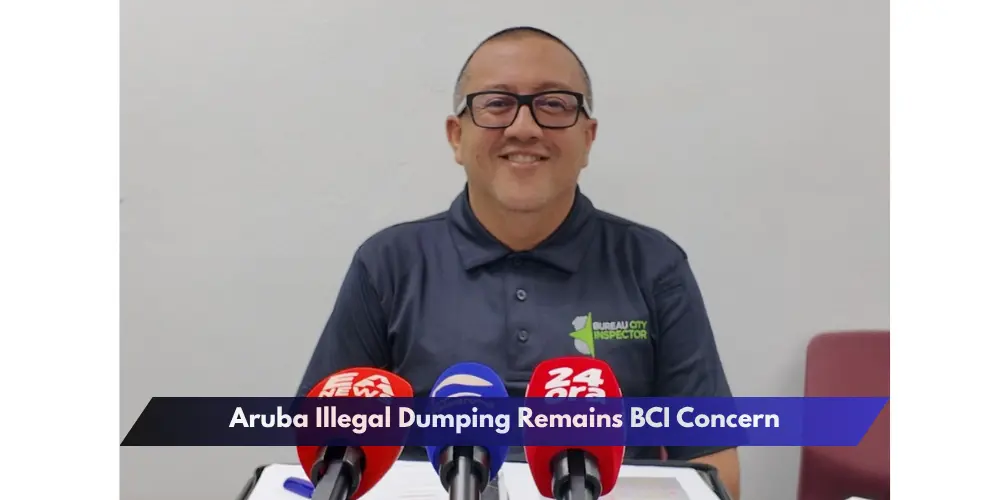
ORANJESTAD, Aruba — Aruba Illegal Dumping remains a persistent problem despite the introduction of a free permanent waste-disposal facility, with Bureau City Inspector warning that residents continue using roadsides, undeveloped land and private property as unauthorized dumping areas.
BCI spokesperson Maikel Gomes said waste, illegal dumps and improper use of land continue to create daily challenges for inspectors and other government departments.
Gomes said the government has introduced alternatives intended to make proper disposal easier, including the permanent Zona di Desperdicio in Barcadera.

The facility allows residents to dispose of permitted waste free of charge and operates from 7:00 a.m. until 3:00 p.m.
Despite that option, BCI continues receiving complaints about waste being dumped elsewhere.
Aruba Illegal Dumping Continues Despite Free Facility
The permanent waste zone opened in June as part of efforts to provide residents with a legal and convenient alternative to illegal dumping.
Government figures showed strong public use during its first weeks, with hundreds of tons of material collected.
Gomes said the availability of a free disposal facility makes continued dumping in Aruba’s countryside and vacant areas particularly concerning.
One challenge for inspectors is that illegal waste is often deposited late at night or early in the morning when officers are not present.
That can make identifying the person responsible difficult even when inspectors later discover the waste.
Private Land Is Not Exempt From Rules
Gomes also addressed what he described as a common misunderstanding involving privately owned and leased land.
Owning property, or holding land under erfpacht, does not automatically give someone the right to turn it into an uncontrolled waste site.
BCI has previously said Aruba’s Algemene Politieverordening contains rules restricting unauthorized dumping and environmental nuisance.
Where inspectors have sufficient evidence, enforcement measures may follow.
However, Gomes explained that larger penalties and certain legal decisions can involve the Public Prosecutor’s Office, depending on the violation and applicable procedure.
Different Agencies Handle Different Problems
The latest comments also clarify that BCI is not responsible for every land or environmental complaint received from residents.
For example, Gomes said cases involving land excavation or removal of sand can fall under the authority of Directie Natuur en Milieu, or DNM.
Questions involving the formal use and management of government, leasehold or other designated land can involve Directie Infrastructuur en Planning, or DIP.
Other complaints may require action from DOW, the Aruba Police Force or another government service.
This means a complaint initially received by BCI may ultimately need to be transferred to another agency with the appropriate legal authority.
FIXI Serves as Entry Point for Complaints
BCI receives many reports through Aruba’s FIXI reporting system.
The system can serve as an entry point for residents reporting problems in public spaces.
Once officials determine which government department is responsible, the complaint can be forwarded to that agency.
Gomes emphasized that after BCI transfers a case, responsibility for handling and completing it rests with the department that has jurisdiction.
The division of responsibilities makes coordination between government agencies particularly important when cases involve environmental damage, land use and enforcement at the same time.
BCI Calls for Greater Public Responsibility
Gomes urged residents to recognize that Aruba Illegal Dumping cannot be solved through enforcement alone.
He called for stronger cooperation from both citizens and government departments, stressing that Aruba’s environment is a shared responsibility.
BCI’s message is that residents who have waste to dispose of should use the legal facilities available rather than abandoning material on roadsides or empty properties.
Government officials have similarly emphasized that the Barcadera waste zone was created to make responsible disposal more accessible.
For BCI, keeping Aruba clean will require enforcement where violations occur, better coordination between responsible agencies and greater willingness from residents to use the proper disposal system.