


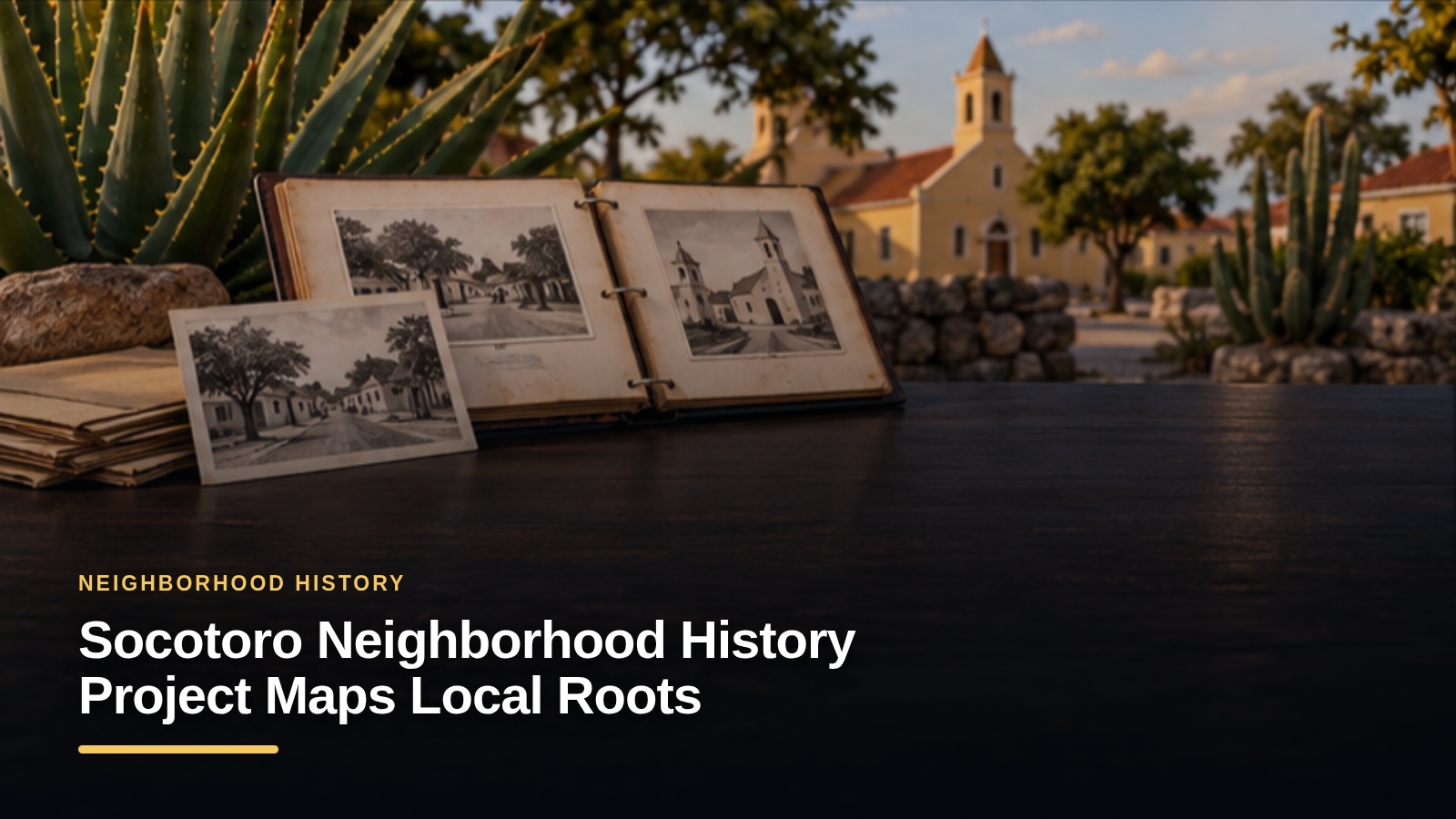
A Socotoro neighborhood history project is documenting the community’s agricultural past, cultural identity and development. Members of Comision Sokotra presented Prime Minister Mike Eman with research materials that include information drawn from the National Archives of Aruba.
Research traces farming and water management
According to the commission’s findings, agriculture shaped the area by the middle of the 19th century. Residents grew beans and corn, while dams supported farming in Socotoro’s dry conditions.
Aloe connects the neighborhood to a wider history
The commission also documented aloe cultivation and the sale of aloe resin. Its account connects the name Socotoro to the island of Socotra near Yemen and says the local name evolved over time after aloe was introduced to Aruba.

The community changed through growth and migration
Housing, schools and commerce expanded as the neighborhood developed. Migration from countries including Venezuela and Colombia helped form a multicultural community, while local athletes, artists, businesses and residents contributed to its identity.
Comision Sokotra is also working on a neighborhood flag inspired by aloe and colors associated with hope and prosperity. The Socotoro neighborhood history initiative was detailed by 24ora.