

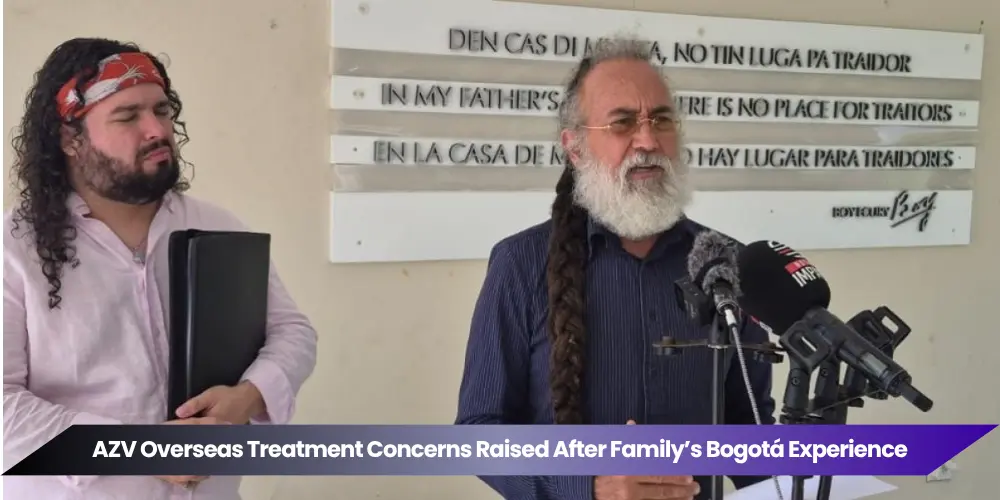
ORANJESTAD, Aruba — AZV Overseas Treatment Concerns have been raised by former parliamentarian Ricardo Croes following what he described as a difficult medical experience involving his son’s treatment in Bogotá, Colombia.
Speaking alongside Jayburtt Dijkhoff, Croes alleged that delays, poor communication and uncertainty surrounding treatment coverage created additional emotional and financial pressure for his family.
Croes said his son travelled to Colombia for medical care but that decisions concerning a recommended immunotherapy treatment were not made quickly enough.

According to Croes, Colombian doctors considered the therapy necessary, but the family was informed that it was not covered through the approved treatment arrangement.
He said the family therefore paid for parts of the treatment and related expenses themselves.
A separate local report also quoted Croes as alleging that requests concerning immunotherapy were delayed and that communication among the medical and administrative parties was inadequate.
Family Questions Treatment Approval Delays
Croes said his family spent several days in Bogotá without his son receiving the specific treatment they expected to begin.
He argued that serious medical cases require faster communication between AZV, specialists in Aruba and hospitals abroad.
According to AZV, overseas medical referrals are initiated by an Aruban specialist when treatment is unavailable locally. Expenses are covered only after AZV grants advance approval.
AZV also states that specialists abroad communicate with AZV through its Medical Referral Aruba digital platform, which centralises patient information and overseas-treatment coordination.
Croes questioned how long approval would take if his son required surgery during a future visit to Colombia.
He said the family later received an email indicating that AZV would cover an operation if doctors determined that surgery was required and asked them to keep the insurer informed.
However, Croes remained concerned about the time required to obtain final approval and a financial guarantee.
Patient Rights and Communication Raised
Croes also raised concerns about patient privacy, consent and the relationship between a patient and medical specialist.
He alleged that confidential information concerning his son’s condition was not handled appropriately.
The specific circumstances surrounding that allegation were not included in the report, and no independent finding of a privacy violation has been published.
Aruba’s medical-treatment law requires healthcare professionals to explain proposed examinations and treatments clearly, including expected risks, consequences and reasonable alternatives.
Medical procedures generally require the patient’s consent. Special consent rules apply when the patient is a minor aged 12 or older.
The law also generally prohibits healthcare professionals from sharing patient information with people who are not involved in the treatment without the patient’s permission. Necessary information may still be shared among professionals directly involved in providing the patient’s care.
Croes said patients and families should be heard when treatment options are being discussed and should receive clear explanations about why a recommended therapy is approved or rejected.
Family Reports Nearly $5,000 in Expenses
Croes said the family spent almost $5,000 during approximately three weeks in Bogotá.
According to him, the expenses included food, medication and medical treatment that the family paid for directly.
He also criticised the meal arrangements available through the approved accommodation.
Croes said the food offered at the hotel largely consisted of unhealthy options that were unsuitable for his son during treatment. The family therefore purchased other meals using its own money.
AZV’s official FAQ says the insurer arranges the appointment, airfare and hotel or apartment for approved overseas treatment.
It also provides a daily allowance directly to the patient. Since August 1, 2025, the published daily allowance for Colombia has been COP 100,000 per day.
The published policy does not mention a separate food allowance for the person accompanying the patient.
Family Preparing to Return to Colombia
Croes said he and his son have returned to Aruba but are preparing to travel to Colombia again at their own expense.
He indicated that the family’s priority is obtaining the medical care they believe his son requires.
Croes said he decided to speak publicly after becoming frustrated with the delays and uncertainty surrounding the treatment process.
He stressed that his criticism concerned the way the case was handled and the difficulties experienced by the family.
The allegations do not establish wrongdoing by AZV or any healthcare professional. A complete assessment would require medical records, correspondence, coverage decisions and responses from the institutions and professionals involved.
Formal Complaint Options Available
AZV provides an online complaint form for insured residents who want to challenge or question its service or decisions.
Patients who are dissatisfied with the quality of medical care, communication, waiting times, professional conduct or privacy protection may also contact the Aruba Health Inspectorate’s complaint centre.
IVA states that every patient in Aruba has the right to submit a formal complaint when dissatisfied with received healthcare or when patient rights may not have been respected. Healthcare providers are normally given six weeks to respond, with a possible four-week extension.
IVA can also receive reports concerning possible risks to patient safety, access to healthcare, waiting times and the handling of confidential information.
The AZV Overseas Treatment Concerns raised by Croes highlight the importance of timely decisions, transparent communication and clear explanations when Aruban patients are referred abroad for serious medical treatment.