

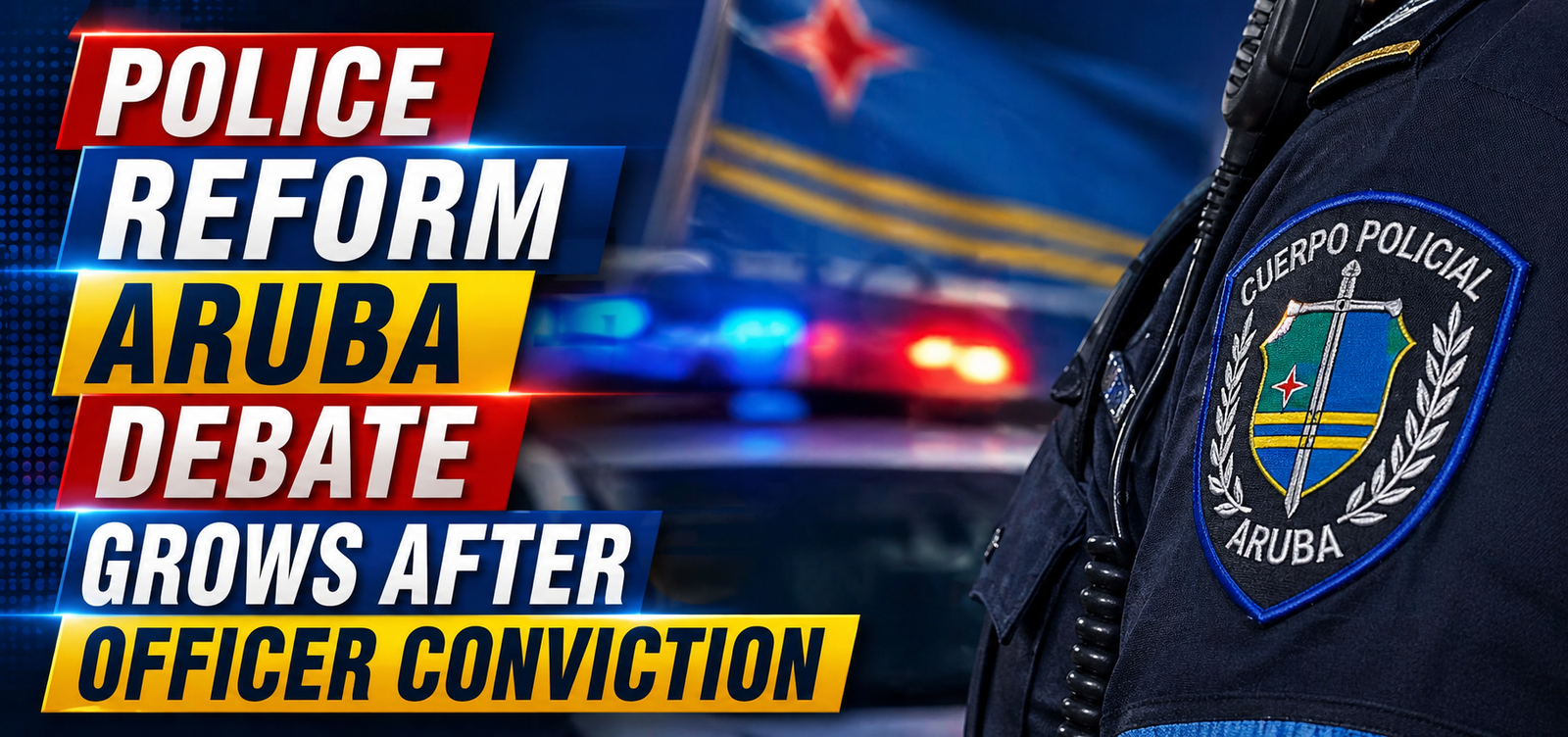
The Police Reform Aruba discussion has intensified following the conviction of two police officers involved in a fatal incident that occurred more than a year ago.
In the recent court ruling, the officers received a three-year prison sentence, with one year conditional. The decision confirmed what many citizens had believed from the beginning — that mistakes were made and accountability was necessary.
While the ruling brings a sense of justice, the Police Reform Aruba debate now shifts toward prevention. The key question being raised is how similar incidents can be avoided in the future.

Critics argue that the case exposed deeper issues within the police force. Over recent years, multiple incidents involving the use of firearms by officers have raised concerns about decision-making under pressure, training standards, and operational guidance.
The Police Reform Aruba conversation highlights that these incidents are not isolated, but rather part of a broader pattern that requires attention. Observers point out that officers may not always be adequately prepared for high-risk situations, especially when dealing with vulnerable individuals.
One major concern raised is the handling of situations involving persons with psychiatric conditions. Experts suggest that such cases require specialized training and experienced personnel, yet there have been instances where less experienced officers were assigned to these sensitive situations.
The Police Reform Aruba discussion also emphasizes the need to review existing weapon-use protocols. Clear guidelines and better training could help officers make safer and more effective decisions during critical moments.
Additionally, staffing practices have come under scrutiny. Assigning younger or less experienced officers to complex operations without proper support increases the risk of escalation and unintended consequences.
The case has sparked a wider public debate about trust in law enforcement and the importance of ensuring that police officers are both well-trained and properly supervised.
Supporters of reform argue that addressing these issues is essential not only for public safety but also for protecting officers themselves. Better systems, training, and protocols can reduce risks for everyone involved.
The Police Reform Aruba debate now stands at a critical point, with calls for concrete action rather than discussion alone.
As Aruba reflects on this case, many believe it represents an opportunity to strengthen the police force, improve accountability, and ensure that future incidents are prevented through meaningful reform.