


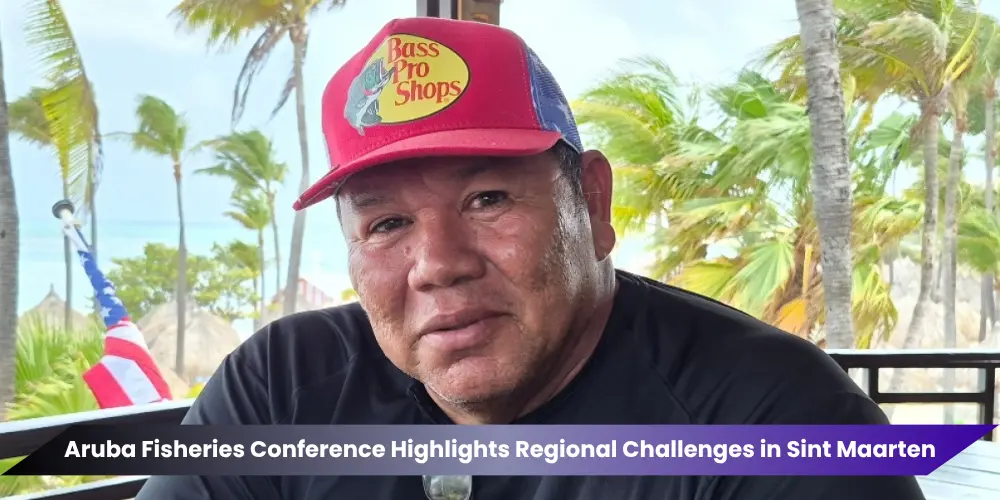
ORANJESTAD, Aruba — The Aruba Fisheries Conference discussions at the recent Dutch Caribbean Agriculture, Livestock and Fisheries Alliance gathering focused on fishing regulations, regional cooperation and challenges affecting fishermen across the islands.
Arthur Giel of the Hadicurari Fishing Centre represented Aruba at the DCALFA Conference in Sint Maarten.
Speaking after the event, Giel said this was his second time attending the regional conference. He previously participated in the gathering held in Bonaire in 2025.

According to Giel, attendance more than doubled compared with the previous conference.
The event also welcomed participants and specialists from islands outside the Kingdom of the Netherlands, allowing them to share their expertise and support other Caribbean territories.
Regional Challenges Discussed
Participants discussed several matters affecting agriculture, livestock and fisheries throughout the Caribbean.
One topic involved methods for controlling plant diseases and agricultural pests.
Giel said Hadicurari also presented information about its organization, operations and financial administration.
He described the foundation as one of the more stable and organized fisheries organizations within the Dutch Caribbean.
According to Giel, Hadicurari has its financial procedures in order and continues to operate with an effective administrative structure.
Some newer participating islands reportedly do not yet have the same organizational systems or resources in place.
Government Representation Needed
Giel said Hadicurari would have preferred greater government representation within the delegation attending the conference.
He explained that the current delegation includes two fishermen, two representatives from Santa Rosa and another recently selected member.
Two additional representatives are reportedly needed to complete the intended seven-member group.
Despite the vacancies, Giel said the organization continues to function properly because sufficient members are usually present to establish a quorum.
Fishing Laws Compared Across Islands
A significant part of the Aruba Fisheries Conference discussion focused on environmental protection laws and fishing regulations.
Representatives from Aruba, Curaçao, Sint Maarten and Sint Eustatius discussed the rules affecting fishermen and the difficulties they experience while carrying out their work.
Each island shared concerns about local legislation, restrictions and the practical effects of fishing regulations.
Giel said Bonaire has clearly established rules governing activities such as catching lobster and conch.
However, regulations are not applied consistently across all Dutch Caribbean islands.
According to Giel, fishermen in Saba are permitted to catch lobster and conch under conditions that may be more flexible than those applied elsewhere.
This difference has led representatives from other islands to question why certain fishing activities are allowed in one territory but restricted in another.
Islands Exchange Plans and Experience
Conference participants also reviewed existing projects, future plans and developments that have already taken place within their respective islands.
The gathering created an opportunity for fishing organizations, agricultural representatives and government-related institutions to compare their policies and learn from one another.
The increased number of participants demonstrated growing regional interest in cooperation involving food production, fisheries and sustainable resource management.
Giel said the exchange of experience from both Kingdom and non-Kingdom islands was one of the strongest aspects of the conference.
The Aruba Fisheries Conference participation gave Hadicurari an opportunity to present its work while raising concerns about regulatory differences and challenges faced by local fishermen.
The organization is expected to continue participating in regional discussions aimed at strengthening cooperation and developing clearer, more practical rules for the Caribbean fishing industry.