
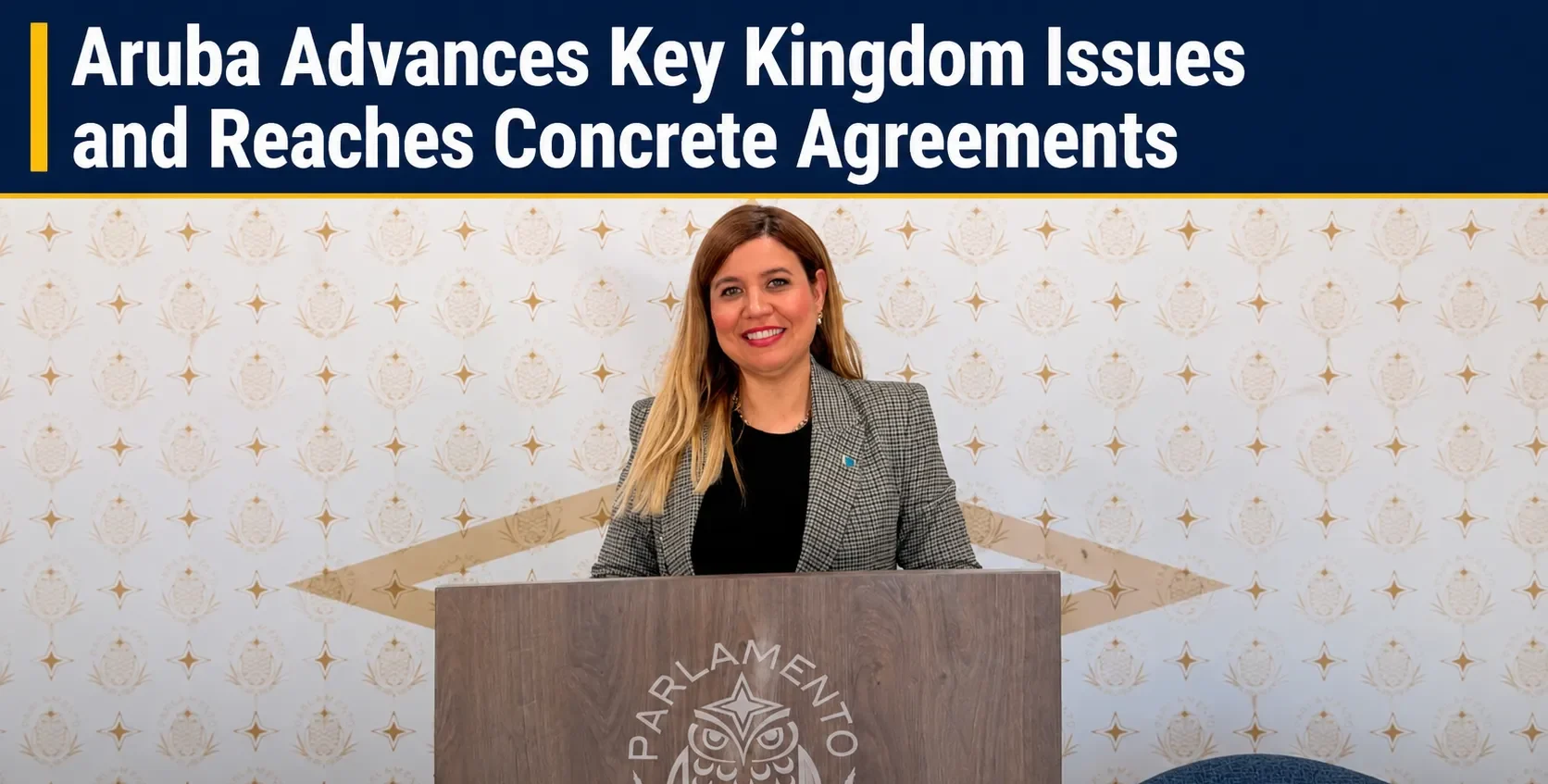
ORANJESTAD (AAN) – Aruba’s parliamentarians recently concluded an intensive and productive program in the Netherlands as part of the Tripartite and Interparliamentary Kingdom Consultations (IPKO) and several official working visits. According to Jennifer Arends-Reyes, Chair of the Kingdom Affairs and Foreign Relations Commission of Aruba, the delegation successfully raised critical and sensitive topics on the Kingdom agenda and secured agreements to move forward with concrete actions on key national issues.
Arends-Reyes emphasized that Aruba must continue to actively participate in discussions shaping the Kingdom’s future while defending the interests of its citizens in all relevant forums.
“Aruba ensured its voice was heard on fundamental topics for the Kingdom’s future, including the historical legacy of slavery, dispute resolution mechanisms, and democratic deficits. Now, it is essential to follow up and translate these agreements into tangible outcomes,” she said.

A major outcome of the Tripartite meeting was consensus among Aruba, Curaçao, and Sint Maarten to address the historical legacy of slavery as a shared responsibility within the Kingdom. Delegations stressed that recognition must go beyond symbolic gestures, transforming agreements into concrete initiatives in historical research, education, cultural heritage preservation, social reparations, and projects that foster a fairer future for current and future generations.
Other discussions focused on the continuation of the Kingdom’s dispute resolution framework, with Caribbean partners reiterating the need for an independent, impartial, and effective system to manage conflicts among Kingdom members.
Additionally, IPKO approved actions to address democratic deficits within the Kingdom, ensuring that decisions and legislation enacted at the Kingdom level consider the impact on Aruba, Curaçao, and Sint Maarten while providing sufficient participation in decision-making processes.
Aruba’s delegation also engaged in strategic meetings with key institutions. At the Raad van State, discussions included the HOFA process and the importance of a legal framework balancing Aruba’s financial responsibility and autonomy. At Clingendael Institute, the delegation addressed institutional capacity building and the potential effects of international geopolitical changes on small nations like Aruba. Visits to the European Parliament in Brussels explored cooperation opportunities and access to European funding in areas including renewable energy, sustainability, education, innovation, digitalization, and economic development.
According to Arends-Reyes, these meetings confirmed that Aruba has significant opportunities to strengthen its international position, expand cooperation, and create more prospects for future generations.
“Aruba must continue actively participating in discussions that define the Kingdom’s future and our international relationships. Only through this can we ensure our citizens’ interests are represented and build a stronger future for Aruba,” she concluded.