
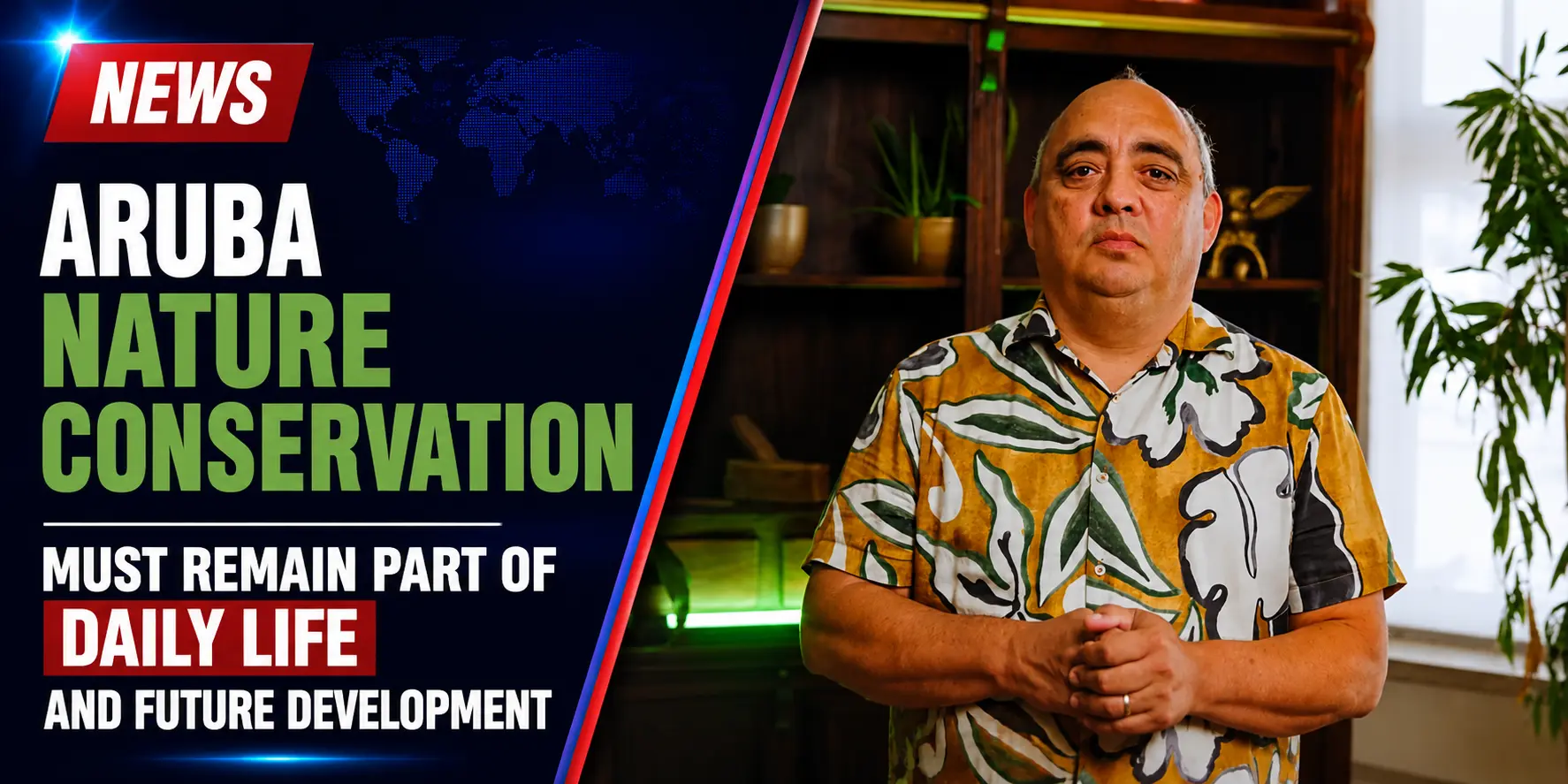
Aruba Nature Conservation should be integrated into the island’s daily life, economic development, and long-term planning, according to Gisbert Boekhoudt, Director of the Department of Nature and Environment (DNM).
Speaking in connection with World Environment Day on June 5 and World Oceans Day on June 8, Boekhoudt emphasized the importance of ensuring that environmental protection remains a central part of Aruba’s future development strategy.
According to Boekhoudt, DNM is actively involved in UNESCO’s “Man and the Biosphere” (MAB) initiative, which seeks to balance environmental conservation, economic growth, and human activity. The program promotes sustainable development while protecting biodiversity and natural resources.

As part of this effort, Aruba Nature Conservation is supported through the National Biodiversity Strategic Action Plan (NBSAP), which was approved in 2024 and serves as a foundation for Aruba’s Biosphere Reserve vision.
Boekhoudt explained that the Biosphere concept recognizes that nature cannot be separated from communities. Protected areas, transition zones, residential neighborhoods, tourism districts, and economic centers all play a role within a broader environmental framework.
“Nature is not only found in protected areas,” he noted. “It is connected to our daily lives, tourism, economy, and community.”
The Department of Nature and Environment continues to work on environmental management plans, policy recommendations, legislative reviews, and proposals related to protected areas and environmental protection measures.
To support Aruba Nature Conservation, DNM collaborates with stakeholders, land users, scientists, and technical experts. The department uses scientific research, remote sensing technology, environmental data, and historical information to assess habitat conditions and monitor vulnerable species.
Bookhoudt also highlighted several initiatives already underway, including reforestation projects, habitat restoration programs, and efforts to strengthen the Aruba Marine Park.
In addition, the Government of Aruba recently signed several memorandums of understanding and cooperation agreements during the Common Good Conference. These agreements focus on sustainability, environmental restoration, and international scientific cooperation.
According to Boekhoudt, these partnerships are essential for strengthening technical expertise and ensuring long-term environmental management.
The discussion also addressed coastal and marine ecosystems. Human activities continue to affect biodiversity and marine environments, making it necessary to strike a balance between economic development and conservation efforts.
Bookhoudt emphasized that Aruba Nature Conservation does not mean preventing development, but rather ensuring that growth occurs in a sustainable and responsible manner that protects natural resources for future generations.
Looking ahead, DNM plans to continue strengthening cooperation among government agencies, environmental organizations, private sector partners, and local communities.
The ultimate goal of Aruba Nature Conservation is to create a development model where sustainability, biodiversity, and environmental responsibility become integral parts of Aruba’s future while supporting economic prosperity and community wellbeing.