

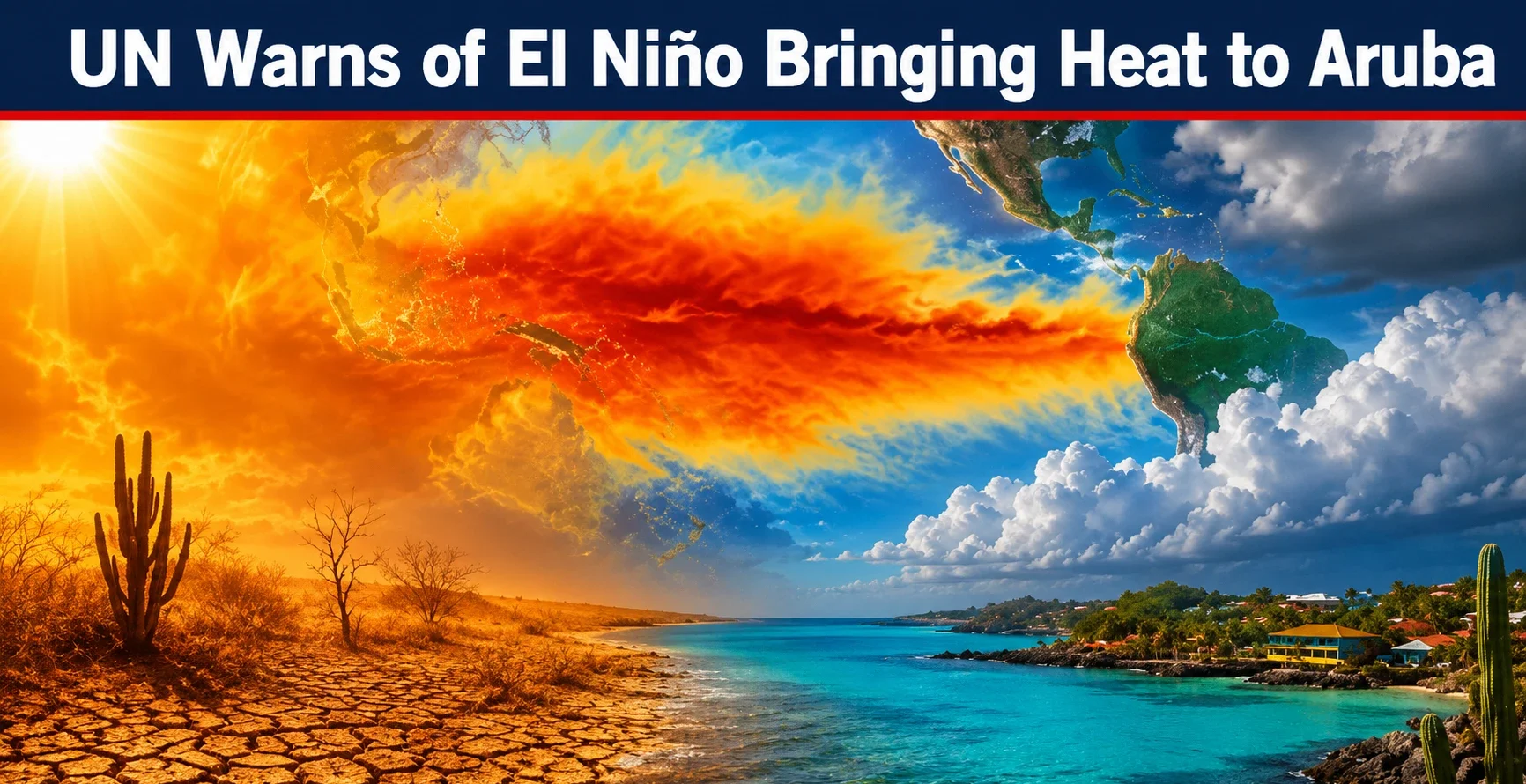
The World Meteorological Organization (WMO), a branch of the United Nations based in Geneva, has issued an alert regarding the high probability of a new El Niño episode. The organization states that the likelihood of this phenomenon has risen to over 80 percent. This weather event is expected to bring heatwaves, drought, and potential record-breaking temperatures to various parts of the world, including the Caribbean islands of Aruba and Curaçao.
According to the WMO, El Niño is characterized by a significant warming of the Pacific Ocean, which disrupts global weather patterns. For Aruba and Curaçao, meteorologists warn that this typically results in a season with significantly less rainfall and extended dry spells. The reduced precipitation, combined with higher air and sea temperatures, is expected to increase the sensation of heat. These conditions may strain water resources, affect local agriculture, and create a stifling environment, particularly for vulnerable populations such as the elderly and outdoor laborers.
While the changing wind currents associated with El Niño generally reduce the number of tropical storms and hurricanes in the Atlantic, experts advise that the development of strong storms is still possible. The UN noted that the last major El Niño period, occurring between 2023 and 2024, played a significant role in establishing global heat records. With current ocean temperatures already surpassing the limits required to officially declare an El Niño episode, the WMO expects new temperature records could be reached in the coming months.