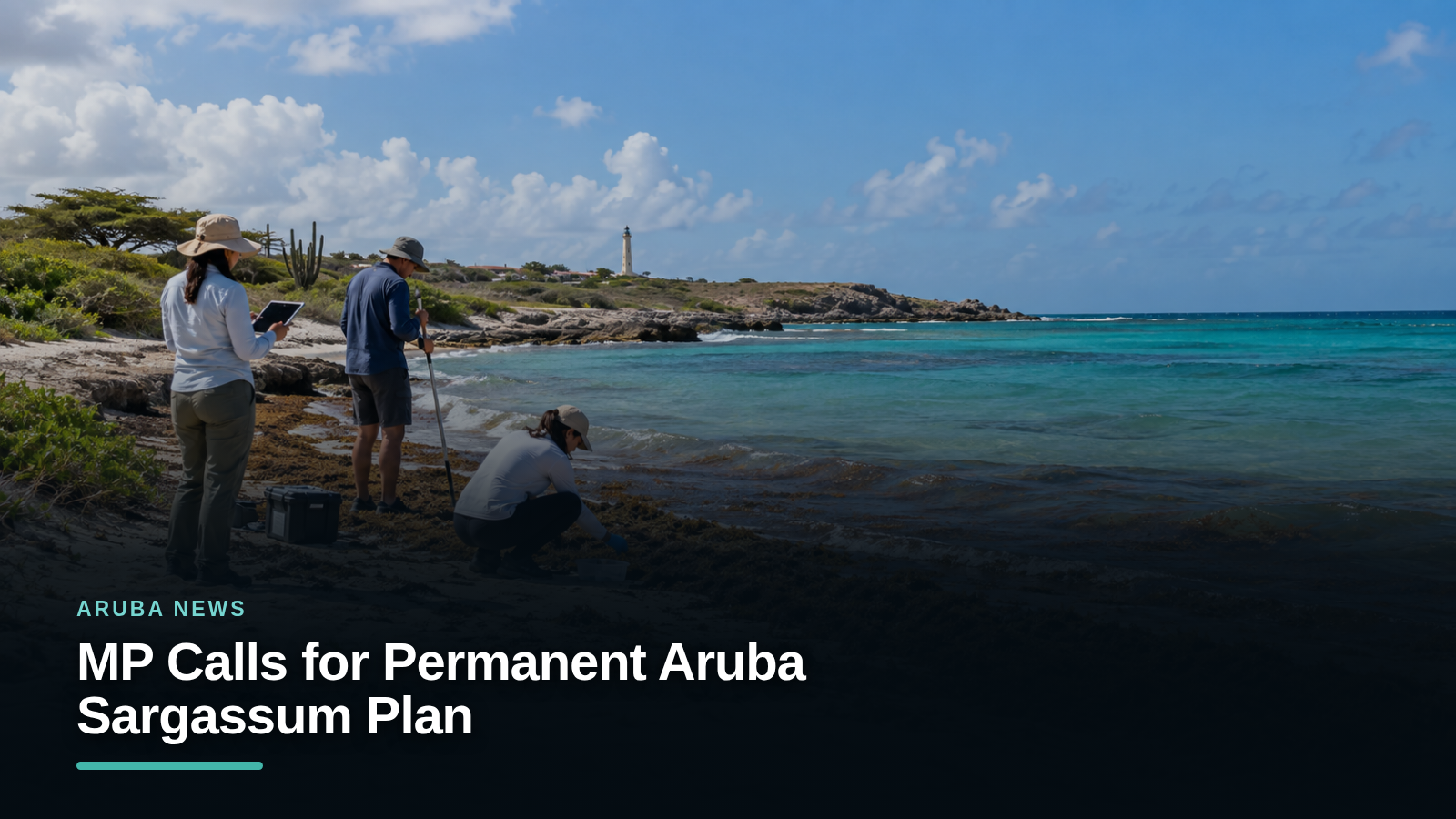


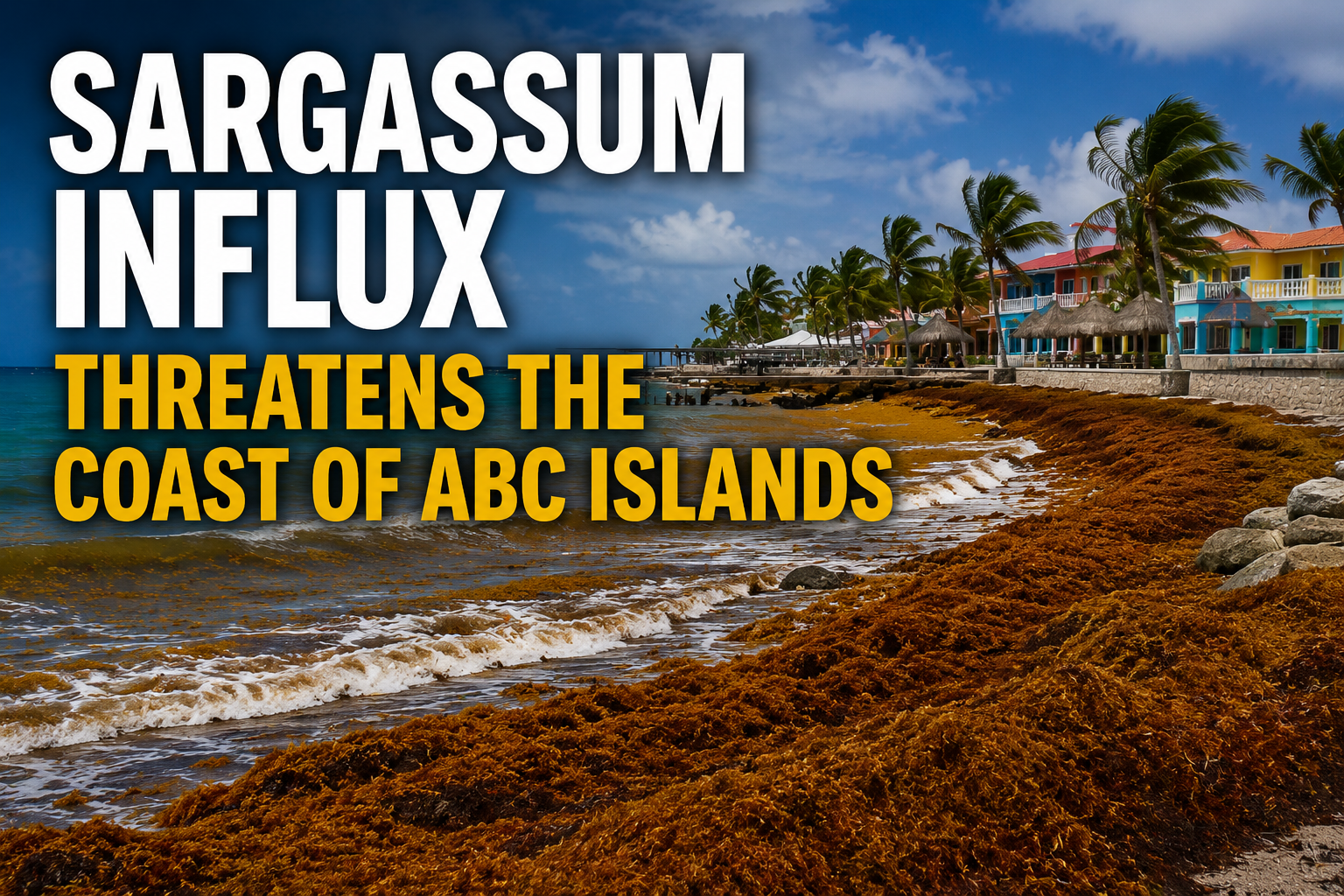
ORANJESTAD (AAN) – The recent arrival of sargassum on the coasts of the ABC islands has raised concerns among residents and environmental experts. While the algae serves as a vital ecosystem for marine life in the open sea, its accumulation on shorelines creates significant ecological and economic challenges.
Scientists have observed that a ‘Great Atlantic Sargassum Belt’ has formed between Africa and Brazil, fueled by rising water temperatures, changing currents, and nutrient pollution. When large quantities wash ashore and decompose, they deplete oxygen in the water and release hydrogen sulfide, a gas known for its ‘rotten egg’ smell.
Although Aruba generally experiences less impact than its neighbors, the east coast remains vulnerable. Experts warn that the problem could become structural for the region due to climate change. They advocate for an integrated approach involving constant monitoring, early warning systems, and regional cooperation to manage the influx effectively.