

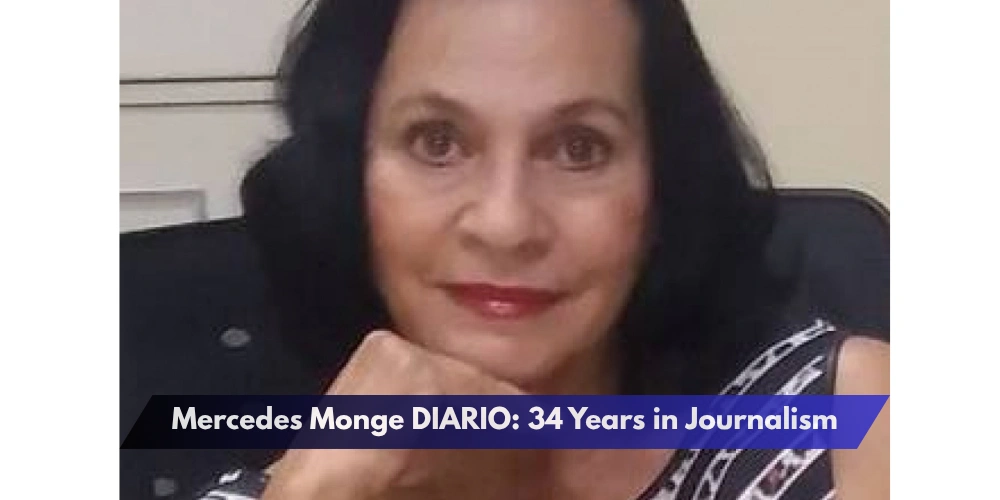
ORANJESTAD, Aruba — Mercedes Monge DIARIO journalist and longtime reporter is reflecting on 34 years in the profession, looking back on the lessons, challenges and contributions that have shaped more than three decades of work documenting life in Aruba.
Monge marked 34 years at Matutino DIARIO on June 1, 2026.
In a personal reflection, she described journalism not simply as a profession but as a form of public service requiring determination, responsibility, respect and a commitment to truth.

Her career at DIARIO began in 1992 and has included reporting, interviews, photography, press conferences and years of documenting events that now form part of the newspaper’s historical archive.
Mercedes Monge DIARIO Career Built Around Service
Monge said one of the most important lessons from her career is that a strong sense of vocation can help a journalist overcome obstacles.
She described journalism as work that demands aptitude, attitude and persistence, particularly when reporters must continue working through difficult circumstances.
For Monge, one of the most important personal achievements has also been learning Papiamento.
Spanish is her native language, but Papiamento gradually became the language she used professionally, socially and at home.
She said mastering the language required considerable effort and assistance from others, but it ultimately became inseparable from her life in Aruba.
Decades Covering Aruba’s Stories
For more than two decades, Monge was highly active in field reporting.
Without always having her own transportation, she travelled to press conferences, conducted interviews, took photographs, listened to sources and recorded information before returning to prepare stories for DIARIO readers.
She sees those articles as part of the newspaper’s wider historical record.
For her, journalism gives people information they can read, discuss and use to form their own opinions.
The stories accumulated over decades also preserve moments from Aruba’s political, social and community life for future generations.
Youth Section Remains Special Achievement
One project Monge remembers with particular pride is Hubentud den Movecion, a youth-focused section developed together with students from La Salle College.
The initiative, led in part by student Siomara Everon, gave young people a dedicated place within DIARIO.
Although the section later continued in a smaller format, Monge considers it one of the most meaningful contributions from her years at the newspaper.
The project reflected her belief that journalism can do more than report events. It can also create opportunities for younger generations to participate, express themselves and develop an interest in communication.
Journalism Requires Responsibility and Empathy
Monge rejects the idea that producing news is easy work.
She described news as the foundation of a newspaper and said journalists have a responsibility to approach information carefully and honestly.
That means seeking reliable sources, checking facts and communicating information with respect and empathy.
For Monge, credibility depends on readers being able to trust that journalists have made a serious effort to present information responsibly.
Those principles are among the most important lessons she believes she learned during her Mercedes Monge DIARIO career and among the values she hopes she has passed on to others.
Part of DIARIO’s Historical Archive
Monge said one source of satisfaction is knowing that her work remains within DIARIO’s archives alongside that of colleagues from different generations.
Readers still return to those archives to find stories and information from Aruba’s past.
She sees that accumulated record as a kind of historical collection containing decades of events, personalities and developments from across the island.
Knowing that her work forms part of that record gives her a strong sense of accomplishment.
Gratitude After 34 Years
Monge concluded her reflection by thanking the people who gave her the opportunity to become part of DIARIO and supported her throughout her career.
She paid tribute to the late Jossy Mansur and also thanked Nuhad, Jossito and her current colleagues.
After 34 years, Monge’s reflection is ultimately about more than longevity.
It is about learning a new language, serving readers, documenting Aruba’s history, creating opportunities for young people and maintaining the professional standards she believes journalism requires.
For Mercedes Monge DIARIO, those experiences represent both what she learned from journalism and what she hopes she contributed to Aruba’s media community.