

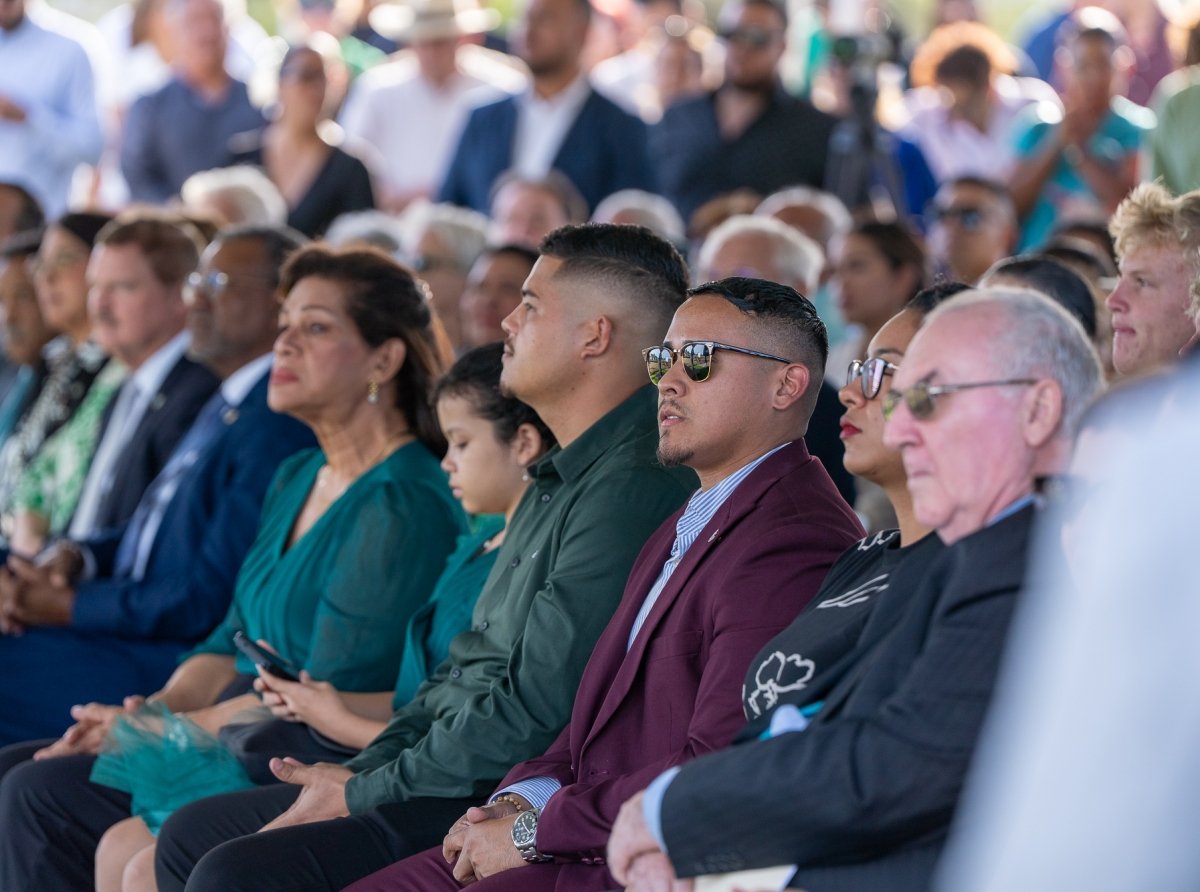
During the official unveiling ceremony of Henny Eman Boulevard on Tuesday, James Hepple, CEO of Tourism Analytics, delivered a powerful reflection on the decisive and visionary role played by Henny Eman in shaping Aruba’s modern tourism industry.
Hepple emphasized that Henny Eman assumed leadership at one of the most challenging moments in Aruba’s history. Following the closure of the LAGO oil refinery in 1985 and the introduction of Status Aparte in January 1986, Aruba faced a deep economic crisis after losing its main economic pillar.
At the time, expectations surrounding Status Aparte were extremely high, yet the island entered a severe recession. Tourism, then only the second economic pillar, was underdeveloped, welcoming roughly 200,000 visitors per year, while high-spending tourism from Venezuela declined sharply. Despite global tourism growth elsewhere, Aruba’s tourism sector stagnated.

According to Hepple, what made Henny Eman exceptional was his ability to recognize tourism as Aruba’s best path forward — and more importantly, his determination to act on that vision. While others had acknowledged Aruba’s tourism potential before, Henny Eman was the leader who successfully turned vision into reality.
Rather than focusing solely on increasing visitor numbers, Eman prioritized strategic investment in infrastructure, high-quality tourism products, and targeted marketing aimed at affluent travelers, particularly from the northeastern United States — a stable, high-spending market.
At the time, Aruba was widely perceived as an expensive destination. Eman embraced that image strategically, understanding that attracting higher-income visitors would generate greater economic returns. He also created a strong legislative and investment framework that attracted renowned international hotel brands while safeguarding Aruba’s cultural identity.
The results were remarkable. Visitor arrivals grew from 207,000 in 1985 to 619,000 within just ten years. American tourism more than doubled, rising from 150,000 to 345,000 visitors during the same period.
Hepple drew parallels between Henny Eman and other globally recognized visionary leaders such as Lee Kuan Yew of Singapore and Sheikh Rashid bin Saeed Al Maktoum of Dubai, both of whom transformed their nations through bold leadership and long-term vision.
Quoting a line popularized by Robert Kennedy and attributed to George Bernard Shaw, Hepple noted:
“Some people see things as they are and ask why. I dream of things that never were and ask why not.”
According to Hepple, leaders like Henny Eman do more than manage economies — they reimagine national identity and implement the structures necessary to turn ambition into reality.
He concluded by stressing that tourism is dynamic and cyclical, requiring constant adaptation. To honor Henny Eman’s legacy, Aruba must continue ensuring that tourism growth translates into sustainable prosperity and long-term well-being for the island and its people.
Photo Credits : https://diario.aw/categories/noticia/general/james-hepple-a-repasa-e-contribucion-di-henny-eman-den-turismo












Discussion about this post