

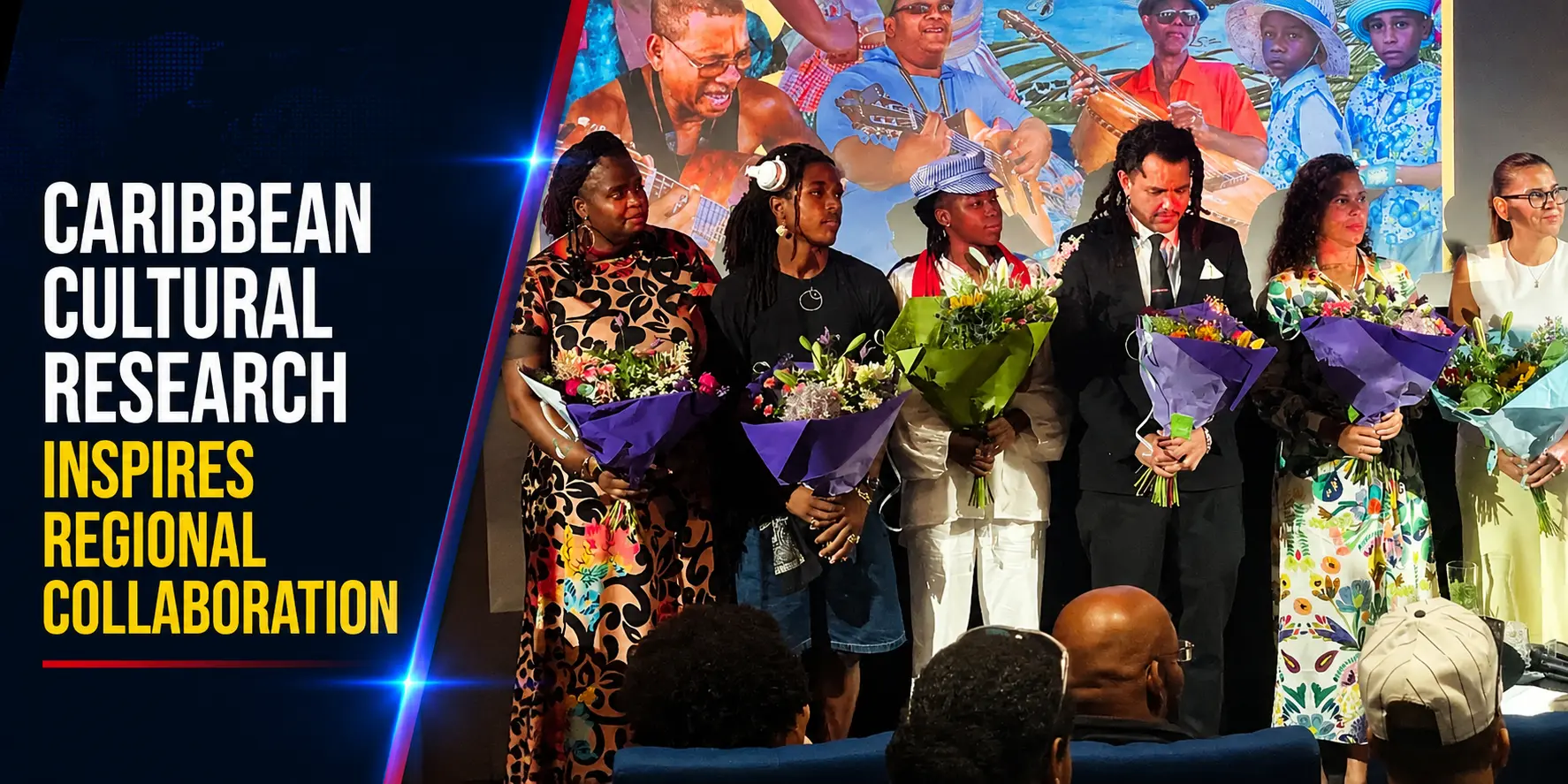
ORANJESTAD (AAN) – Caribbean Cultural Research Inspires Regional Collaboration following the successful conclusion of the Where Culture Lives (WCL) research project, an initiative commissioned by the Dutch Ministry of Education, Culture and Science (OCW) and carried out by Lemonade & Partners. The project concluded with a symposium in The Hague that brought together policymakers, researchers, cultural organizations, artists, and stakeholders from across the Dutch Caribbean and the Kingdom of the Netherlands.
The research represents the first comprehensive study of cultural practices across Aruba, Bonaire, Curaçao, Saba, St. Eustatius, and St. Maarten. It examined how culture is practiced, experienced, preserved, and passed on within Caribbean communities. More than 580 people participated in surveys, alongside 131 key informants, over 100 validation participants, and 32 artistic contributions, creating one of the region’s most extensive cultural research initiatives.
A unique feature of the project was the Where Culture Lives Artistic Award, which invited creative professionals to answer the question, “Where does culture live on your island?” Winning artists included Ariadne Wever (Aruba), Dillon Rannou (Bonaire), Principio/Genesis (Curaçao), KYRO (St. Maarten), Rhea Courtar (St. Eustatius), and Angelita Peterson (Saba). Supported by OCW, the artists participated in a special program during the symposium that highlighted identity, creativity, and cultural belonging throughout the Caribbean.

Research presenter Ludmila Duncan explained that the findings demonstrate the diverse ways culture is supported across the islands. Some communities rely on strong volunteer networks, while others are sustained through cultural associations or creative entrepreneurship. Together, these approaches form essential parts of the Caribbean’s cultural ecosystem.
The study also identified opportunities to strengthen connections between culture, tourism, creativity, and economic development while safeguarding the authenticity and community ownership of cultural traditions. Researchers emphasized the need for additional studies into the Caribbean’s creative economy and broader cultural development.
Research team member Gregory Richardson noted that sustainable cultural development requires three key elements: continuous monitoring, stronger links between cultural education and talent development, and increased regional collaboration among cultural institutions, professionals, and policymakers.
The Dutch Ministry of Education, Culture and Science confirmed that it is working to make the research findings more accessible across all six islands. Meanwhile, Lemonade & Partners is developing an interactive digital platform that will present the research results, artistic contributions, and comparative data for cultural professionals, educators, researchers, and government officials.
Although the Where Culture Lives project has officially concluded, the partnerships it created are expected to continue. Lemonade & Partners and its collaborators are exploring the creation of a broader Caribbean consortium focused on cultural mapping, collaborative research, knowledge exchange, and regional cooperation to support the long-term development of the Caribbean’s cultural and creative sectors.