

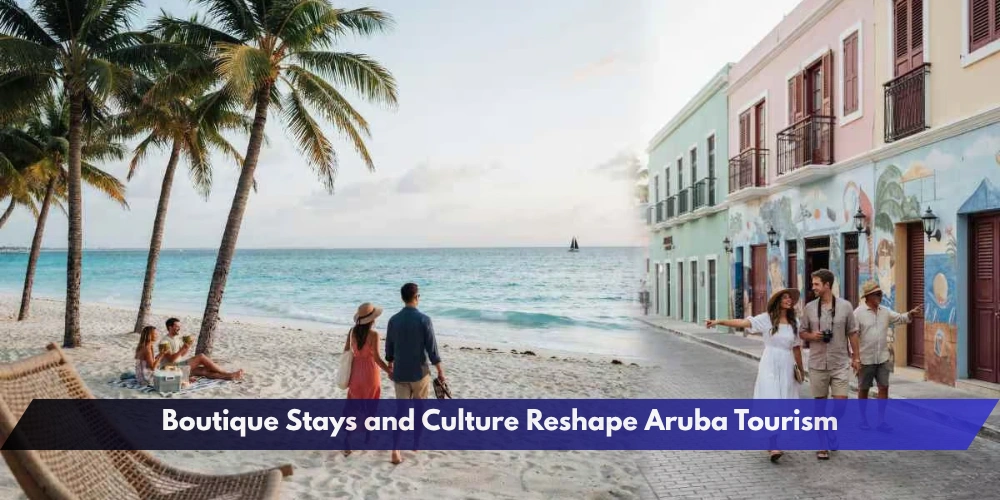
ORANJESTAD, Aruba – Aruba Tourism is becoming increasingly diverse as boutique accommodations, cultural attractions, agritourism and nature-based experiences give visitors more opportunities to explore the island beyond its traditional resort areas.
While Aruba remains internationally recognized for its beaches, sunshine and major resorts, the island’s tourism offering is expanding. Smaller casitas, boutique properties and European Plan accommodations are giving travellers more flexibility in deciding where they eat, what they experience and which parts of the island they explore.
The shift is particularly noticeable around Eagle Beach and San Nicolas, two areas offering visitors distinctly different experiences.

Boutique Stays Offer More Flexibility
Boutique properties and smaller accommodations provide an alternative to large all-inclusive resorts.
European Plan accommodation generally includes lodging without meals, allowing visitors to choose restaurants, cafés, food trucks and other dining options independently.
This can encourage travellers to spend more time exploring communities and supporting businesses outside their accommodation.
Visitors may rent vehicles, book local excursions, visit restaurants, shop for locally produced goods and experience attractions across different parts of Aruba.
Eagle Beach Remains a Popular Base
Eagle Beach continues to be one of Aruba’s best-known coastal destinations, recognized for its broad white-sand beach and relaxed surroundings.
Alongside established resorts, smaller independent accommodations are adding variety to the area.
Travellers staying near Eagle Beach can enjoy convenient access to the coastline while remaining within reach of restaurants, attractions and activities around Noord and Oranjestad.
This combination can appeal to independent travellers who want a beach-focused vacation without spending their entire stay inside one resort.
San Nicolas Strengthens Cultural Tourism
San Nicolas is playing an increasingly important role in Aruba Tourism through art, murals, galleries and community-focused cultural activities.
The southern city has developed a distinctive artistic identity that provides travellers with another reason to explore beyond Aruba’s traditional tourism areas.
Public murals and other creative attractions have helped transform San Nicolas into a destination for visitors interested in local art and culture.
The 9th Aruba Art Fair in 2026 is expected to further highlight the city’s creative identity by bringing together artists and visitors.
Cultural events can also generate wider economic activity as attendees spend money on transportation, restaurants, shopping and accommodation.
Agritourism Adds Another Aruba Experience
Agriculture is also becoming part of Aruba’s diversified visitor experience.
Despite the challenges created by the island’s dry climate, farms, gardens, local produce and traditional food practices can provide visitors with another perspective on life in Aruba.
Agritourism can connect directly with the island’s culinary sector by helping travellers understand where local ingredients come from and how food is produced.
For visitors seeking experiences beyond beaches and resorts, these activities can provide a closer connection to local communities.
Arikok Brings Nature Into the Experience
Nature remains another important component of Aruba’s broader tourism offering.
Arikok National Park covers approximately 20% of Aruba, according to the source article, and offers desert landscapes, caves, rugged coastline, cacti and wildlife.
Visitors using boutique accommodations as their base can combine beach days with hiking, nature excursions, cultural attractions and trips through Aruba’s interior.
This makes it possible to create an itinerary incorporating several different sides of the island during one vacation.
Tourism Expands Beyond Resort Areas
Traditional resort districts remain essential to Aruba’s tourism economy, but boutique stays and local experiences are expanding the range of choices available to travellers.
Eagle Beach can provide the coastal experience, while San Nicolas offers art and community culture. Aruba’s rural areas introduce visitors to agriculture and local food, while Arikok provides opportunities to experience the island’s natural landscape.
Together, these options create a broader Aruba Tourism experience in which visitors can combine beaches, culture, food, art and nature rather than concentrating their entire vacation within the traditional resort belt.
The growing variety may be particularly attractive to repeat visitors, independent travellers, couples and tourists looking to experience more of the island.
For local businesses and communities, the trend can also distribute visitor spending across restaurants, transportation providers, galleries, shops, tours and other locally operated services.
Aruba’s beaches and resorts remain central to its international appeal, but the growth of boutique accommodation and community-based experiences is giving travellers more ways to discover the island.