

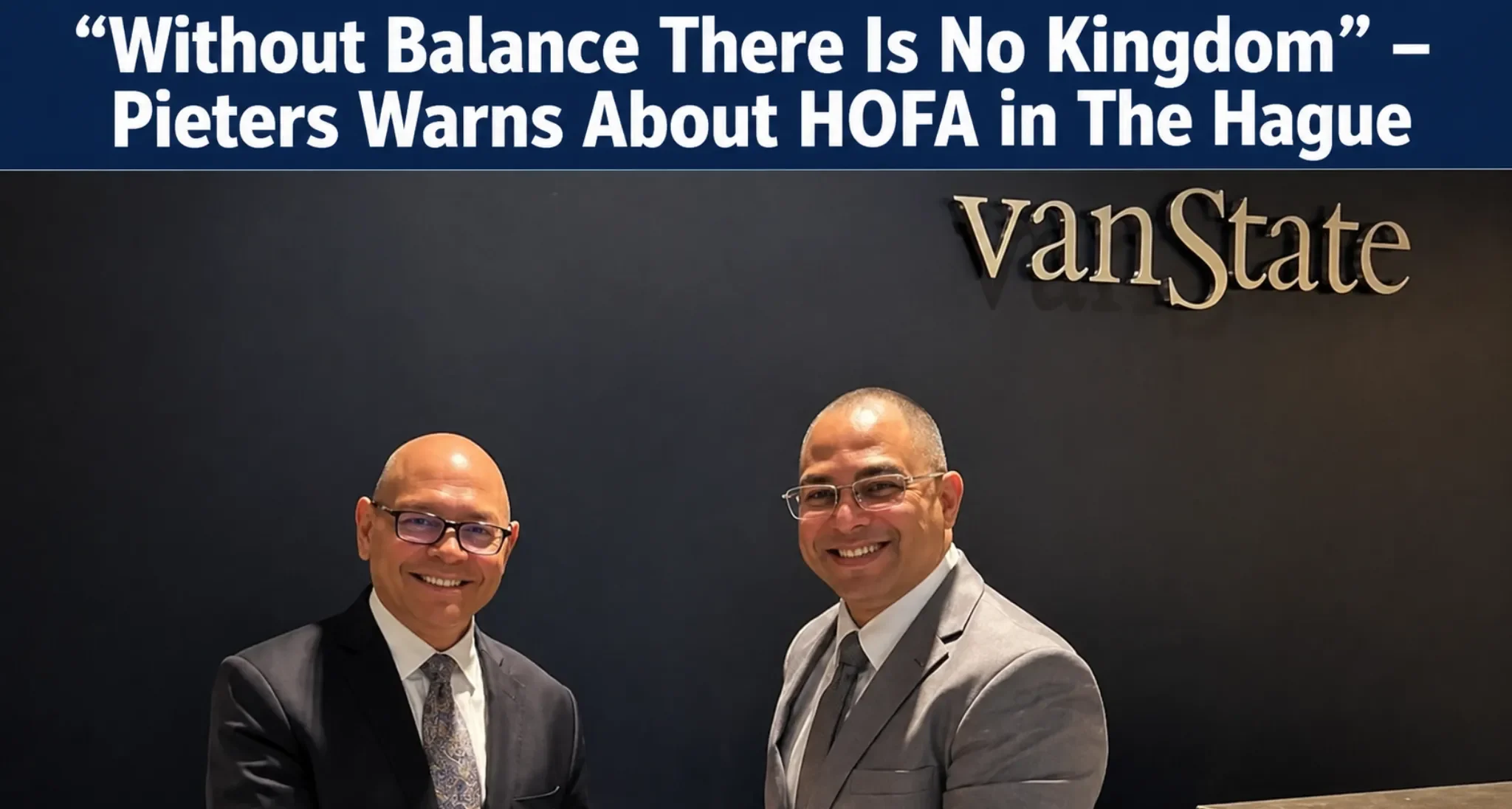
‘Good law is not born from something done in haste, but from criticism, analysis, and balance.’ With this forceful message, Andy Lee, member of the Council of State in the Netherlands, set the tone during his meeting with parliamentarian Eduard Pieters of the PPA faction. A meeting that was not superficial but deep, in which the central theme was clear: the impact of the Rijkswet HOFA on Aruba’s autonomy and the balance within the Dutch Kingdom. Council of State: more than advice, a pillar of governance. During the conversation, Andy Lee emphasized the essential role of the Council of State as an independent institution that evaluates all legislative proposals, both national laws and Kingdom laws, before they reach a final decision. He explained that this role is not ceremonial but fundamental to: analyze the content and process of legislation; ask critical questions about legitimacy and impact; and provide advice to improve the quality of governance. The Council of State does not make political decisions but influences them with deep and independent advice, something which, according to Pieters, is an essential safeguard to prevent weak or unbalanced laws from passing unquestioned. A process that still has open questions. Andy Lee clearly acknowledged that the legislative process is not yet complete. The final text has not yet reached the Tweede Kamer and neither has the formal advice of the Council of State been published. According to Lee, only when all information is available can a definitive opinion be formed. But the most important point he expressed is that the discussion about HOFA has been going on for several years and still no clear solution has been found. This, for Pieters, is a very concerning sign. HOFA: a law that leaves fundamental questions unanswered. According to Pieters, the fact that a law of such impact is still spinning around with so many doubts is precisely the reason why Aruba must stand firm. The central questions remain: Is this law really urgent or necessary? Does it protect or weaken the autonomy of Aruba’s Parliament? Does it strengthen the Kingdom or create a power imbalance? ‘A law without clarity should not be imposed with speed,’ Pieters emphasized. Without real consensus, there is no legitimacy. Another key point that became clear during the meeting is the importance of the democratic process. Andy Lee underlined that in the Dutch Kingdom, the role of parliaments, both in the Netherlands and in Aruba, is essential for the legitimacy of laws. Pieters connected this directly to the current situation: ‘If Aruba’s Parliament has not given its approval, how can we speak of a consensus Kingdom law?’ For PPA, this is not just a lack of formality but a lack of respect for democracy. Aruba must speak now and not later. With the law not yet having reached the Tweede Kamer, Pieters emphasized that this is the moment for Aruba to show leadership. ‘The final decision has not yet been made, but the direction is being formed now. If we don’t speak, others will do it for us,’ he said. The PPA mission in The Hague was precisely to put Aruba’s real context on the table, clarify the implications of HOFA, and influence the debate before it becomes definitive. A strong Kingdom is based on respect and not control. The meeting with Andy Lee confirmed a fundamental truth: the Dutch Kingdom cannot function without balance between the countries. Lee emphasized the importance of understanding each country’s context, something that, according to Pieters, is often missing in decisions made in The Hague. ‘We are not against the Kingdom,’ Pieters concluded, ‘we are against a direction that weakens our rights regarding Aruba’s budget.’ The final message from The Hague is clearer than ever: Good law is born from criticism, not in silence. Democracy demands real participation and autonomy must be protected, not traded. ‘If we don’t question today, we will pay the price tomorrow,’ Pieters concluded firmly.