

ORANJESTAD, Aruba — Concerns about Aruba Food Prices are strengthening calls for residents to support local farmers and consider producing food on a small scale at home.
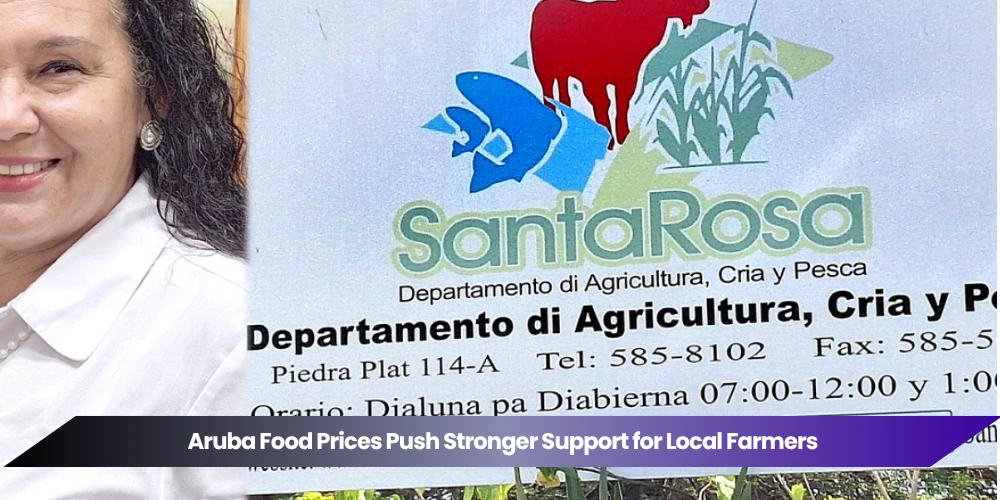
Nathalie Maduro, director of the Department of Agriculture, Livestock and Fisheries at LVV-Santa Rosa, said food remains an essential product and warned that prices are likely to continue increasing.
Speaking during an interview with Matutino DIARIO, Maduro encouraged residents to purchase locally grown products and support Aruba’s farmers, artisans and community markets.

Local Markets Continue Growing
Maduro said she has noticed an increase in agricultural and community markets operating around Aruba.
She recently visited a market at Outreach Farm, where she observed cooperation among vendors and strong public interest in locally produced food and handmade products.
According to Maduro, this cooperation supports a goal Santa Rosa has promoted for years: greater unity among producers and more consistent availability of local products.
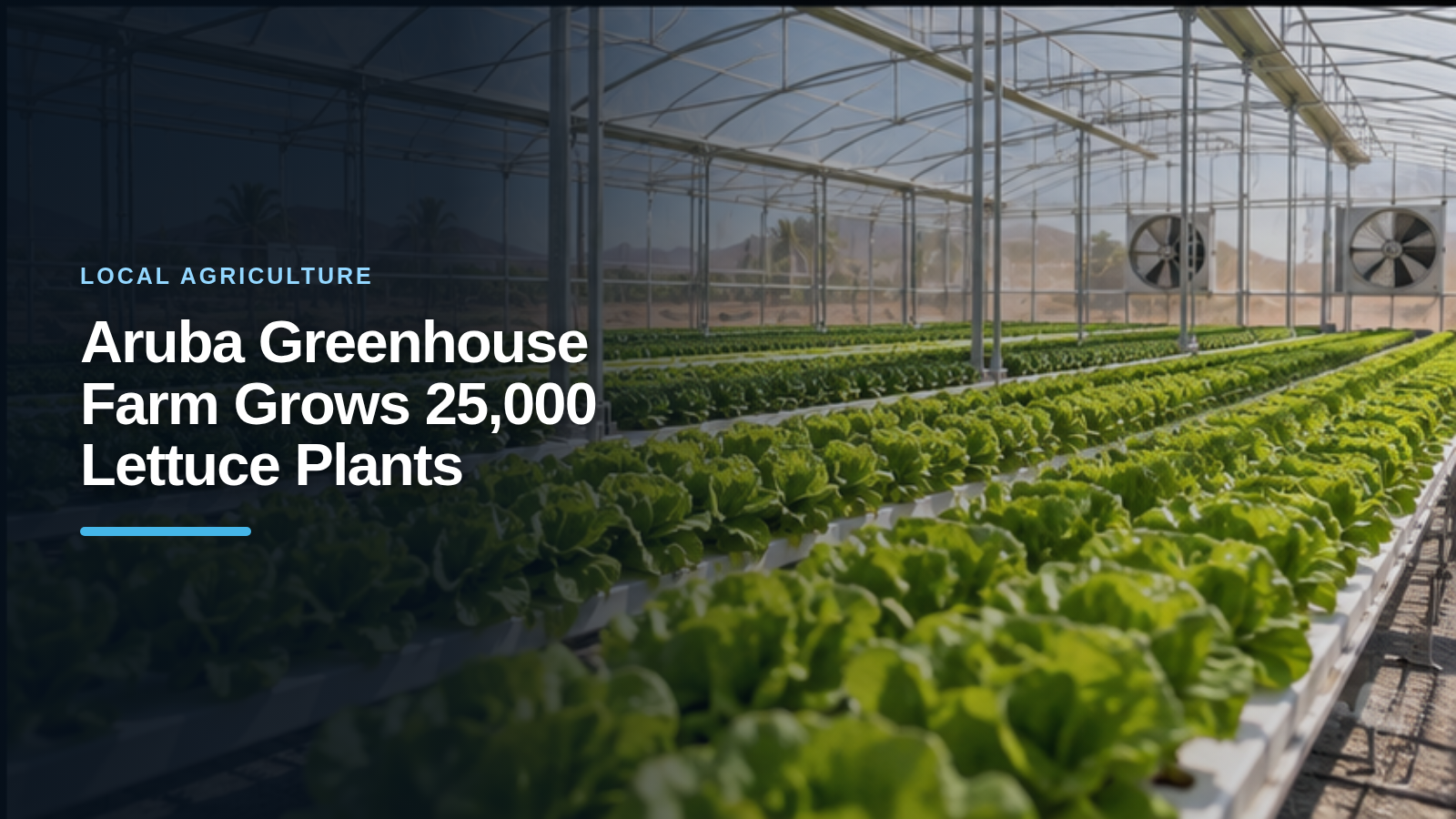
The Santa Rosa Market has also developed a regular presence, offering residents access to eggs, vegetables, coconut oil and other locally produced items. Despite limited rainfall, farmers continue growing crops using available water supplies, hydroponic systems and traditional cultivation methods.
Consumers Encouraged to Compare Prices
Maduro used lettuce as an example of the potential value offered by local agriculture.
She said she had seen an imported lettuce advertised for 10 florins, while locally grown lettuce could reportedly be purchased for approximately six or seven florins.
The example represented her observation rather than an official island-wide price comparison. Prices can differ depending on the retailer, variety, size, availability and production method.
Aruba’s Department of Economic Affairs regularly monitors supermarket prices and publishes comparisons to help consumers identify differences in the cost of basic products.
Food Costs Remain an Important Concern
Official consumer-price data provides context for Maduro’s concerns.
In May 2026, Aruba’s food and catering index increased by 0.5% compared with April. The vegetables category recorded the largest food-related increase at 2.8%, while fruit prices rose by 2.5%.
Aruba’s annual inflation rate reached 2.4% in June 2026, although changes varied among product and service categories.
Maduro said increasing food prices are not unique to Aruba. She noted that consumers in the Netherlands and other countries are also experiencing high grocery costs.
Her statement that food prices will not decrease is a personal forecast rather than a confirmed economic projection. Future prices can change because of international supply conditions, transportation costs, weather, exchange rates and government policies.
Local Production Can Reduce Dependence
Supporting local agriculture can give consumers additional choices while creating income for farmers and small businesses.
Locally grown produce may also spend less time in international transportation and storage before reaching consumers.
However, local production in Aruba faces challenges involving limited rainfall, water expenses, available land, equipment and the cost of agricultural supplies.
Maduro said careful planning is therefore essential for anyone interested in farming.
She advised producers to consider the amount of water available before deciding how much to plant. Farmers facing water limitations should avoid beginning with a scale they cannot maintain, but they should not stop producing entirely.
Hydroponics Helps Manage Water
Some Aruban growers use hydroponic systems, which allow crops to grow using nutrient-rich water rather than traditional soil cultivation.
Maduro said these systems can make water consumption easier to control, an important advantage during dry periods.
Other farmers continue using traditional methods by planting directly in the ground.
Neither approach removes the need for planning. Producers must consider water availability, crop selection, growing conditions and expected customer demand before expanding their operations.
Start With a Small Home Garden
Maduro encouraged residents interested in agriculture to begin with small projects in their own yards.
A household could start by growing herbs, peppers, lettuce or another crop suited to its available space and water supply.
The first objective does not need to be a large commercial operation. A small garden can help residents develop agricultural knowledge and understand the time and resources required to produce food.
Maduro said a home-growing project should not automatically be dismissed as merely a hobby. With consistency and sufficient demand, it could eventually develop into a small business.
She said she regularly gives similar advice to students completing internships at Santa Rosa.
Farmers Need Consistent Community Support
Local farmers require customers throughout the year, not only during special campaigns or market events.
Consistent purchases allow producers to plan future crops, invest in equipment and determine which products have reliable demand.
Maduro expressed satisfaction with the development of the Santa Rosa markets but said the community must continue supporting local production.
The market’s growing popularity has encouraged Santa Rosa to communicate regularly with vendors about product availability and upcoming editions.
Government Regulates Some Essential Prices
The Government of Aruba publishes maximum prices for selected products and periodically updates the amounts permitted for regulated items.
The government has also announced stronger enforcement of maximum prices for basic-basket products. Beginning in August 2026, supermarkets that continue exceeding established prices after a correction period may face administrative penalties.
These controls cover regulated products, but they do not guarantee that every food item will remain at the same price.
Local Agriculture Offers Economic Opportunities
The discussion surrounding Aruba Food Prices is also a discussion about food security, entrepreneurship and community resilience.
Maduro’s message is that residents should recognise the value of local farmers while considering what they can produce themselves.
Not every household will become a commercial farm, and local agriculture cannot immediately replace all imported food. However, small gardens, hydroponic projects and stronger community markets can contribute to a more diverse food supply.
By supporting Aruban producers and starting at a manageable scale, residents can help strengthen the island’s agricultural sector while creating new opportunities for families and small businesses.