


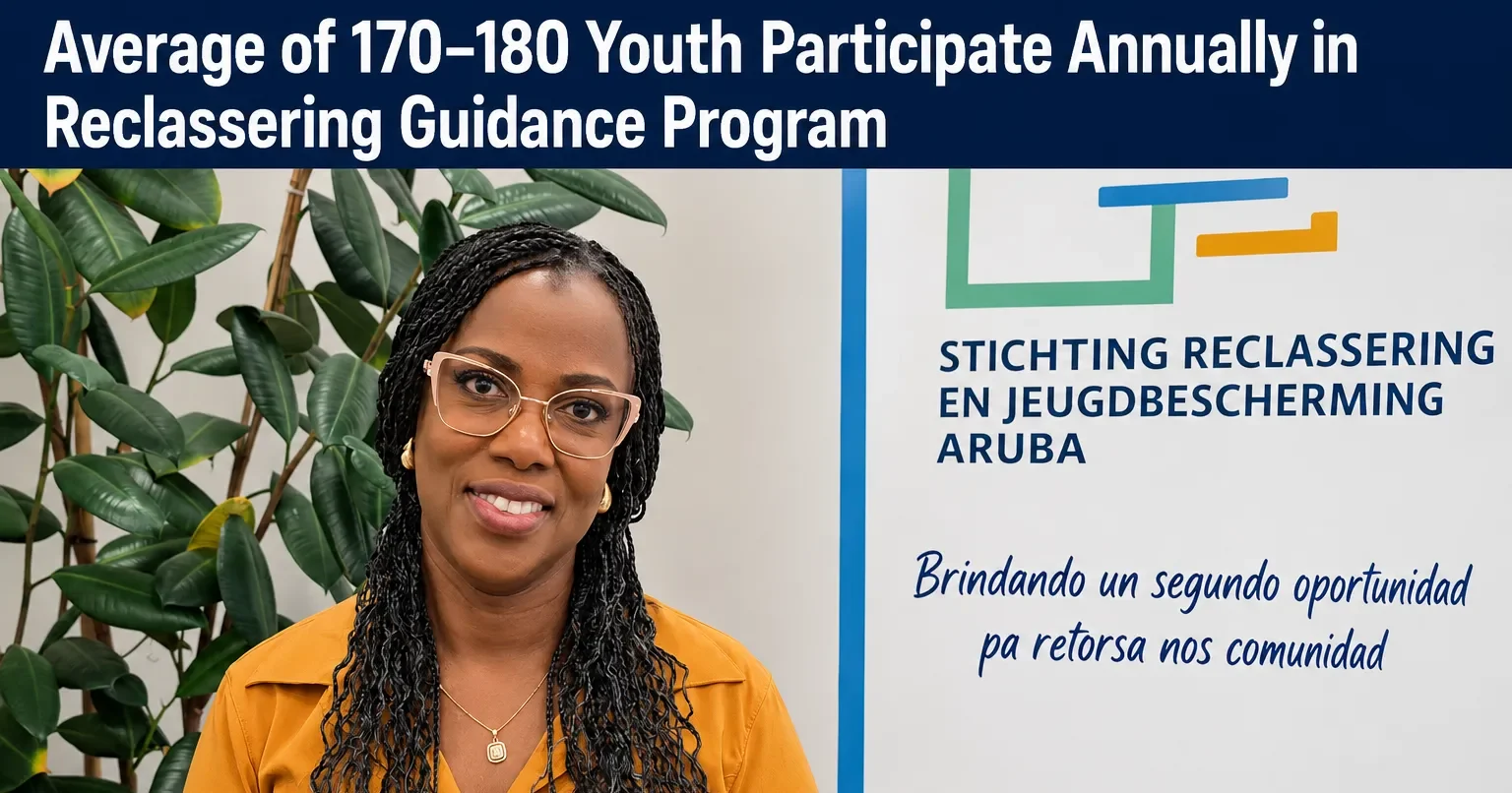
ORANJESTAD (AAN) – According to a survey conducted by Stichting Reclassering, nearly 870 youth have gone through the program since 2022. Most participants are Aruban youths aged 12 to 24, many of whom are still in school. Stichting Reclassering analyzes the collected data to better understand youth challenges and identify interventions that address their needs.
Sorayda Pemberton of Stichting Reclassering explained in an interview with DIARIO that when a youth encounters the justice system, Reclassering investigates and reports on the youth’s personal and social circumstances to the Public Prosecutor. Based on this information, recommendations are made for assistance, guidance, or supervision.
According to Pemberton, most youths show positive progress. On average, 170–180 youths participate in the program each year. However, a more complex group faces greater challenges, including youths not attending school, unemployed, using drugs, or influenced by negative peer circles.

These cases require a more intensive and structured approach, as guidance alone may not create lasting change. Many youths return to the same environment that contributed to their initial problems. Available data also indicates a concern regarding youths involved in violent crimes and weapon-related offenses, highlighting the risks and consequences.
Preventing juvenile delinquency is not only the responsibility of the justice system but also of families, schools, communities, and the government. Only through broad and sustained collaboration can real opportunities be created for youths, helping them avoid crime and achieve a future with greater prospects.