
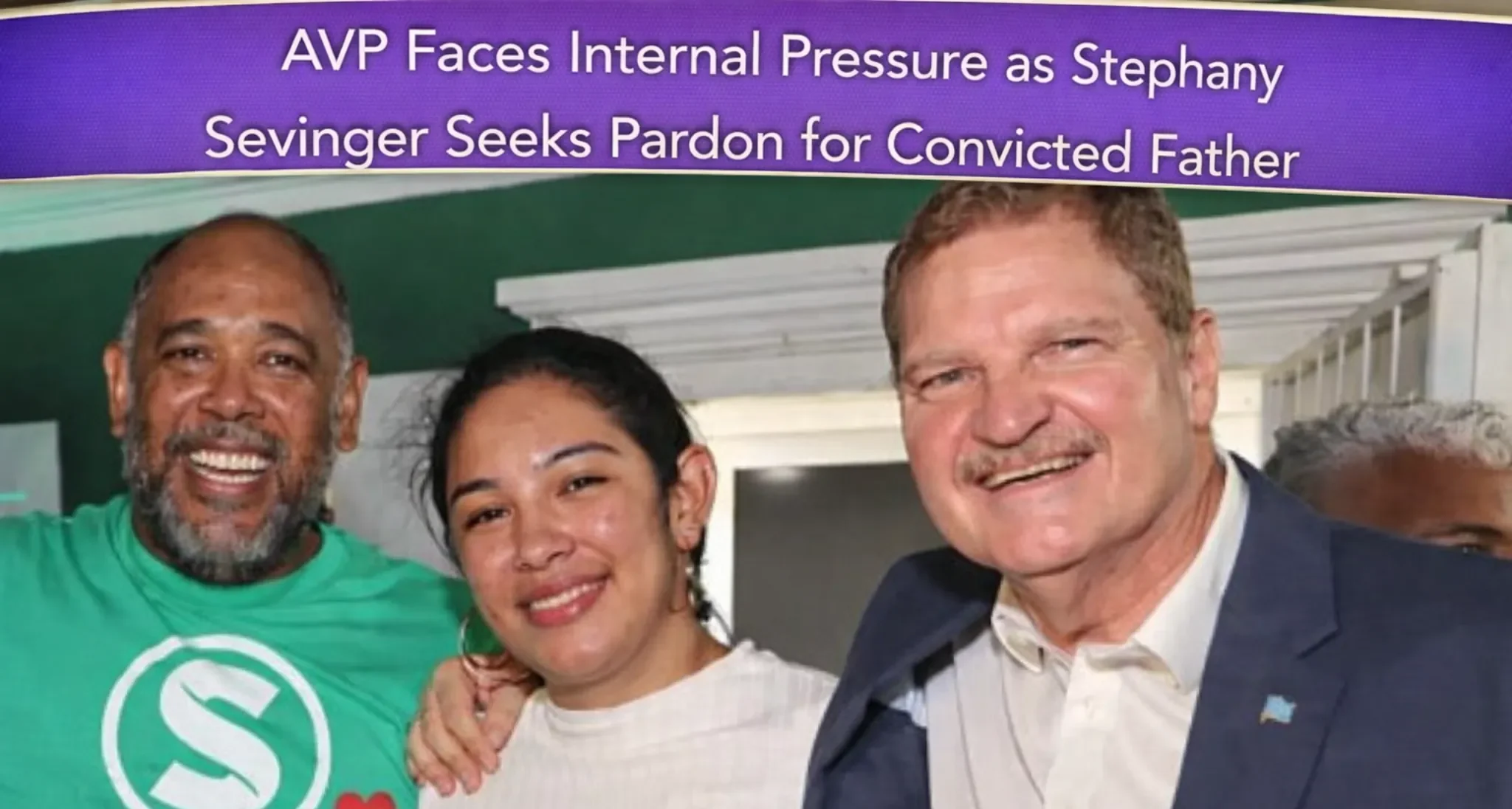
Internal political tensions within Aruba’s AVP party have intensified following the Supreme Court’s final verdict in the Avestruz corruption case, as parliamentary member Stephany Sevinger reportedly pushes for a presidential pardon for her father, convicted former minister Benny Sevinger.
The Hoge Raad decision dealt a significant blow to the AVP, confirming the conviction of one of the party’s most influential figures in recent decades. According to sources familiar with the matter, those convicted—including Benny Sevinger, Leoncita Arends, and Pieter Susebeek—have a nine-day legal window to submit a petition for pardon to avoid entering prison.
Pressure Mounts Within AVP Ranks
Despite official party statements requesting “privacy” for their parliamentary colleague, internal sources indicate that Stephany Sevinger is leveraging her position in Parliament to apply pressure for her father’s pardon. The primary argument centers on Benny Sevinger’s decades of loyalty and service to the party, where he functioned as a powerful electoral engine that helped grow the AVP through the same organizational foundation that ultimately became the basis of his conviction.

Political observers note that many involved in the case were more closely tied to current Prime Minister Mike Eman than to Sevinger himself, raising questions about the origins of the “orders” that led to the corruption charges. This dynamic has created an uncomfortable situation within the party, as the Eman-led government would need to decide on any pardon request.
Legal and Political Implications
The pardon petition process presents a complex political dilemma for the AVP-led government. Granting a pardon to a convicted former minister could damage public trust and invite criticism from anti-corruption advocates both locally and within the Kingdom. Conversely, denying the request risks deepening internal party divisions at a time when the government needs unity.
The Avestruz case, which has been working through the Dutch Caribbean judicial system for years, involved fraudulent land deals and misappropriation of public funds during Sevinger’s tenure as a government minister. The Supreme Court’s final ruling leaves no further avenue for legal appeal, making a pardon the only remaining option to avoid imprisonment.
The situation highlights the ongoing challenges Aruba faces in addressing political corruption while maintaining governmental stability. As the nine-day window for pardon submissions ticks down, all eyes remain on the Eman administration’s response to this politically charged decision.