


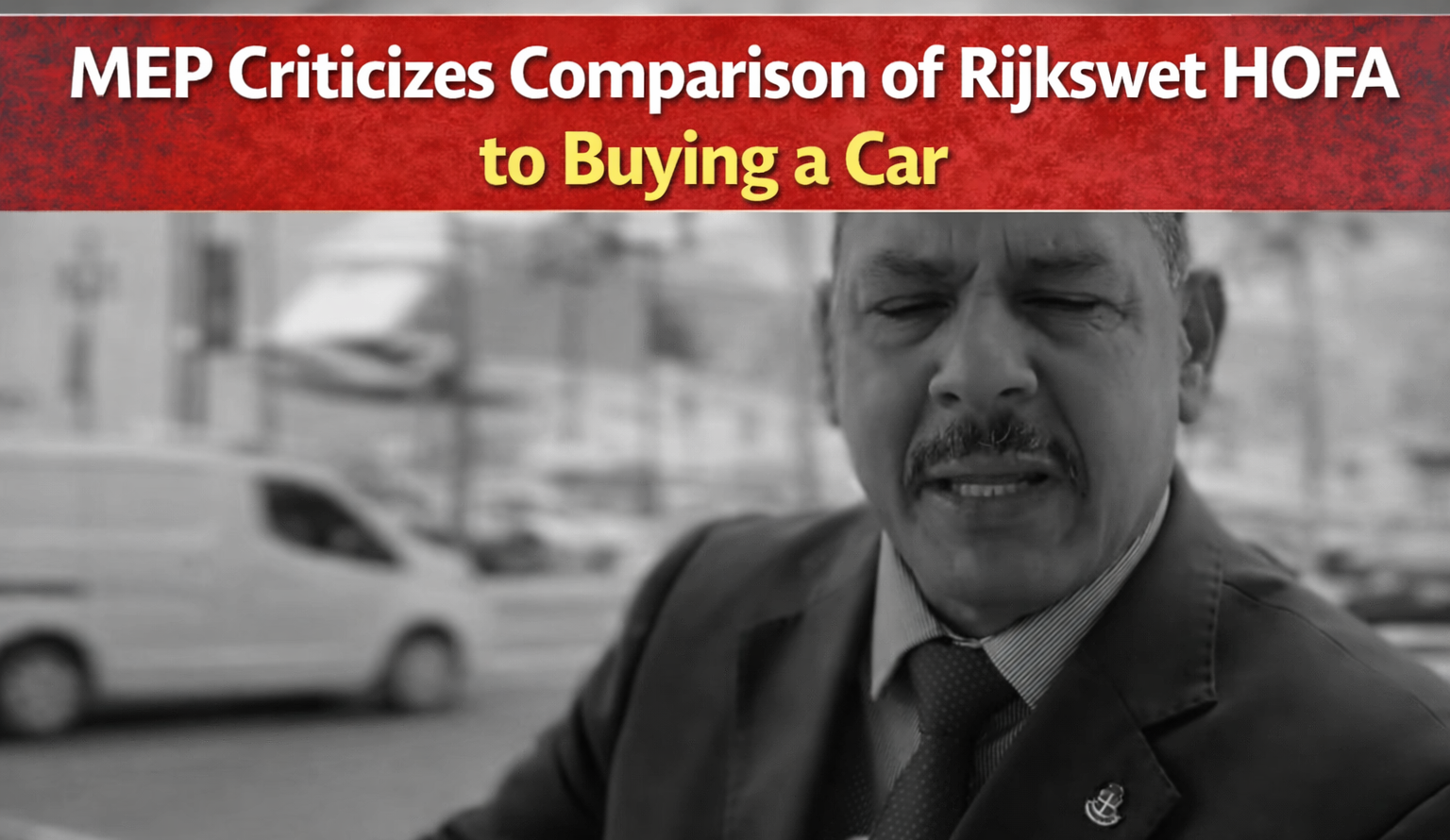
The comparison of Rijkswet HOFA to buying a car criticized by MEP has sparked political debate in Aruba. Members of the MEP faction argue that the analogy used to justify support for the proposed law is incomplete and misleading.
According to the statement, Parliamentarian Bermudez recently used the example of purchasing a car to explain why Aruba should accept the Rijkswet HOFA agreement. In his explanation, Bermudez suggested that once a car has been financed and delivered, a buyer cannot later refuse it simply because they change their mind.
However, the comparison of Rijkswet HOFA to buying a car criticized by MEP points out that an essential element of the analogy is missing.

“Not the Car That Was Ordered”
MEP argues that the situation is different if the product delivered is not the same as the one originally requested.
The party explained the comparison with several examples:
-
A buyer orders an automatic car, but the delivered car is manual.
-
A buyer requests a yellow car, but the delivered car is green.
-
A buyer orders a 4-liter engine, but the delivered vehicle has a 2-liter engine.
In such cases, MEP states that a responsible consumer would simply refuse the product because it does not match the original order.
“That is not the car we ordered,” the statement explains, emphasizing that a product that does not meet the agreed specifications should be returned.
Debate Over the Agreement
MEP argues that the situation with Rijkswet HOFA can be compared to such a scenario. The faction says that the initial administrative agreement (“bestuurlijk akkoord”) may represent the original order, but the legislation currently being discussed does not reflect what was originally negotiated.
According to MEP, legal advice available to policymakers also confirms that the administrative agreement does not legally obligate Aruba to accept the law in its current form.
This means, they argue, that political leaders still have the option to reject the proposal if it differs from what was originally discussed.
Political Criticism
The statement also criticizes the position of Bermudez and Hart, accusing them of supporting the proposal instead of firmly defending Aruba’s interests.
MEP claims that Aruba deserves leadership willing to reconsider agreements if they believe the outcome may not be beneficial for the country.
Ongoing Political Debate
The comparison of Rijkswet HOFA to buying a car criticized by MEP reflects the broader political debate in Aruba surrounding the proposed legislation and its potential impact on the island’s financial autonomy.
Supporters and critics continue to present different interpretations of the agreement, while discussions in Parliament and within the public sphere continue regarding Aruba’s future financial governance.