

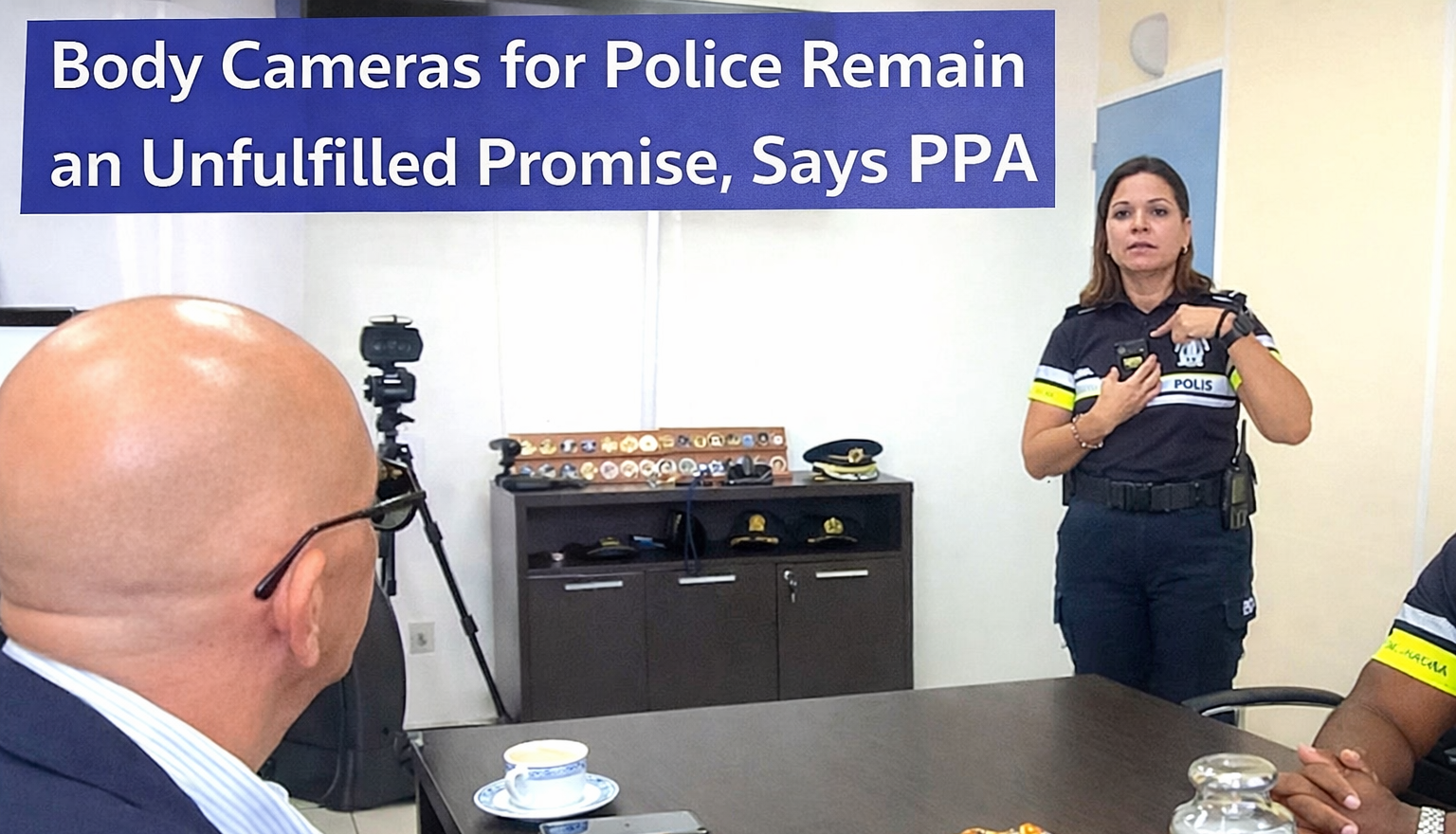
During a Central Committee meeting last week, concerns about public and traffic safety were raised once again, with PPA parliamentarian Eduard Pieters strongly criticizing the continued delay in implementing body cameras for police in Aruba. According to Pieters, public safety cannot be addressed with political delays, especially when transparency and trust are at stake.
Although the committee meeting primarily focused on the proposed Reckless Driving (Roekeloos Rijden) legislation, Pieters emphasized that one critical issue cannot be ignored: the long-promised introduction of body cameras for police, a tool he described as essential for transparency, protection, and public confidence.
A Repeatedly Delayed Issue
Pieters explained that the discussion around body cameras is not new. Following the tragic Lanoy incident, the PPA acted urgently. In March 2025, the party called for an emergency meeting and submitted a motion that was unanimously approved in Parliament, mandating the introduction of body cameras for police officers.

“The goal was simple and clear,” Pieters stated. “To prevent doubt, protect both police officers and citizens, and provide objective clarity during critical incidents.”
Later that same month, the PPA formally questioned Minister Arthur Dowers about the ministry’s position, required funding, and necessary legislative adjustments. The minister responded that 28 body cameras were available from the previous government. Around that time, PPA members also met with Police Chief Ramon Arnhem to gain a detailed understanding of how body cameras function and their practical value in policing.
Funding Rejected Despite Proposals
When it became evident that the number of available body cameras was insufficient, the PPA proposed a budget amendment during the 2025 budget debate to allocate additional funds. This amendment was rejected by the AVP and FUTURO factions, who argued that the matter was already covered in the budget.
The PPA did not drop the issue. In August 2025, during the supplementary budget (Najaarsnota) discussions, the party submitted two additional amendments aimed at freeing up funds for body cameras. These proposals were also rejected by the same factions.
No Implementation After One Year
Nearly one year after the unanimous parliamentary motion, Pieters noted that no concrete implementation has taken place. He warned that frustration within the community is growing, as unanswered questions continue to erode trust.
“Body cameras are not against the police,” Pieters stressed. “On the contrary, they protect police officers and citizens alike. They allow incidents to be reviewed objectively, reduce speculation, and strengthen the rule of law.”
Promises Without Action
Minister Dowers previously indicated that a body camera pilot project would begin in July 2025, but according to Pieters, the public has yet to see any results. While the PPA considers a pilot project necessary, it also views it as long overdue.
“Promises without action do not restore trust,” Pieters concluded. “Public safety and transparency cannot depend on political calendars. Body cameras must be implemented urgently, with proper funding and real political will. Aruba deserves a police force equipped with the necessary tools—and a government that acts, not one that merely makes promises