

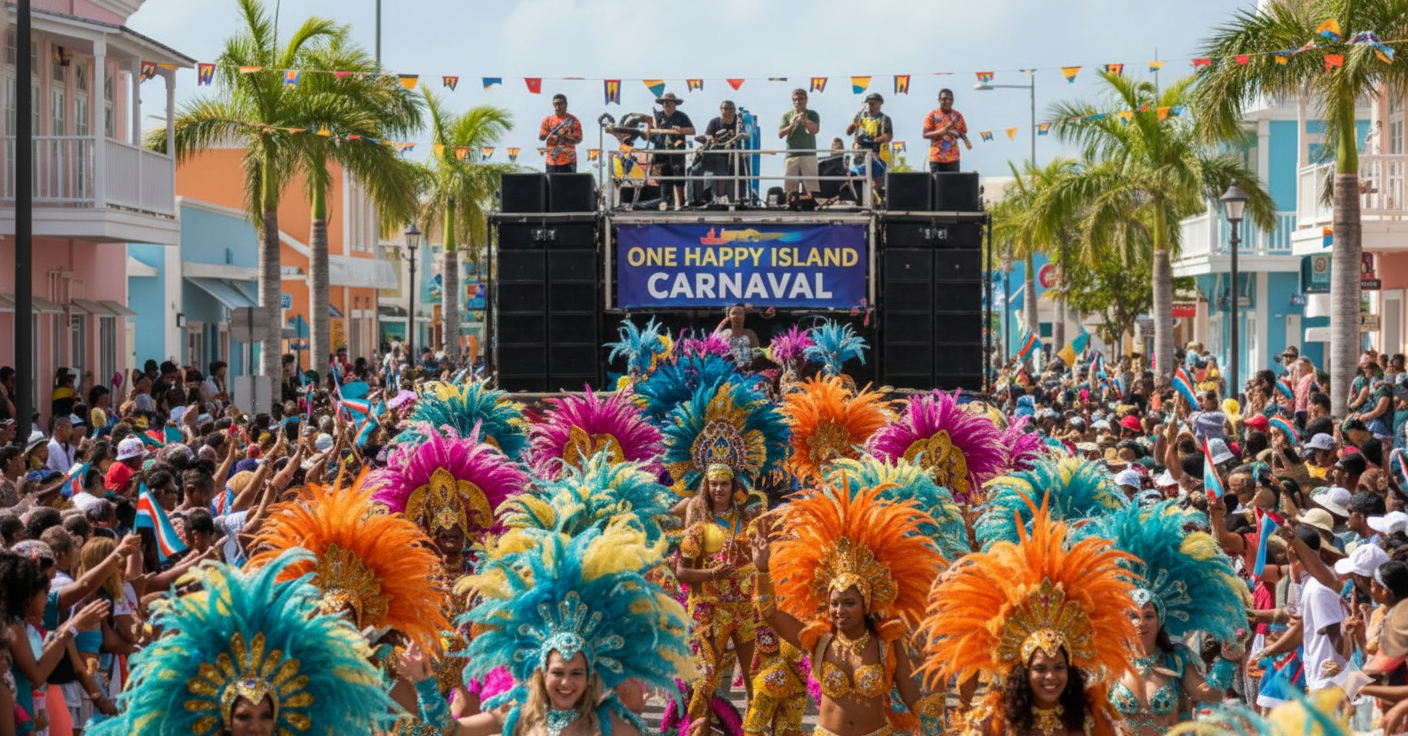
Carnaval is more than just a celebration in Aruba — it is the heartbeat of the island. Deeply rooted in tradition, music, dance, and community pride, Aruba Carnaval brings the entire island together in a vibrant expression of identity and joy.
For weeks, neighborhoods buzz with rehearsals, colorful costumes, and the infectious rhythms of calypso, soca, steel pan, and Road March anthems. Streets come alive as generations connect, creativity shines, and Aruba’s famous “One Happy Island” spirit takes over.
Historically, Carnaval reflects Aruba’s multicultural soul, blending Caribbean, Latin, African, and European influences into one unforgettable spectacle. From grand parades to family-friendly festivities, Carnaval strengthens community bonds and showcases Aruba’s culture to the world, making it one of the most meaningful and anticipated moments of the year.

Carnaval Season in Aruba
In Aruba, Carnaval officially begins in early January and runs through February.
The traditional kickoff event is the Fakkel (Torch) Parade, which marks the ceremonial opening of the season and signals the start of weeks filled with celebrations, rehearsals, and festivities leading up to the Grand Parades.
As the season progresses, the energy builds across the island, truly bringing Aruba to life as one united celebration.
Key Dates of Aruba Carnaval 2026
January 3 – Fakkel (Torch Parade)
The ceremonial opening of Carnaval, officially launching weeks of island-wide celebration.
January 31 – Children’s Parade (Noord)
A joyful, family-friendly parade where Aruba’s youngest participants shine and keep Carnaval traditions alive.
February 7 – Aruba Grand Lighting Parade (Oranjestad)
A spectacular nighttime parade filled with illuminated costumes, music, and dazzling energy through the capital.
February 7 – Jouvert Morning Jump-Up (San Nicolas)
One of the most energetic Carnaval events. This early-morning street party starts at 4:00 a.m., with revelers dancing until sunrise — often in pajamas, earning it the nickname “the pajama party.”
February 8 – Children’s Parade (San Nicolas)
Another colorful celebration led by children in Aruba’s cultural capital.
February 12 – Lighting Parade (San Nicolas)
A vibrant evening parade showcasing creativity, lights, and rhythm through the streets.
February 14 – Aruba Carnaval Parade (San Nicolas)
One of the main adult parades, bursting with elaborate costumes, dance, and Road March vibes.
February 15 – Aruba’s 72nd Grand Carnaval Parade (Oranjestad)
The grand finale of Carnaval — Aruba’s largest and most iconic parade — bringing the entire island together in an unforgettable celebration.
The Music That Drives Aruba Carnaval
Music is the driving force behind Aruba Carnaval. It sets the pace, fuels the energy, and unites every parade from start to finish. From rehearsals weeks in advance to the final Grand Parade, the island moves to one rhythm.
Key Carnaval music styles include:
- Road March – The heartbeat of Carnaval, with high-energy songs competing for the prestigious Road March title.
- Soca – Fast, infectious, and made for nonstop dancing.
- Calypso – Storytelling through music, often blending humor, tradition, and social commentary.
- Steel Pan (Steel Drums) – Classic Caribbean sounds that add rhythm and soul to events.
- Local Fusion – A unique Aruban blend of Caribbean beats with Latin and international influences.
During Carnaval, music trucks, live bands, and steel pan groups transform Aruba’s streets into one massive open-air dance floor where locals and visitors celebrate together.
How People Participate in Aruba Carnaval
Participating in Aruba Carnaval is an unforgettable experience — and one of the best ways to truly feel the island’s spirit. Carnaval is not just something you watch; it’s something you live.
Ways to participate include:
- Joining a parade group
Locals and visitors can register with Carnaval groups and parade in custom-made costumes with nonstop music and choreography. - Dancing behind music trucks
High-energy music trucks keep crowds moving for hours as dancers follow along the parade routes. - Celebrating as a spectator
Even watching is participatory — dancing, singing, waving flags, and celebrating from the sidelines are all part of the experience.
One Beat. One Island. One Happy Carnaval.
From the first torch to the final grand parade, Carnaval transforms Aruba into one rhythm, one celebration, and one happy island. Participating in Aruba Carnaval is an experience that goes far beyond watching from the sidelines — it’s something you feel in your heart.