


ORANJESTAD (AAN) – An agreement has been reached between the U.S. Air Force Southern Command and the authorities responsible for regulating airspace in the Dutch Caribbean to prevent unexpected encounters between civilian and military aircraft while flying through shared air corridors.
The decision follows several serious incidents in recent days. One widely reported case involved a JetBlue flight north of Curaçao and a private Falcon 900EX aircraft north of Aruba, both of which narrowly avoided possible collisions with U.S. military aircraft flying without active transponders. In both cases, the pilots’ visual awareness allowed them to take evasive action in time.
It has now also been confirmed that on Thursday, December 11, 2025, a KLM Airbus A330-200, operating a flight from Bonaire to Amsterdam, encountered a military aircraft flying dangerously close. The incident occurred approximately 75 miles north of Bonaire.

The KLM flight crew reported the situation to Curaçao Air Traffic Control, explaining that they had to deviate from their flight path due to the proximity of the unidentified aircraft. Air traffic controllers responded that the aircraft was not identifiable, but it briefly appeared on primary radar. The KLM pilots further noted that the military aircraft did not appear on their TCAS (Traffic Collision Avoidance System), which relies on transponder signals to detect nearby aircraft.
The crew of KLM flight KL-765 indicated that the military aircraft was flying at an altitude of approximately 25,000 feet at the time of the encounter.
New Safety Measures
In response to a NOTAM issued for the Caribbean FIR, warning civil aviation pilots to remain alert due to increased military activity, KLM has introduced additional safety measures. While these warnings are easier to manage during daylight hours, night flights—particularly those departing at sunset—pose increased risks.
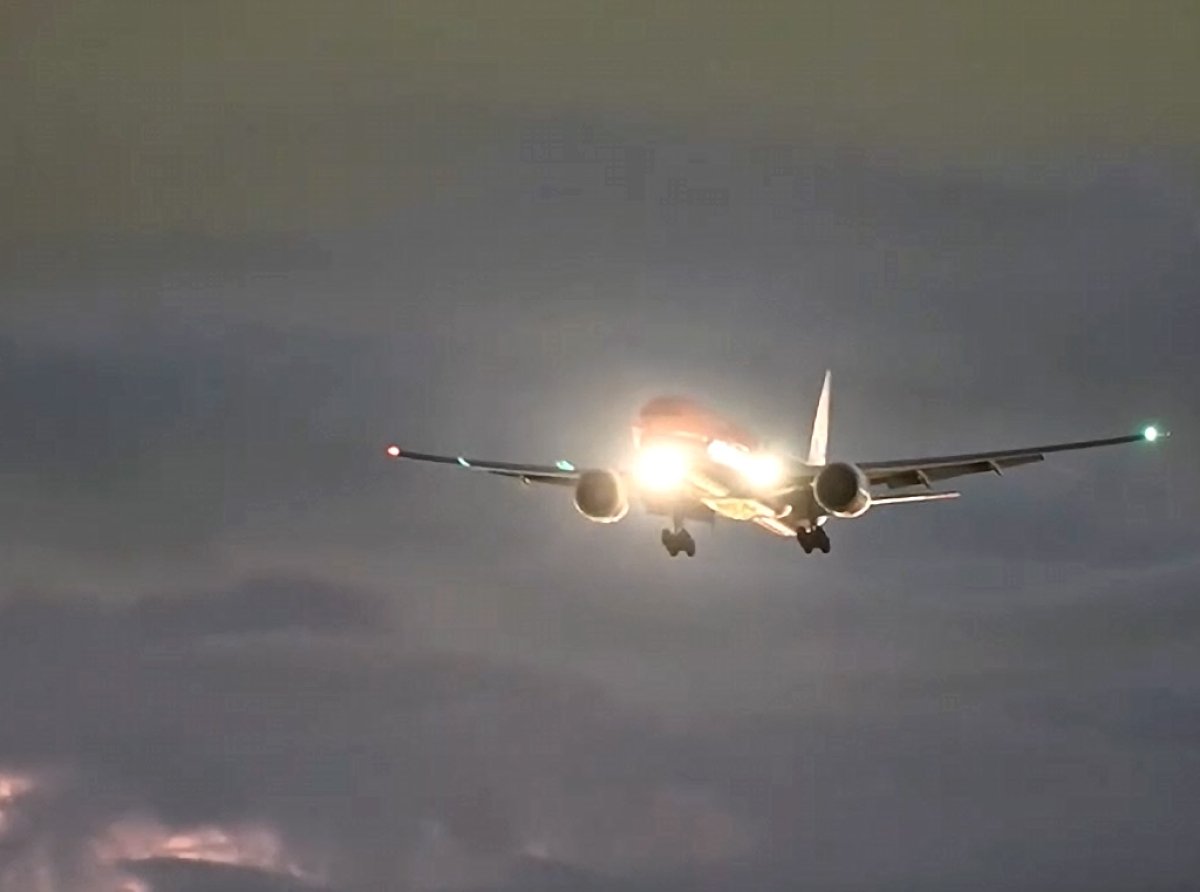
As a precaution, KLM has decided that all flights operating to and from the ABC islands (Aruba, Bonaire, and Curaçao) will now fly with all exterior lights fully illuminated, in addition to the standard navigation lights. This extra lighting improves aircraft visibility, especially during nighttime operations.
KLM emphasized that this measure is purely preventive and aims to enhance visibility amid ongoing military activity in the region’s airspace.
This step complements the recent announcement by the U.S. Air Force Southern Command, which confirmed that military flights will avoid commercial air corridors whenever possible and improve coordination during transit. With commercial aircraft now flying with full exterior lighting, military pilots will have improved visual detection of large passenger aircraft in the area.
It remains unclear whether KLM will apply this measure to other international routes passing through the Caribbean FIR—such as flights to Colombia, Ecuador, or Peru—or if it will remain limited to flights departing from Aruba, Bonaire, and Curaçao.
Photo Credit : https://diario.aw/categories/noticia/general/avionnan-di-klm-ta-bulando-awo-riba-lama-caribe-cu-tur-nan-luznan-pafo-cendi