


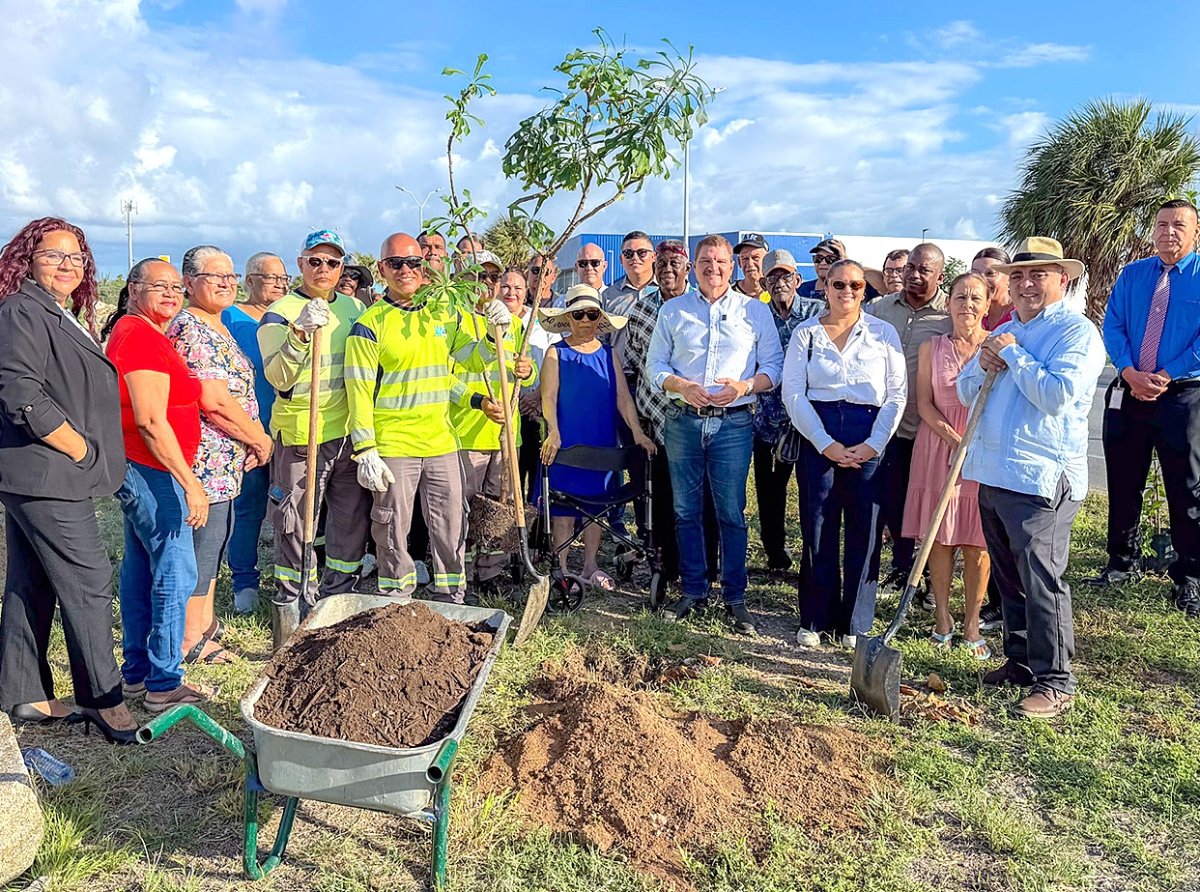
ORANJESTAD (AAN): On Thursday morning, a tree-planting session took place together with the residents of Maracastraat in Dakota, as part of the National Reforestation Program (NRP). This pilot initiative is a collaboration between the Ministry of General Affairs, Culture, Environment and Nature (MinAZ), the Department of Public Works (DOW), the Department of Nature and Environment (DNM), and the Watty Vos Boulevard (WVB) project execution team.
Prime Minister Mike Eman stated that Maracastraat was selected as a pilot location for an innovative model of urban green spaces that combines ecological restoration, neighborhood revitalization, and active community participation. During informal conversations held on residents’ verandas, neighbors shared their wishes and advice, which were used in planning the project. Many residents expressed a preference for native plants, shade-giving trees, and fruit trees that do not block visibility, ensuring safety in the area.
Based on the community’s input, the Department of Nature and Environment (DNM) used its ecological ‘Tree Mix Choice’ system to propose a balanced combination of species. DOW integrated these community preferences into the final planting design.
These are the 55 trees planted in the project:

- From Santa Rosa Nursery: 5 Flamboyan, 5 Pal’i Boonchi, 5 Kibrahacha, 5 Huliba, 5 Watapana, 3 Almond, 3 Macapruim, 3 Sea Grape, 5 Ratonero
- From Agro Aruba Garden: 3 Mispel, 3 Cashew Cora
- From Ronald Slot-Lopes: 5 Wayaca
- From Randolph Fingal of SPO: 5 Fofoti
Residents also contributed trees they had been caring for themselves, including Kenepa, Boneriano, Mango, and Scopapel, all in the spirit of “the common good.” The combination of these species will help restore natural shade, support habitats for native birds such as the Aruba Parakeet (Prikichi) and Lora, improve soil health, and strengthen resilience against heat. Over the coming years, the area will transform into a greener, more pleasant, and more sustainable neighborhood space.
Watty Vos Boulevard (WVB) prepared the land, dug the planting holes, supplied soil, and will continue to maintain and water the new vegetation.
With this pilot project on Maracastraat, Aruba continues moving toward a future with more urban green spaces and improved climate resilience—where ecological restoration and community participation go hand in hand.
Extensive behind-the-scenes work has taken place to develop the Tree Mix Choice System, establish the technical foundations, plan for native plant nurseries, conduct stakeholder meetings and brainstorming sessions, and strengthen cooperation among government departments and with partners from Bonaire.
Building on this foundation, the National Reforestation Program (NRP) is preparing additional pilot projects in other neighborhoods for 2026. Besides urban areas, ecological restoration pilots will also be launched in nature conservation zones managed by the Aruba Conservation Foundation. In the future, some of these initiatives may offer visitors the opportunity to participate through “voluntourism” as part of the NRP.
Photo Credit : https://diario.aw/categories/noticia/general/proyecto-piloto-pa-espacio-berde-urbano-na-maracastraat












Discussion about this post