

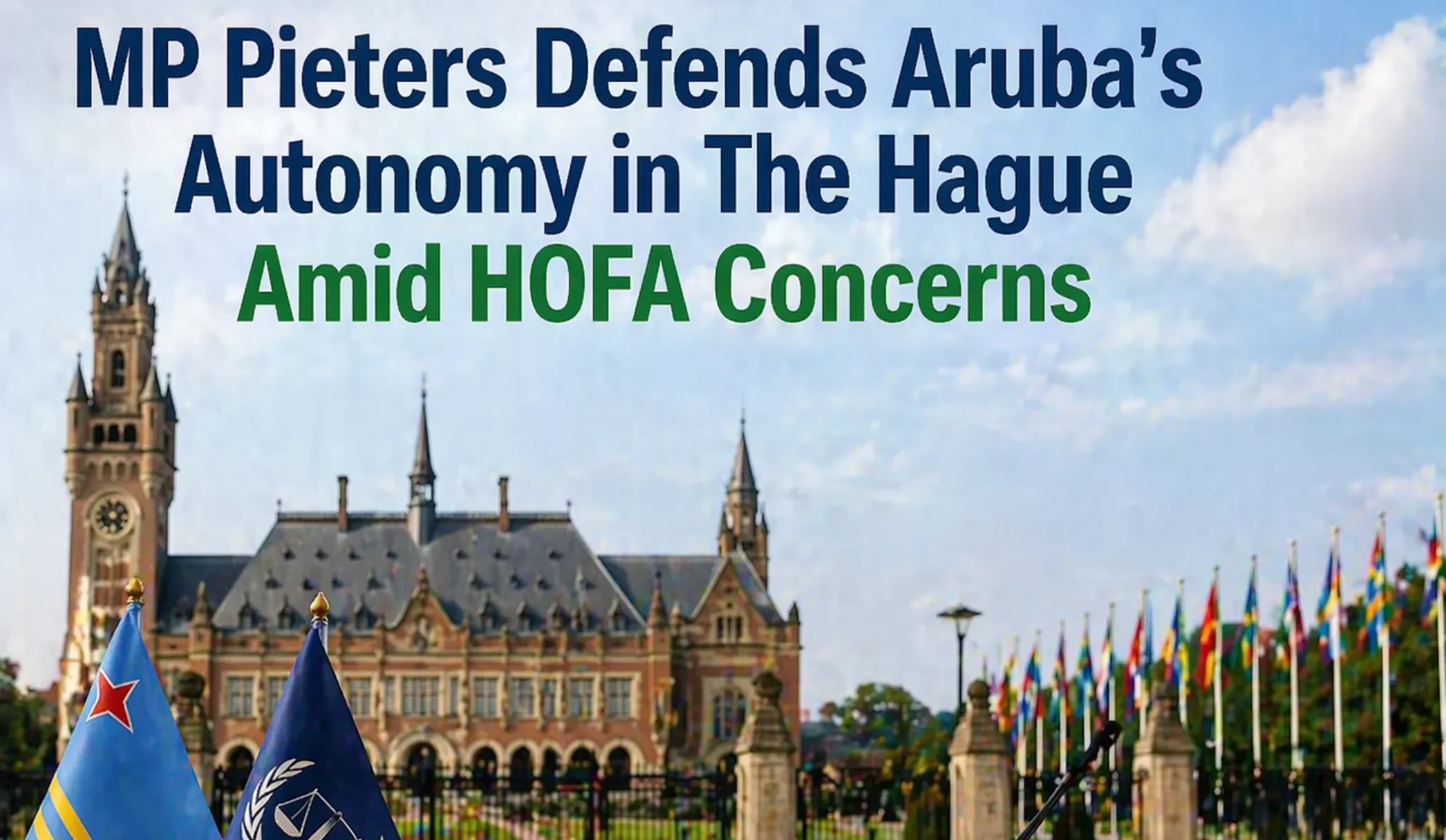
MP Pieters Defends Aruba’s Autonomy in The Hague Amid HOFA Concerns
Member of Parliament Eduard Pieters delivered a firm defense of Aruba’s autonomy during an official mission to The Hague, warning that the proposed HOFA Kingdom Act could erode the island’s self-governance under the guise of financial supervision.
Speaking with representatives of Kingdom institutions, the PPA faction member argued that the HOFA legislation goes beyond technical financial measures and represents a structural shift in the balance of power between Aruba and the Netherlands. Pieters stressed that the matter cannot be reduced to administrative procedure, as it touches upon Aruba’s fundamental right to manage its own finances and make decisions for its people without disproportionate outside interference.
PPA Proposes Alternative: Budget Chamber
The PPA’s position is clear: Aruba is not opposed to supervision but rejects imposition without genuine consensus or respect for the democratic process. As a concrete alternative, Pieters proposed establishing a Budget Chamber (begrotingskamer) anchored in Aruba’s own Constitution (Staatsregeling). This mechanism would provide structural guarantees for financial oversight while keeping responsibility in Aruba’s hands rather than transferring it to the Kingdom level without sufficient local legitimacy.

Aruba’s Financial Track Record Raises Questions
Pieters pointed to Aruba’s current financial performance to strengthen his case. Despite global economic pressures, the country has significantly lowered its debt-to-GDP ratio and continues managing public finances with discipline. The central question he posed: if Aruba is complying and demonstrating progress, why is there a need for additional external control?
Legislative Process Still Unfolding
During the discussions, it became clear that the legislative process is not yet finalized. The Council of State still must issue its advice, and the House of Representatives (Tweede Kamer) will ultimately make the final decision. Pieters emphasized the importance of Aruba maintaining an active and consistent presence in The Hague, noting that without strong participation, the narrative will be shaped by others.
For the PPA faction, the issue represents a crucial turning point for Aruba’s future autonomy. “We did not fight for Status Aparte only to hand it back little by little,” Pieters concluded. “Autonomy is non-negotiable, and we have a responsibility to defend it with conviction.”