

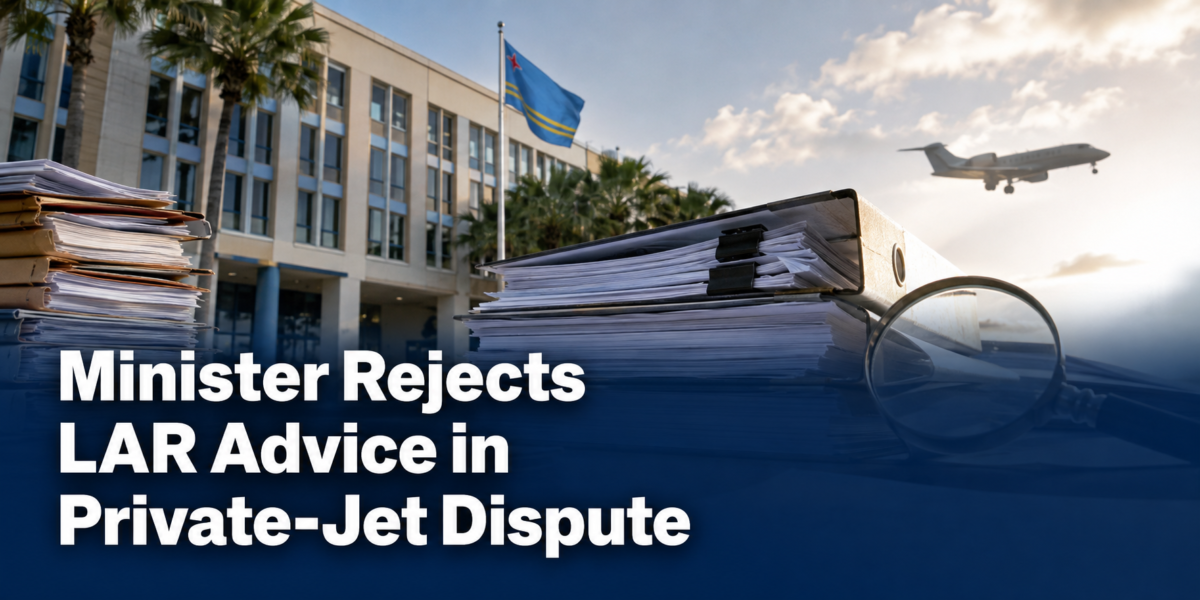
Minister Gerlien Croes rejected advice from Aruba’s LAR Objection Advisory Committee and maintained her earlier decision not to process a public-information request concerning a private-jet trip to Curaçao.
The minister issued her final decision on August 28, according to a newly published account of the committee’s July 10 advice. The disclosure is a substantive development in a dispute involving parliamentarians Evelyn Wever-Croes and Rocco Tjon.
Committee said applicants should have been allowed to fix request
The lawmakers submitted a request in December 2025 for documents and information connected with Croes’ November 19 private flight to Curaçao. The request was routed through Parliament rather than filed directly through the channel prescribed for electronic requests under Aruba’s public-information law, known as the LOB.

Croes initially extended the period for deciding the request. In February, however, she informed Parliament that it had not been submitted in the required form and would not be treated as a legally filed LOB request.
The advisory committee concluded that the February letter had legal consequences and therefore qualified as an administrative decision that could be challenged. Although it recognized a procedural defect in how the request was delivered, the committee said the applicants should have been notified and given a reasonable opportunity to correct it.
It recommended declaring the objection well-founded, revoking the February decision and issuing a new decision under the LOB framework.
Minister maintained her original position
Croes did not follow that recommendation. Her August 28 decision declared the objections unfounded and left the earlier decision in place.
The committee also rejected the argument that members of Parliament should rely only on parliamentary questions. It said lawmakers can still use the LOB, although the right to information remains subject to the law’s exemptions.
The advice did not decide who paid for the flight and did not order every requested record to be released. Its central finding concerned how the government should handle a correctable procedural error. MEP has since asked Parliament to address the matter, leaving possible political or legal follow-up ahead.
Source: Information based on Bon Dia Aruba’s report and account of the advisory document: Bon Dia Aruba.