
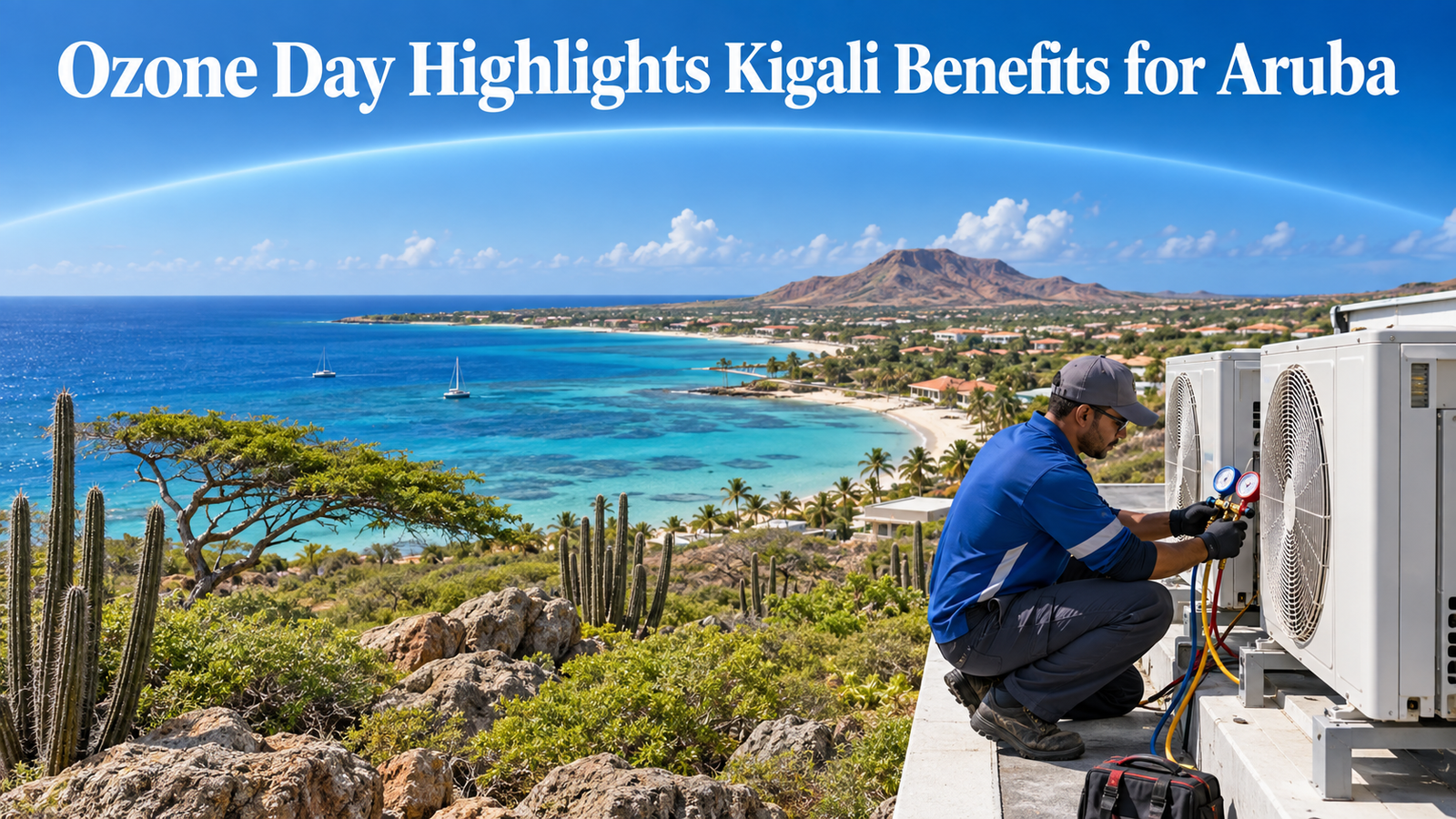
Aruba’s environmental agency is using International Ozone Day 2026 to highlight how the Kigali Amendment can support efficient cooling, responsible refrigerant use and climate resilience on the island.
Ten years of the Kigali Amendment
In an International Ozone Day statement published by AWE24, Aruba’s Directorate of Nature and Environment, known as DNM, marked the tenth anniversary of the Kigali Amendment under the 2026 theme “Global action for a cooler planet.”
The Montreal Protocol originally targeted substances that damage the ozone layer. The Kigali Amendment, adopted in 2016, added a global phase-down of hydrofluorocarbons, or HFCs. These refrigerants do not deplete ozone but are potent heat-trapping gases.

Kigali benefits for Aruba
DNM said the agreement has encouraged development of cooling systems that use less energy and rely on more environmentally responsible refrigerants. For Aruba, where demand for air conditioning and refrigeration is high, greater efficiency can reduce electricity use and related fossil-fuel consumption.
The agency also pointed to local controls over imported cooling gases and the importance of ensuring that technicians and the refrigeration industry use safer, more sustainable alternatives.
Climate resilience for an island environment
DNM linked global refrigerant policy to Aruba’s vulnerability to rising temperatures, sea-level rise and pressure on marine ecosystems, including coral. Limiting additional warming can help reduce stress on local vegetation, wildlife and coastal environments.
The statement also encouraged local action, including planting native trees to provide shade, absorb carbon and create cooler microclimates. DNM said protection of the atmosphere is a shared responsibility that benefits countries and communities of every size.