

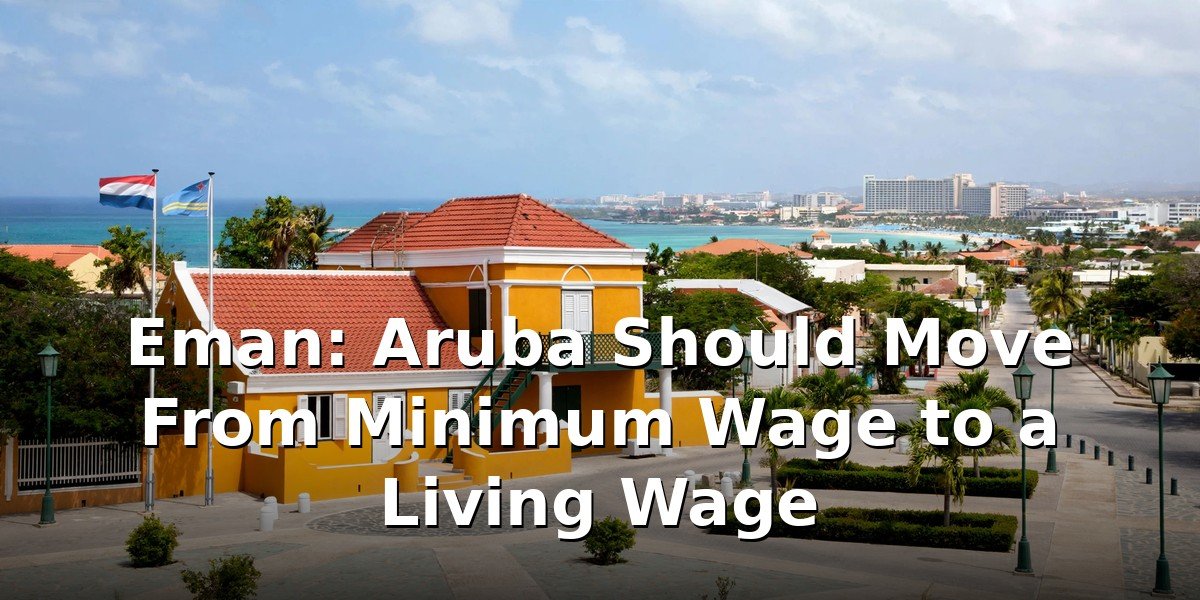
Aruba should stop speaking of a ‘minimum wage’ and start speaking of a ‘living wage’, Prime Minister Mike Eman has said in an interview reported on October 27 — setting out a gradual increase from about Afl. 2,100 to Afl. 2,600 over three years.
The interview, published by 24ora on the evening of October 27, is a follow-up development in the minimum-wage debate ArubaNews.ca has been covering this week, including the cost analysis and the coalition disagreement reported on October 24.
Responding to the Chamber of Commerce
Eman was responding to Chamber of Commerce concerns about the form and speed of the government’s planned minimum-wage increase. Aruba, he argued, cannot keep delaying decisions to improve workers’ incomes while the tourism industry posts success figures.

A large part of minimum-wage earners work in the hotel sector, he noted — the same sector whose results are used to describe the island’s economic success.
Support during the Netherlands meetings
Eman said that during his meetings in the Netherlands he received positive reactions to the government’s intention to raise the minimum wage — in the Eerste Kamer, at the Social and Economic Council (SER), and from CDA leader Henri Bontenbal.
He framed the central question as how an island with five-star hotels and impressive tourism figures cannot ensure that well-being reaches workers’ homes.
Bontenbal backs the wage effort
In a separate meeting in The Hague, reported by English 24ora, Eman discussed economic growth, the minimum wage and shared prosperity with Henri Bontenbal, leader of the Christian Democratic Appeal (CDA) and of its parliamentary group in the Dutch House of Representatives.
Bontenbal said he shares Eman’s view that economic growth must go hand in hand with social well-being, and he specifically highlighted Eman’s efforts to increase Aruba’s minimum wage, stressing that progress should be measured not only by figures but by quality of life and financial security.
Eman told Bontenbal that fair wages alone are not enough and called on the business community to contribute and share prosperity, expressing concern about wealth concentration while large sections of the population are left behind.
What happens next
On the figures Eman set out, the path is gradual: from approximately Afl. 2,100 toward Afl. 2,600 over a period of three years, replacing the language of a ‘minimum wage’ with that of a ‘living wage’. Business groups, including the Chamber of Commerce and the food and beverage association, continue to press for the increase to be carefully assessed and financially planned.
Sources: 24ora | 24ora (English)